The New Hampshire: High Output and a Broody Mother
In our Rhode Island Red guide we left a problem hanging: the RIR is an excellent dual-purpose breed, but it rarely goes broody — so you can't hatch naturally with it. You need an incubator, or a Silkie in the flock.
The New Hampshire is the answer to exactly that problem. It descends from the RIR and closely resembles it, but it goes broody readily and makes a good mother. It is the breed for anyone who doesn't want to choose between high output and natural hatching.
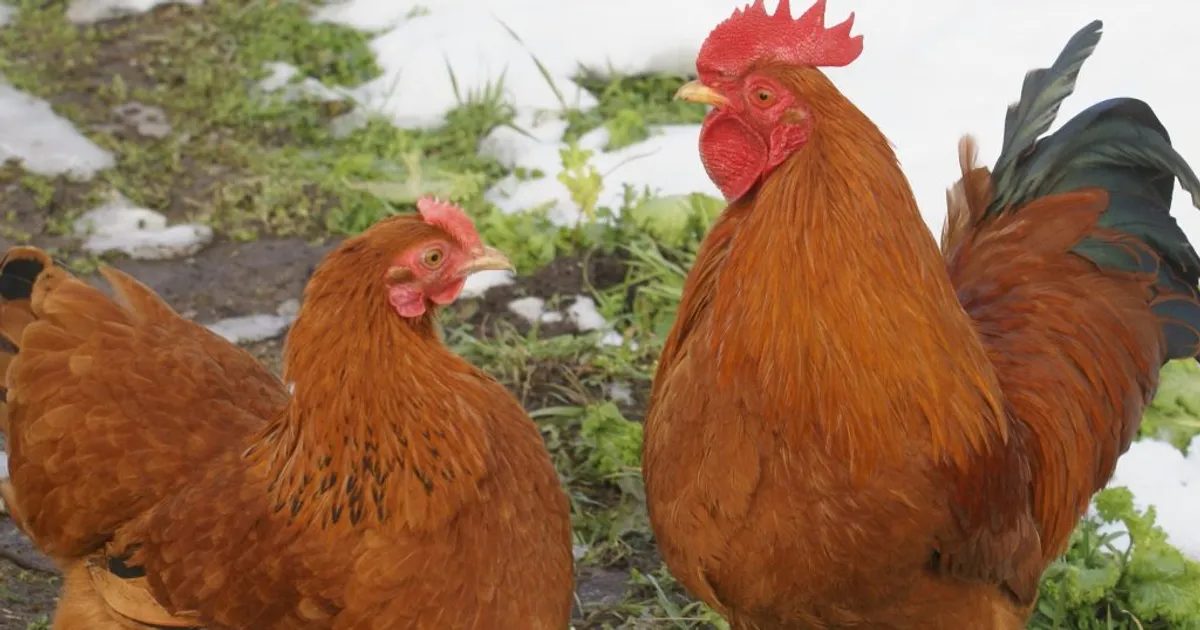
Origin: The RIR, Re-Selected
The New Hampshire was developed in the early 1900s in the American state of New Hampshire — but not from scratch. Breeders took pure Rhode Island Red flocks and selected them for years on different traits:
- Faster growth
- Earlier maturity (an earlier point of lay)
- Faster feathering
- Better meat yield
The result is an "accelerated" version of the RIR. It is a story much like the Orpington's transformation into the Australorp in Australia — the same genetic base, a different goal.
- Cock: 3.8 – 4.0 kg
- Hen: 2.9 – 3.0 kg
- Colour: a light chestnut, salmon-red — markedly lighter than the RIR's dark mahogany
- Comb: single
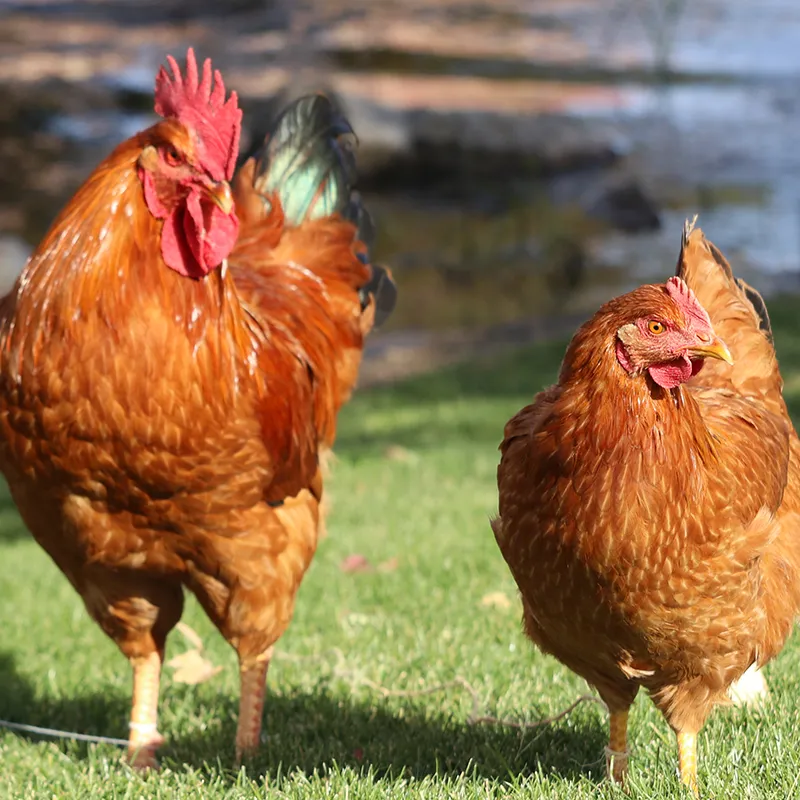
RIR or New Hampshire? A Comparison
At a glance the two look the same, but in practice they are different birds:
| Rhode Island Red | New Hampshire | |
|---|---|---|
| Eggs per year | 250-300 | 200-250 |
| Point of lay | 5-6 months | ~5 months (earlier) |
| Growth rate | Normal | Fast |
| Feathering | Normal | Fast |
| Meat yield | Good | Better |
| Broodiness | Rare | Goes broody readily |
| Cock temperament | Can be aggressive | Calmer (though competitive) |
| Colour | Dark mahogany | Light chestnut / salmon |
In short: for maximum eggs, take the RIR. For eggs plus meat plus natural hatching, take the New Hampshire.
The Real Advantage: It Goes Broody
This is what makes the New Hampshire special among productive breeds. Across the breeds on this site there is a trade-off: the more eggs, the less broodiness.
| Breed | Eggs per year | Broodiness |
|---|---|---|
| Lohmann | 300-320 | Never |
| Leghorn | 280-320 | Never |
| RIR | 250-300 | Rarely |
| New Hampshire | 200-250 | Readily |
| Silkie | 100-120 | Very often |
| Cochin | 140-180 | Very often |
The New Hampshire sits in the sweet spot of that table: 200-250 eggs — serious output — and a dependable broody mother. That is why village flocks favour it: it gives you eggs and hatches its own chicks.
For natural incubation see our guide to hatching with a broody hen; being a mid-sized bird, you can set 10-12 chicken eggs under it.
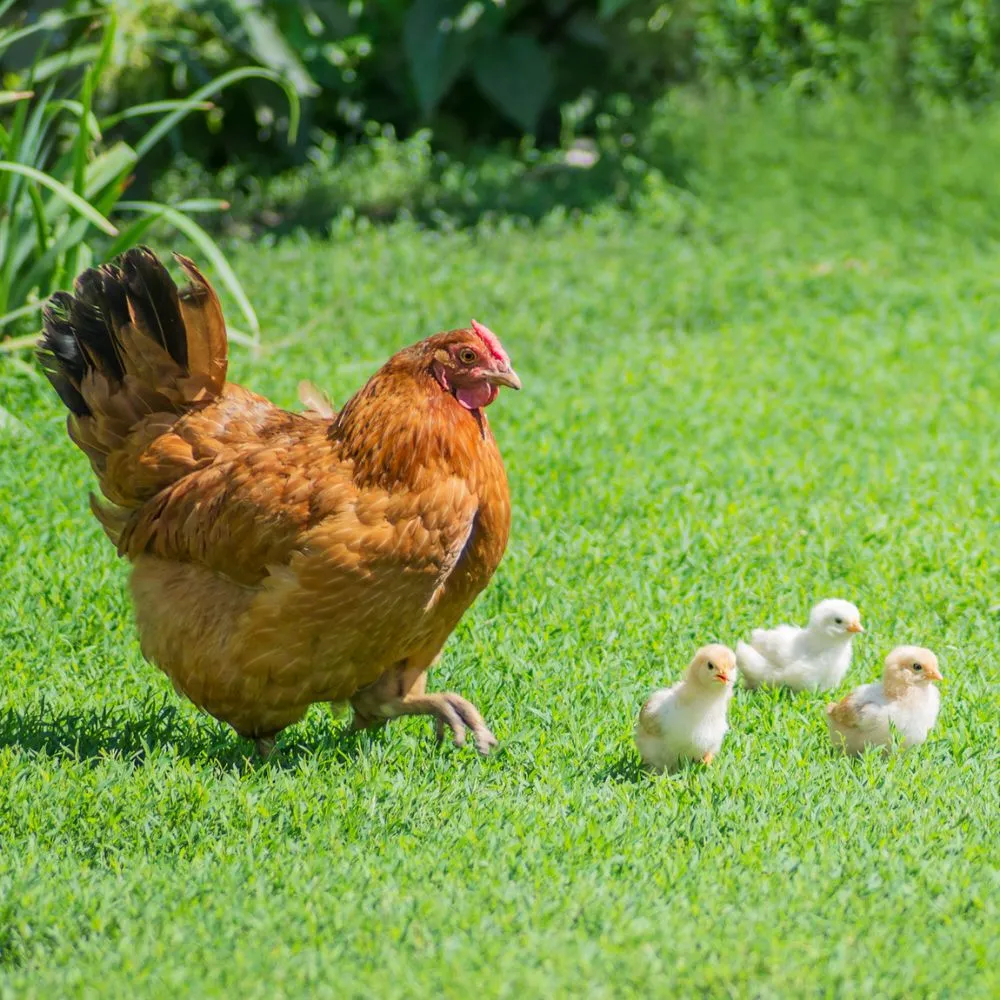
Fast Feathering: Why It Matters
This is a trait most sources skip over, yet it makes a real difference in rearing chicks.
New Hampshire chicks feather up faster than other breeds. The consequences:
- Less heat needed: a feathered chick starts holding its own body heat, so the brooder lamp comes off sooner. You can step the weekly temperature schedule in our brooder setup guide down a little faster.
- Less pecking: bare skin and slow-growing feathers make a chick a target for pecking and cannibalism. Fast feathering reduces that risk.
- A tougher chick: early feathering means early protection from cold and stress.
Output in Numbers
| Trait | Value |
|---|---|
| Point of lay | ~5 months (early) |
| Eggs per year | 200-250 |
| Egg weight | 60-65 g (large) |
| Egg colour | Brown |
| Daily feed intake | 120-130 g |
| For the table | Grows fast; ready early |
Temperament and Hardiness
The New Hampshire is generally calm and friendly, and its cocks are not as aggressive as the RIR's. But it is competitive — it pushes at the feeder and asserts itself in the flock. If you keep it with very gentle breeds such as the Orpington or the Faverolles, add extra feeders.
It is hardy: it copes with heat and cold, resists disease well and forgives husbandry mistakes. Like the RIR, it is a forgiving breed for beginners.
Care and Housing
- Coop space: 0.3-0.4 m² per hen
- Run: 2-3 m²; a good forager
- Flying: it barely flies; a 1.5 m fence is enough
- Perch: mid-height (50-60 cm)
- Nest boxes: one per 4 hens
- Light: 14-16 hours a day in lay (see winter eggs)
For coop dimensions see how to build a chicken coop, and for vaccination and hygiene our coop biosecurity guide.
Hatching
Natural incubation is the New Hampshire's strong suit — see our guide to hatching with a broody hen.
In an incubator the period is standard: 21 days, 37.5-37.8 °C, 45-55% humidity, lockdown on day 18. We set out the process in our 21-day incubation guide; to keep the days straight, the Kuluçka Takip app builds the calendar and reminds you of turning and hatch days. You can check out the app here.
A breeding note: the New Hampshire is a pure breed — chicks from your own eggs carry the same traits as their parents. That is impossible with F1 hybrids like the Lohmann or the Atak-S. So your flock can renew itself — and the broody hen to do it with is already in the flock.
Pros and Cons
- + High output (200-250) and a dependable broody mother — a rare combination
- + Comes into lay early (~5 months)
- + Grows fast and feathers fast → easier chick rearing
- + Dual purpose: better meat yield than the RIR
- + Calm; the cocks aren't as aggressive as the RIR's
- + Hardy and forgiving — suitable for beginners
- + A pure breed: your flock can renew itself
- − Egg output below the RIR's (200-250 vs 250-300)
- − Competitive at the feeder; add feeders alongside very gentle breeds
- − Single comb: frostbite risk in a hard winter
- − Pure stock isn't as easy to find as the RIR's
Who Is It For?
The New Hampshire suits you if: you want eggs and meat and you want to hatch naturally; you want to renew your flock with your own chicks (and stop buying hybrids); you're starting out and want a forgiving breed; you want a fast-feathering breed that makes chick rearing easier.
The New Hampshire is not for you if: you want maximum eggs → the Lohmann, the Leghorn or the RIR; you want a guaranteed, near-permanent broody → the Silkie or the Cochin; you want the biggest body and the most meat → the Brahma.
To compare all the breeds side by side, see our guide to choosing a laying or meat breed.
Frequently Asked Questions
What is the difference between the New Hampshire and the Rhode Island Red?
The New Hampshire was derived from the RIR: it grows faster, comes into lay earlier, feathers faster and gives more meat. The key difference is broodiness — the RIR rarely goes broody, while the New Hampshire does so readily. In exchange it lays a little less (200-250 against 250-300).
How many eggs does a New Hampshire lay per year?
It lays 200-250 large brown eggs a year (60-65 g) and comes into lay early, at about 5 months.
Does the New Hampshire go broody?
Yes — readily, and it makes a good mother. That is rare among productive breeds: you get 200-250 eggs and can still hatch your own chicks. You can set 10-12 chicken eggs under one.
Why is fast feathering an advantage?
A feathered chick starts holding its own body heat, so it needs the brooder lamp for less time. And because bare skin is a target for pecking, fast-feathering chicks run a lower risk of cannibalism.
How big is a New Hampshire?
Cocks reach 3.8-4 kg and hens 2.9-3 kg. Because it grows fast, it is ready for the table early.
What is the New Hampshire’s temperament like?
Generally calm and friendly, and its cocks are not as aggressive as the RIR’s. But it is competitive at the feeder — if you keep it with very gentle breeds (Orpington, Faverolles), add extra feeders.
Will chicks from my own New Hampshire eggs be the same quality?
Yes. The New Hampshire is a pure breed, not a hybrid, so chicks from your own eggs carry their parents’ traits. And because it goes broody, your flock can renew itself.
Related Articles
The Orpington: Traits, Show vs Utility Lines, Broodiness and Care
The Orpington's story: bred for utility, ruined for the show ring, and brought back as the Australorp. The show vs utility line gap (120-150 vs 180-250 eggs), the price of being too gentle, its strong broodiness, and how vent feathering lowers fertility.
The Welsummer: The Speckled Terracotta Egg and Day-Old Chick Sexing
The Welsummer, breed of the Kellogg's rooster: its speckled terracotta egg (65-75 g), a comparison with the Marans, day-old chick sexing by down pattern in a pure breed, superb foraging, and why it never goes broody.
The Cochin: The Giant Feathered Breed, Broody Capacity and Care
The Cochin, which set off the Victorian 'Hen Fever' craze and is the ancestor of the Brahma, Orpington and Wyandotte: one of the most reliable broodies (12-15 eggs under one), content in a small space, the bantam as a foster mother for quail and pheasant, and how its feathering affects fertility.