The Silkie Chicken: Traits, Broodiness, Egg Production and Care
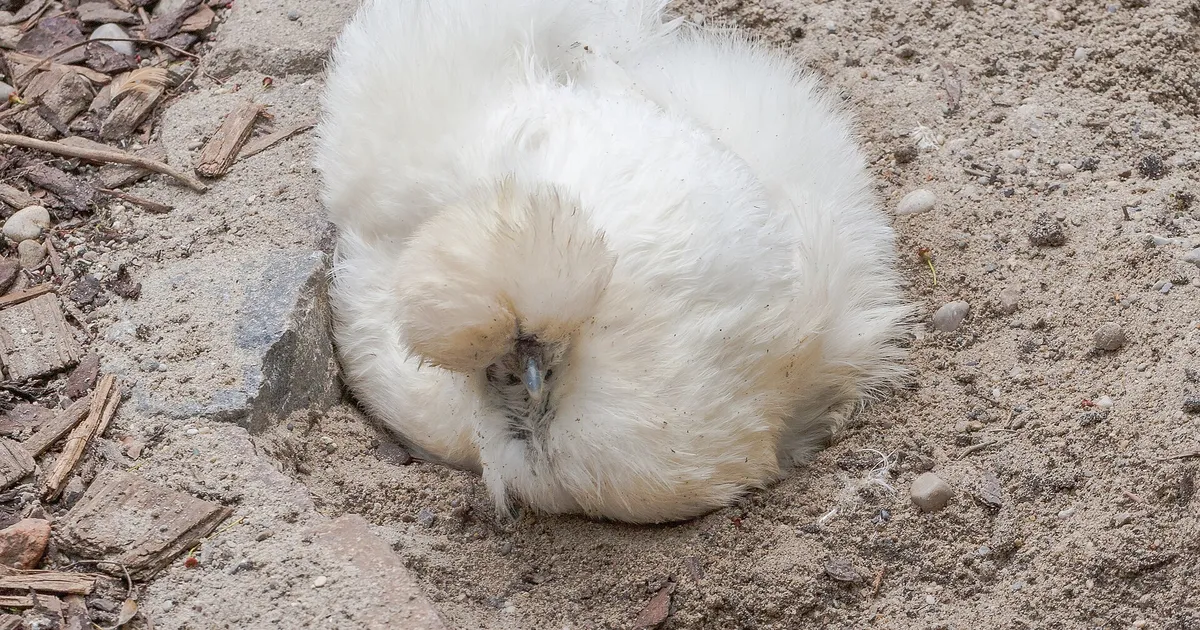
The Silkie is an extraordinary breed: fur-soft feathers, black skin and bones, and five toes on each foot. But for anyone who hatches eggs, its real distinction lies elsewhere: the Silkie is the best broody hen there is. It goes broody several times a year and will sit patiently on not only its own eggs but duck, quail and even pheasant eggs. Many keepers keep one purely as a "living incubator".
Origin and Unusual Traits
The Silkie comes from Asia (most likely China); the "furry chicken" Marco Polo described in the 13th century is thought to be this breed. What sets it apart from every other chicken:
- Silky plumage: the feathers lack the tiny hooks (barbicels) that normal feathers have, so they don't zip together and stand fluffed up like fur. The consequence: it cannot fly, and its feathers soak up water.
- Black skin, meat and bones: caused by a rare mutation called fibromelanosis. The skin, flesh and bones are blue-black.
- Five toes: a normal chicken has four; the Silkie has five. It is one of the markers of the pure breed.
- Turquoise earlobes and a walnut comb.
- Feathered legs and a crest of feathers on the head.
It is a small bird: cocks 1.5-1.8 kg, hens 1.2-1.5 kg — a miniature next to giants like the Brahma. Its temperament is exceptionally gentle; it enjoys being carried, gets on famously with children, and can live 7-9 years.
Its Real Value: Motherhood
In commercial hybrids the brooding instinct has been bred out — a Lohmann never goes broody. In the Silkie the instinct is almost excessive:
- It goes broody 3-4 times a year on its own; some will try to sit at every opportunity.
- It hatches other species' eggs too: duck, quail, pheasant, partridge. It doesn't think the egg is its own — it simply sees something that must be kept warm, and sits to the end.
- It is an excellent mother: it protects the chicks, keeps them warm and teaches them to forage. A Silkie fretting on the bank while her adopted ducklings swim is a classic garden scene.
How many eggs go under her? Because she is small, the number is limited:
| Type of egg | Under one Silkie |
|---|---|
| Chicken eggs | 6-8 |
| Duck eggs (large) | 4-6 |
| Quail eggs (small) | 12-15 |
The rule is simple: the hen's body must comfortably cover every egg. Set too many and the ones on the edge go cold and never hatch. For everything about natural incubation, see our guide to hatching with a broody hen.
A caveat: a broody hen isn't available on demand and won't sit on the day you choose. For planned production you still need a machine; our 21-day incubation guide takes you through the process step by step. To keep the days straight, the Kuluçka Takip app builds the calendar and reminds you of turning and hatch days. You can check out the app here.
Egg Production in Numbers
| Trait | Value |
|---|---|
| Point of lay | 7-9 months (a late maturer) |
| Eggs per year | 100-120 |
| Egg weight | 35-45 g (small) |
| Egg colour | Cream / light beige |
| Lifespan | 7-9 years |
Output is low, and part of the reason is this: a broody hen doesn't lay. Because the Silkie sits several times a year, its laying periods are constantly interrupted. In other words, the breed's greatest strength (going broody) is exactly what makes its egg numbers so poor.
Hardiness: Two Critical Weaknesses
Given the right conditions the Silkie lives a long, healthy life — but it has two serious weaknesses:
- Getting wet can be fatal. Its feathers are not waterproof — a normal feather sheds water, a Silkie's absorbs it. A Silkie caught in the rain gets soaked to the skin, loses heat and chills. The coop and run must be covered and sheltered; if it does get wet, dry it at once. Despite all that fluff, it is not as cold-hardy as the Brahma.
- It is prone to Marek's disease. Susceptibility to Marek's is a known problem in this breed; never skip the Marek's vaccination for the chicks. For the other vaccinations and hygiene rules, see our coop biosecurity guide.
Its feathered legs (as with the Brahma) are also vulnerable to fungus and scaly leg mite on wet or muddy ground — the floor must be kept dry.
Care and Housing
- It cannot fly: a low fence will hold it — but for the same reason it cannot escape a predator. A covered, secure run is essential against cats, dogs, martens and birds of prey. In this breed the commonest cause of death is not disease but predation.
- Keep the perch low (30-40 cm) — it can't fly up, and it injures itself coming down.
- The crest blocks its vision: it notices danger late and startles easily. If the head feathers cover the eyes completely, trimming them lightly is common practice.
- Space: thanks to its small size, 0.25-0.3 m² of coop space per bird is enough.
- Floor: dry, with deep bedding; never let the area around the drinkers stay wet.
Feeding
- In lay: 16-17% protein, 80-100 g a day (a small body eats little)
- While broody: a sitting hen gets up to eat only once a day — put feed and water near the nest, or she will go hungry and lose condition
- Calcium: in a separate dish
- For crested birds, deep feeders stop the head feathers getting caked in feed
Pros and Cons
- + The best broody hen there is; sits 3-4 times a year
- + Hatches other species' eggs too (duck, quail, pheasant)
- + An excellent mother; protects and raises the chicks
- + Exceptionally gentle; ideal for families with children, happy to be handled
- + Small body: little feed, little space
- + Long-lived (7-9 years); a pure breed, so it hatches true
- − Low egg output (100-120) and the eggs are small
- − Constant broodiness interrupts laying
- − Defenceless against rain; a covered shelter is compulsory
- − Cannot fly → helpless against predators
- − Prone to Marek's disease; vaccination is essential
Who Is It For?
The Silkie suits you if: you want to hatch naturally, you'd like a "ready broody mother" in the flock, you keep ornamental or hobby birds, you have children and want a calm bird, or you have a small garden.
The Silkie is not for you if: you're after eggs or meat. For output the Lohmann (closed coop) or the Atak-S (free-range, hardy) makes far more sense, and for meat the Brahma.
The commonest solution is to keep both: a few layers for eggs and one or two Silkies for hatching. The Silkie in your flock does the one job your laying hybrids never will — it sits on the eggs. To compare all the breeds, see our breed selection guide.
Frequently Asked Questions
How many eggs does a Silkie lay per year?
About 100-120 small eggs (35-45 g) a year. Because it goes broody so often, its laying periods are interrupted; output is not the breed’s point.
Why is the Silkie considered the best broody hen?
It goes broody 3-4 times a year of its own accord, sits patiently for the full 21 days, and will hatch other species’ eggs — duck, quail, pheasant. It is also an excellent mother.
How many eggs can you put under a Silkie?
Because she is small: 6-8 chicken eggs, 4-6 duck eggs, or 12-15 quail eggs. The hen’s body must be able to cover every egg.
Why is the Silkie’s skin black?
A rare mutation called fibromelanosis makes its skin, flesh and bones blue-black. It is one of the breed’s defining traits.
Can a Silkie fly?
No. Its feathers lack barbicels, so they don’t lock together and it cannot fly. A low fence contains it — but for the same reason it cannot escape a predator, so a covered, secure run is essential.
Is the Silkie cold hardy?
Despite all the fluff, no. Its feathers absorb water, so a wet Silkie chills and falls ill. The coop and run must be covered, and a wet bird dried at once.
How many toes does a Silkie have?
Five. Normal chickens have four toes; five toes are one of the markers of the pure Silkie.
Related Articles
The Leghorn Chicken: Traits, Egg Production, Feed Efficiency and Care
The Leghorn, ancestor of the white egg: origin, 280-320 eggs a year, the lowest feed intake of any breed, the earlobe-egg colour rule, its ability to clear a 2-3 m fence, comb frostbite risk, and why it never goes broody.
Lohmann Brown Chicken: Traits, Egg Production, Care and Hardiness
The Lohmann Brown's origin, 300-320 eggs a year, point of lay, disease resistance, care, feeding and why it never goes broody — a complete breed guide with pros and cons.
The Australorp: Traits, Egg Production, Productive Life and Care
The record-holding Australorp (364 eggs in 365 days): origin, 250-300 eggs a year, a 4-5 year productive life that outlasts the hybrids, the lifetime-eggs calculation, the summer problem with black plumage, its gentle temperament and how to control broodiness.