The Australorp: Traits, Egg Production, Productive Life and Care
The Australorp holds the most famous record in poultry history: in the official Australian laying trials of 1922-23, one Australorp hen laid 364 eggs in 365 days — and did it without artificial lighting. In the same trial a group of six hens averaged 309.5 eggs each for the year. Those numbers would still stretch a modern hybrid.
But the record isn't the Australorp's real value. In this guide we cover why its productive life is so much longer than a commercial hybrid's, the problem its black plumage creates in summer, its exceptionally gentle temperament, and how to control its broodiness.
Origin: The Second Life of an English Orpington
The name tells the story: AUSTRALia + ORPington. The Black Orpington, developed in England, gradually turned into a show bird and lost its laying ability. Australian breeders took the same stock and re-selected it for production — they were after eggs, not looks. The result broke world records in the 1920s.
- Cock: 3.9 – 4.7 kg (varies by standard)
- Hen: 2.9 – 3.6 kg
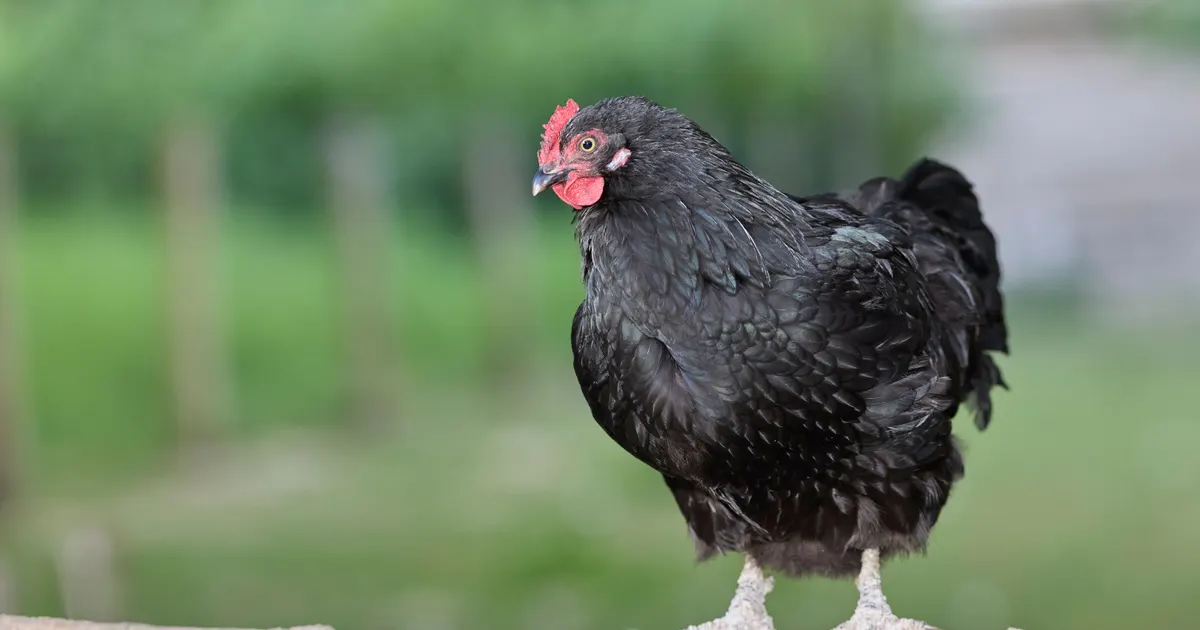
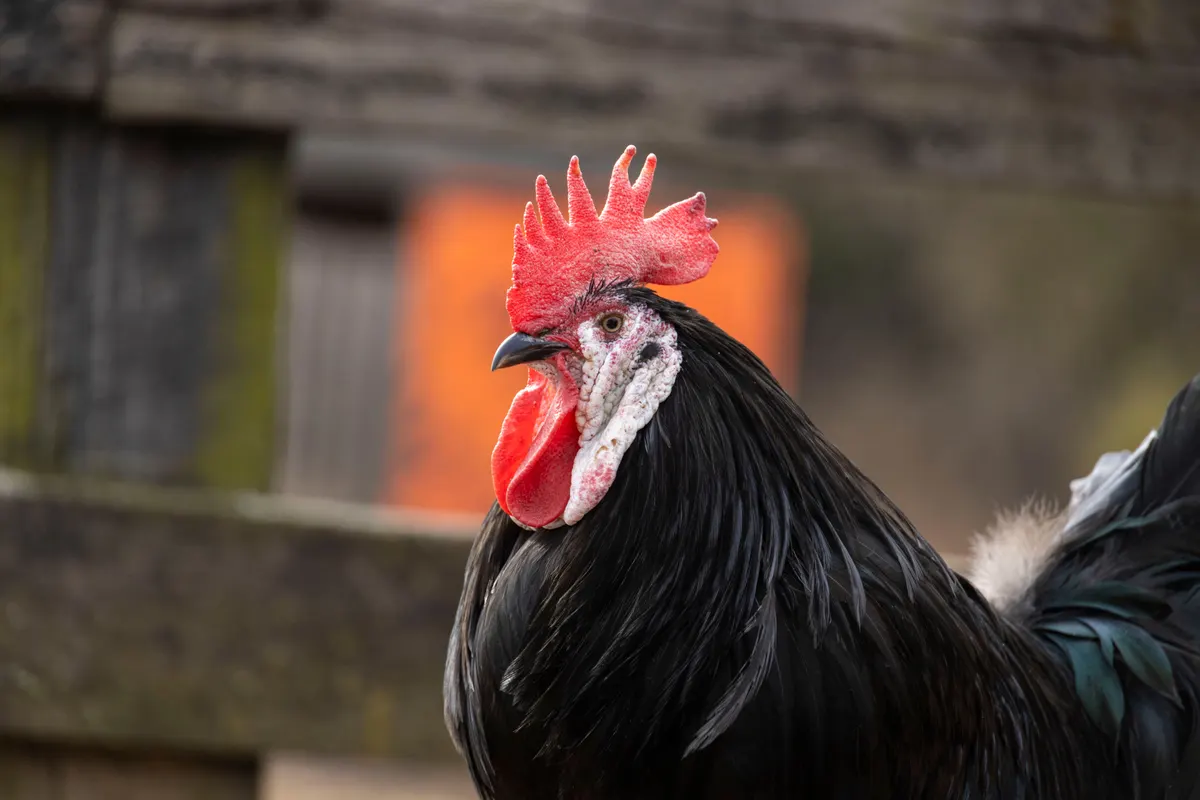
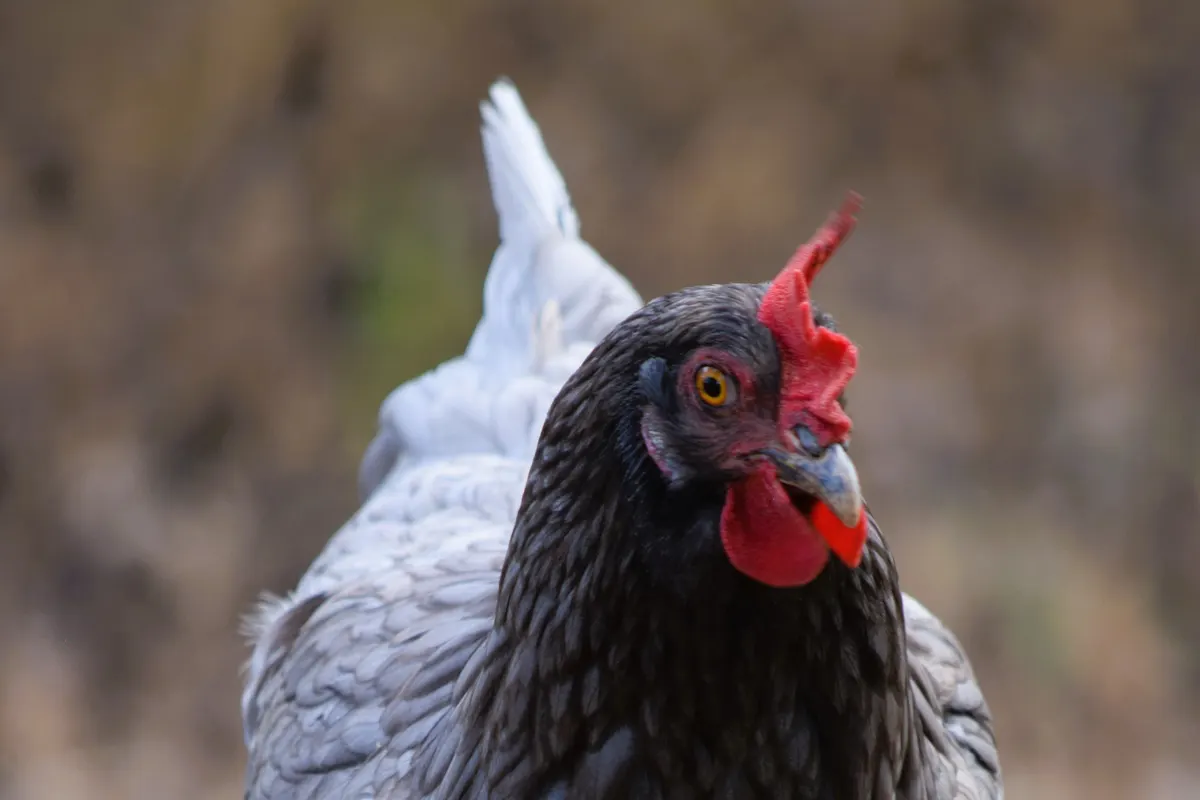
- Colour: coal black is the commonest, with a green-purple iridescence in sunlight. Blue and white varieties also exist.
- Lifespan: around 7 years
Egg Production in Numbers
| Trait | Value |
|---|---|
| Point of lay | 5-6 months (22-24 weeks) |
| Eggs per year | 250-300 |
| Egg weight | 55-65 g |
| Egg colour | Light brown / beige |
| Daily feed intake | 120-140 g |
| Productive life | 4-5 years (2 in hybrids) |
The Real Difference: Output Is Measured Over a Lifetime, Not a Year
This is the most overlooked point in choosing a breed. Commercial hybrids like the Lohmann lay prodigiously in their first year but burn out fast: output drops noticeably in year two and after year three there's little economic value left. That's why commercial units replace their flocks at 72-80 weeks.
The Australorp runs slower but longer. A simple calculation:
| Year | Lohmann (hybrid) | Australorp |
|---|---|---|
| Year 1 | ~310 | ~280 |
| Year 2 | ~250 | ~250 |
| Year 3 | ~170 | ~220 |
| Year 4 | ~100 | ~180 |
| Year 5 | ~60 | ~140 |
| Total | ~890 | ~1070 |
(These are approximate figures showing the typical curve under good husbandry.)
So in backyard keeping, for someone who doesn't replace the flock every two years, the Australorp gives more eggs than the hybrid that looks more "productive" on paper. Hybrids were designed for commercial units; if your hens are staying with you until they retire, look at this table.
Temperament: Perhaps the Gentlest Breed of All
The Australorp is one of the calmest breeds in the chicken world. It doesn't pick fights, doesn't disturb the peace of the flock, gets used to people quickly and is good with children. It's a little shy at first but comes to trust you enough to feed from your hand.
That puts it at the opposite pole from the Rhode Island Red (aggressive cocks) and the Leghorn (flighty, independent). It also causes no trouble in mixed flocks — a good option if you struggle with pecking problems.
Hardiness: Suits Almost Any Climate — With One Exception
The Australorp copes with heat and cold alike; it handles a harsh continental winter and a hot Mediterranean summer. It is a robust breed and resists disease well.
But the black plumage has a price: black absorbs sunlight. In direct sun an Australorp heats up far faster than a light-coloured bird. In summer:
- Shade is essential — don't leave it in the midday sun without a tree, a lean-to or a shade cloth
- Cool, clean water must always be available
- Provide housing with airflow
This doesn't contradict the breed being "heat tolerant": the body copes, but direct sun is a separate problem.
Care and Housing
- Coop space: 0.4 m² per hen (a large body)
- Run: 2-3 m² per hen; it's a good forager
- Perch: mid-height (50-60 cm) — a heavy bird struggles coming down off a very high perch
- Nest boxes: one per 4 hens
- Flying: too heavy to fly much; a 1-1.5 m fence is enough (unlike the Leghorn)
For coop dimensions see how to build a chicken coop, and for vaccination and hygiene our coop biosecurity guide.
Feeding
- Layer feed: 16-18% protein, 120-140 g a day (a large body eats a little more)
- Calcium: in a separate dish — shell quality is critical in a hen that will lay for years
- Grit: needed for a ranging bird
- The ageing hen: output falls after year three but continues; don't cut back the feeding programme
Hatching: It Goes Broody — And You Can Prevent It If You Want
The Australorp goes broody occasionally and makes a good mother. The instinct isn't as strong as the Silkie's, but nor is it zero like the Leghorn's. Most usefully: you can steer it.
- If you want a broody: leave the eggs in the nest. Eggs accumulating in the box trigger the instinct.
- If you don't: collect the eggs every day. An empty nest box greatly reduces the chance of going broody — and since a broody hen stops laying, that matters if you're after output.
For natural incubation, see our guide to hatching with a broody hen. In an incubator the period is standard: 21 days, 37.5-37.8 °C, 45-55% humidity, lockdown on day 18. We set out the process in our 21-day incubation guide; to keep the days straight, the Kuluçka Takip app builds the calendar and reminds you of turning and hatch days. You can check out the app here.
The Australorp is a pure breed — chicks from your own eggs carry the same traits as their parents. That is impossible with F1 hybrids like the Lohmann or the Atak-S.
Pros and Cons
- + A long productive life (4-5 years) → more lifetime eggs than a hybrid
- + High output: 250-300 eggs (world record: 364 in 365 days)
- + Very docile and calm; good with children and in mixed flocks
- + Tolerates both heat and cold — suits almost any region
- + Dual purpose: a 4-4.5 kg cock, good meat value
- + A pure breed: you can hatch your own chicks
- + Can go broody; natural incubation is possible (and controllable)
- − Black feathers absorb heat in sun; shade is compulsory in summer
- − A large body: eats more than a Leghorn (120-140 g)
- − First-year output slightly below the hybrids
- − Pure breeding stock isn't available everywhere
Who Is It For?
The Australorp suits you if: you don't replace your hens every two years and want output over the long run; you want eggs and meat; you have children and want a calm flock; you live somewhere with a harsh climate (hot or cold); you want to hatch your own chicks.
The Australorp is not for you if: you only want maximum first-year output → the Lohmann; you want to minimise the feed bill → the Leghorn; you want a guaranteed broody mother → the Silkie.
To compare all the breeds side by side, see our guide to choosing a laying or meat breed.
Frequently Asked Questions
How many eggs does an Australorp lay per year?
An Australorp lays 250-300 light brown eggs a year. The world record belongs to an Australorp hen: 364 eggs in 365 days (1922-23, with no artificial lighting).
For how many years does an Australorp lay?
It stays productive for 4-5 years. Commercial hybrids last about 2, which is why in backyard keeping the Australorp gives more eggs over a lifetime.
How big is an Australorp?
Cocks reach 4-4.5 kg and hens 3-3.6 kg. That weight makes it a dual-purpose (egg and meat) breed.
Does the Australorp go broody?
Occasionally, and it makes a good mother. If you don’t want a broody, collect the eggs daily: eggs left to accumulate in the nest trigger the instinct.
Is the Australorp heat tolerant?
The bird itself copes with heat and cold. But because black feathers absorb sunlight, it should not sit in direct summer sun — shade and cool water are essential.
What is the Australorp’s temperament like?
It is one of the gentlest of all chicken breeds: it doesn’t pick fights, gets used to people quickly, is good with children and causes no trouble in mixed flocks.
Will chicks from my own Australorp eggs be the same quality?
Yes. The Australorp is a pure breed, not a hybrid, so chicks hatched from your own eggs carry their parents’ traits.
Related Articles
Lohmann Brown Chicken: Traits, Egg Production, Care and Hardiness
The Lohmann Brown's origin, 300-320 eggs a year, point of lay, disease resistance, care, feeding and why it never goes broody — a complete breed guide with pros and cons.
Atak-S Chicken: Traits, Egg Production, Care and Hardiness
The Atak-S's origin (RIR x Plymouth Rock), 260-300 eggs a year, disease resistance, suitability for free-range keeping, its broodiness and day-old chick sexing — a complete breed guide compared with the Lohmann.
The Leghorn Chicken: Traits, Egg Production, Feed Efficiency and Care
The Leghorn, ancestor of the white egg: origin, 280-320 eggs a year, the lowest feed intake of any breed, the earlobe-egg colour rule, its ability to clear a 2-3 m fence, comb frostbite risk, and why it never goes broody.