The Leghorn Chicken: Traits, Egg Production, Feed Efficiency and Care
The Leghorn is the ancestor of the white egg. Every white egg on a supermarket shelf comes from a bird whose genetics trace back to the Leghorn — just as every brown egg traces back to the Rhode Island Red. In this guide we cover the Leghorn's origin, its extraordinary feed efficiency, the problem created by its ability to fly, why its comb is a risk in winter, and why it never goes broody.
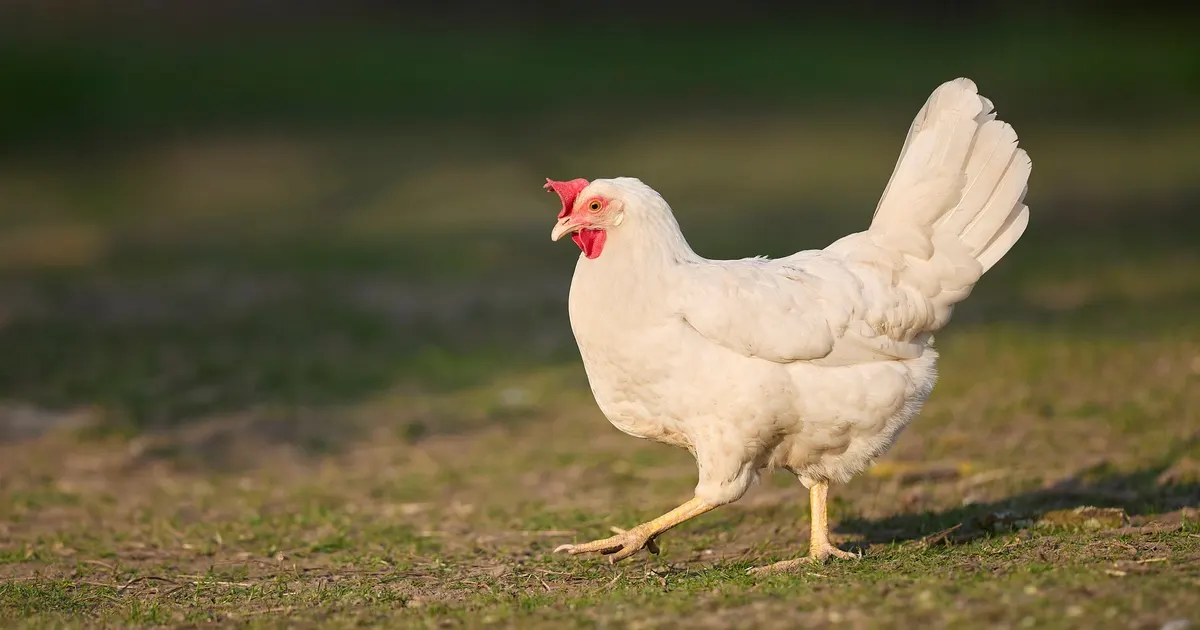
Origin: The Name of an Italian Port
The Leghorn takes its name from the Italian port of Livorno ("Leghorn" in English). In the 1800s, Italian farmyard fowl shipped from that port to America and Britain were refined there, and out of them came today's production machine.
- Cock: 2.7 – 3.4 kg
- Hen: 2.0 – 2.5 kg (light, slender frame)
- Colour: pure white is the commonest; brown, black, buff and silver varieties also exist
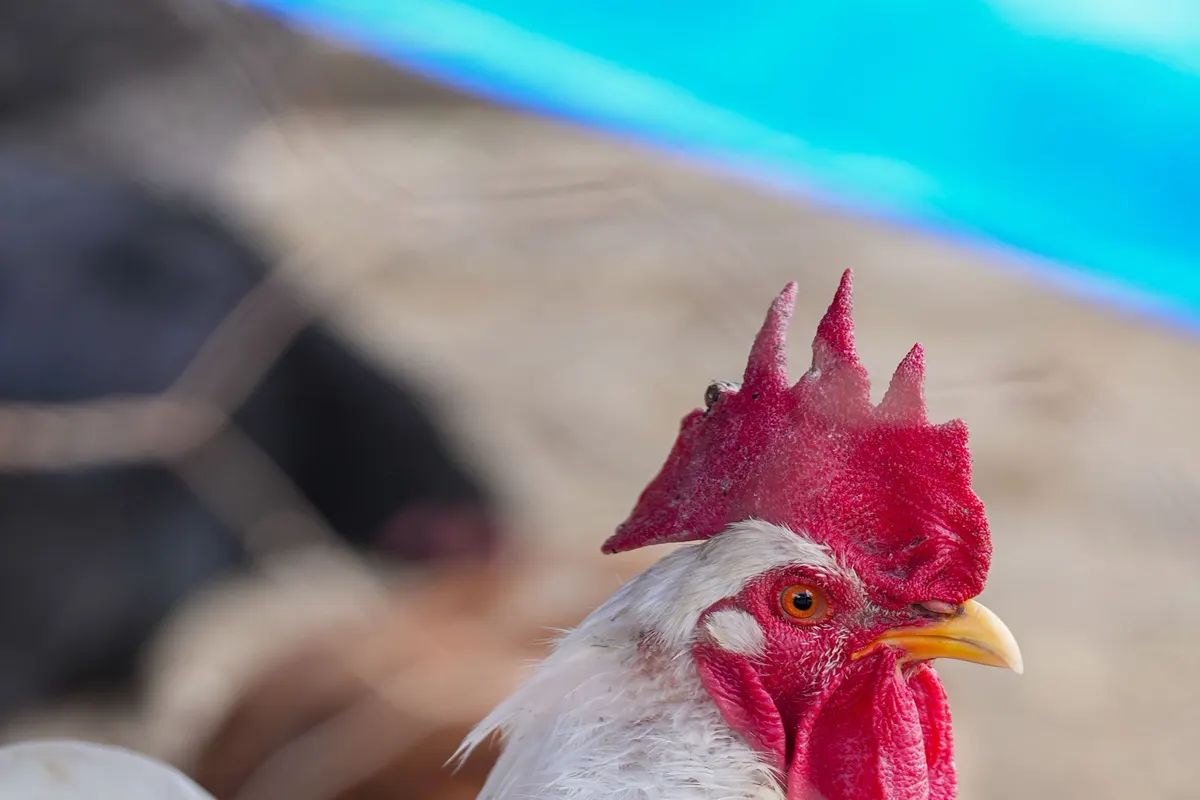
- Comb: a large single comb — upright in the cock, flopped over in the hen
A General Rule: The Earlobe Tells You the Egg Colour
The Leghorn has white earlobes, and that is no coincidence. A simple but surprisingly reliable rule holds in chickens:
If you want to know what colour egg a hen will lay, look at the patch of skin beside her ear. There are exceptions (the blue-egg Araucana, for one), but the rule holds for most breeds.
Egg Production in Numbers
| Trait | Value |
|---|---|
| Point of lay | 4.5-5 months (18-20 weeks) — very early |
| Eggs per year | 280-320 |
| Egg weight | 55-65 g |
| Egg colour | White |
| Daily feed intake | 100-110 g — the lowest of any breed |
| Meat value | Low (a thin, light carcass) |
The Real Advantage: Feed Conversion
The Leghorn's true strength isn't the number of eggs but how little feed it takes to produce them. Its small, light body spends little energy on maintenance; everything left over goes into eggs.
The comparison is stark:
| Breed | Eggs per year | Daily feed |
|---|---|---|
| Leghorn | 280-320 | 100-110 g |
| Lohmann Brown | 300-320 | 110-120 g |
| Rhode Island Red | 250-300 | 120-130 g |
| Brahma | 150-200 | 130-160 g |
So the Leghorn lays twice as many eggs as a Brahma on two-thirds of the feed. That is why white eggs are still the cheap ones in commercial production. If feed cost matters to you, the Leghorn is the most economical breed there is.
Warning 1: This Chicken Flies
The Leghorn is light and athletic — it can clear a 2-3 metre fence without trouble. Where a 1-metre fence is enough for most breeds (the Brahma can't fly at all), a Leghorn will not stay in your garden; you'll find it next door, up a tree or on the roof.
The fixes:
- A covered (netted) run — the safest answer
- Clipping the wing tips — cutting the flight feathers on one wing unbalances the bird and stops it flying (it is painless and the feathers grow back at the moult)
- A high fence (2 m+) may still not be enough
Warning 2: The Big Comb Can Freeze in Winter
The Leghorn's large single comb is an advantage in the heat: its broad surface sheds warmth, which is why a Leghorn copes with summer far better than a breed like the Brahma. But that same comb is at risk of frostbite in a hard winter — especially the cock's tall, heavy comb.
In regions with severe winters:
- The coop must be free of draughts and damp (damp plus cold equals frostbite)
- Smearing the comb with petroleum jelly is a common protection
- If you can, choose the rose-comb Leghorn variety — it was bred for exactly this problem
Temperament: Not Affectionate — Productive
The Leghorn is not a lap chicken. It is lively, alert, flighty and independent; it doesn't like being caught and won't sit in your hands. If you want a bird your children can pick up, like the Silkie or the Brahma, the Leghorn is the wrong choice.
In exchange it is a superb forager: it scratches the garden all day, hunts insects and lowers its own feed bill. It is active and noisy.
Care and Housing
- Coop space: 0.3 m² per hen (a light body)
- Run: 2-3 m² — an active breed, and the run must be covered (it flies!)
- Perch: can be high — it flies up without trouble
- Nest boxes: one per 4-5 hens
- Light: 14-16 hours a day in lay
For coop dimensions see how to build a chicken coop, and for vaccination and hygiene our coop biosecurity guide.
Hatching: It Never Goes Broody
In the Leghorn the brooding instinct has been bred out completely. A Leghorn hen almost never goes broody — a deliberate choice made for output (a broody hen doesn't lay).
Ranking the breeds on this site by broodiness:
| Breed | Broodiness |
|---|---|
| Silkie | Very often — 3-4 times a year |
| Brahma, Denizli | Often |
| Atak-S | Sometimes |
| Rhode Island Red | Rarely |
| Leghorn, Lohmann | Never |
So if you want chicks from Leghorn eggs, an incubator is the only way (or keeping a Silkie in the flock). The period is standard: 21 days, 37.5-37.8 °C, 45-55% humidity, lockdown on day 18. We set out the process in our 21-day incubation guide; to keep track of the days, the Kuluçka Takip app builds the calendar and reminds you of turning and hatch days. You can check out the app here.
Good news: the Leghorn is a pure breed, not a hybrid, so chicks from your own eggs carry the same traits as their parents.
Pros and Cons
- + The best feed conversion of any breed: many eggs on little feed (280-320 a year)
- + Starts laying very early (4.5-5 months)
- + Very well suited to hot climates (the large comb sheds heat)
- + A superb forager; lowers its own feed bill while ranging
- + Robust and disease-resistant
- + A pure breed: you can hatch your own chicks
- − It flies (over a 2-3 m fence) — a covered run is needed
- − The large comb can suffer frostbite in a hard winter
- − Flighty and independent; not a lap chicken
- − Never goes broody → natural incubation is impossible
- − Low meat value (a light body) — not dual purpose
Who Is It For?
The Leghorn suits you if: you want maximum eggs on minimum feed, you like white eggs, you live in a hot climate, you have a covered run, and you don't expect companionship from your hens.
The Leghorn is not for you if: you want meat too → the RIR; you want natural incubation → the Silkie; you want a calm bird you can hand-feed → the Brahma; you live somewhere with hard winters → the Atak-S or the Brahma suits better.
To compare all the breeds side by side, see our guide to choosing a laying or meat breed.
Frequently Asked Questions
How many eggs does a Leghorn lay per year?
A Leghorn lays 280-320 white eggs (55-65 g) a year on just 100-110 g of feed a day — the best feed conversion of any breed.
At what age does a Leghorn start laying?
Very early: at 4.5-5 months (18-20 weeks), one of the earliest points of lay among the common breeds.
Why does the Leghorn lay white eggs?
Because it has white earlobes. The general rule in chickens is: white earlobes → white eggs, red earlobes → brown eggs.
Can a Leghorn fly?
Yes, very well. With its light body it can clear a 2-3 metre fence. You need a covered (netted) run, or the flight feathers on one wing must be clipped.
Does the Leghorn go broody?
No, almost never. The brooding instinct has been bred out entirely for output; if you want chicks you need an incubator (or a Silkie in the flock).
Is the Leghorn cold hardy?
The body is hardy, but the large single comb can suffer frostbite in a hard winter. Keep the coop draught-free and dry; smearing the comb with petroleum jelly is a common protection, and the rose-comb variety suits cold regions better.
Is the Leghorn any good for meat?
No. It has a thin, light body (hens 2-2.5 kg) and low meat value. If you want eggs and meat, the Rhode Island Red is the better fit.
Related Articles
Lohmann Brown Chicken: Traits, Egg Production, Care and Hardiness
The Lohmann Brown's origin, 300-320 eggs a year, point of lay, disease resistance, care, feeding and why it never goes broody — a complete breed guide with pros and cons.
Brahma Chicken: Traits, Size, Egg Production and Care
The giant Brahma's origin, its 4.5-5.5 kg size, 150-200 eggs a year, cold hardiness, feathered-leg care, broodiness and hatching — a complete breed guide with pros and cons.
The Silkie Chicken: Traits, Broodiness, Egg Production and Care
The Silkie's silky plumage, black skin and five toes; why it is the best broody hen, how many eggs to set under it, hatching duck and quail eggs, Marek's susceptibility and the danger of getting wet — a complete breed guide.