The Orpington: Traits, Show vs Utility Lines, Broodiness and Care
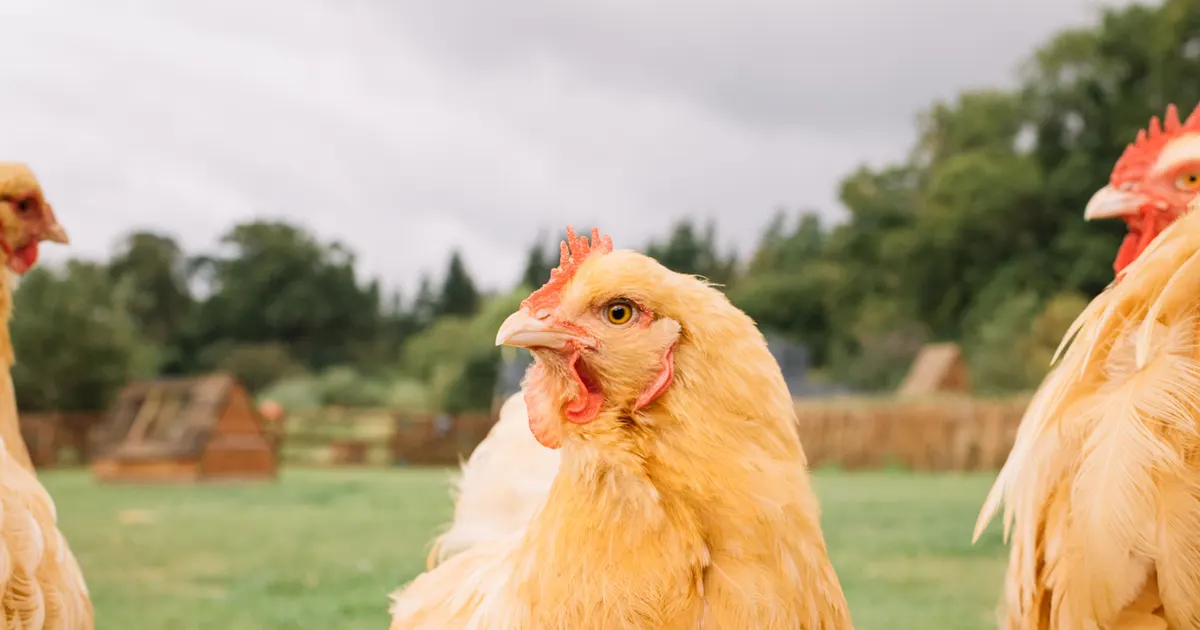
The Orpington is the chicken world's loveable giant: a fluffy, soft-feathered, big-bodied bird with an exceptionally gentle nature — practically a plush toy. But this breed's story also carries the most instructive lesson in poultry history: how production is lost in the pursuit of beauty, and how it is won back.
Origin: Born for Utility, Ruined for the Show Ring
The Orpington was created in 1886 by William Cook in the town of Orpington, England. The aim was clear: a farm bird that laid well, ate well and stood up to the English climate. The first variety was the Black Orpington; the Buff, which arrived in 1894, made the breed world-famous.
Then something happened. Exhibition breeders took the breed over and began selecting for ever fluffier feathers, ever bigger bodies and a showier stance. With each generation the fluff grew and the body swelled — and egg production collapsed. By the early 20th century the Orpington had become the opposite of what it was made for: beautiful, but unproductive.
The rest of the story was written in Australia. Australian breeders took the Black Orpington and re-selected it for production — they looked at eggs, not feathers. The result was the Australorp, which broke the world record in 1922 (364 eggs in 365 days). The Australorp is, in effect, the Orpington put back to work.
So which Orpington are you buying? Two lines exist, and the gap between them is wide:
- Show line: extremely fluffy, very large, spectacular. 120-150 eggs a year.
- Utility line: plainer, closer to the original purpose. 180-250 eggs a year.
When buying stock, always ask which line it comes from — two very different birds are sold under the same breed name.
General Traits
- Cock: 4.0 – 4.5 kg
- Hen: 3.4 – 3.6 kg
- Feathers: dense, soft, fluffy — they make the body look even bigger than it is
- Colour: Buff is the most famous; also black, blue, white, lavender and chocolate
- Eggs: cream to light brown, large (60-65 g)
Temperament: The Price of Being Too Gentle
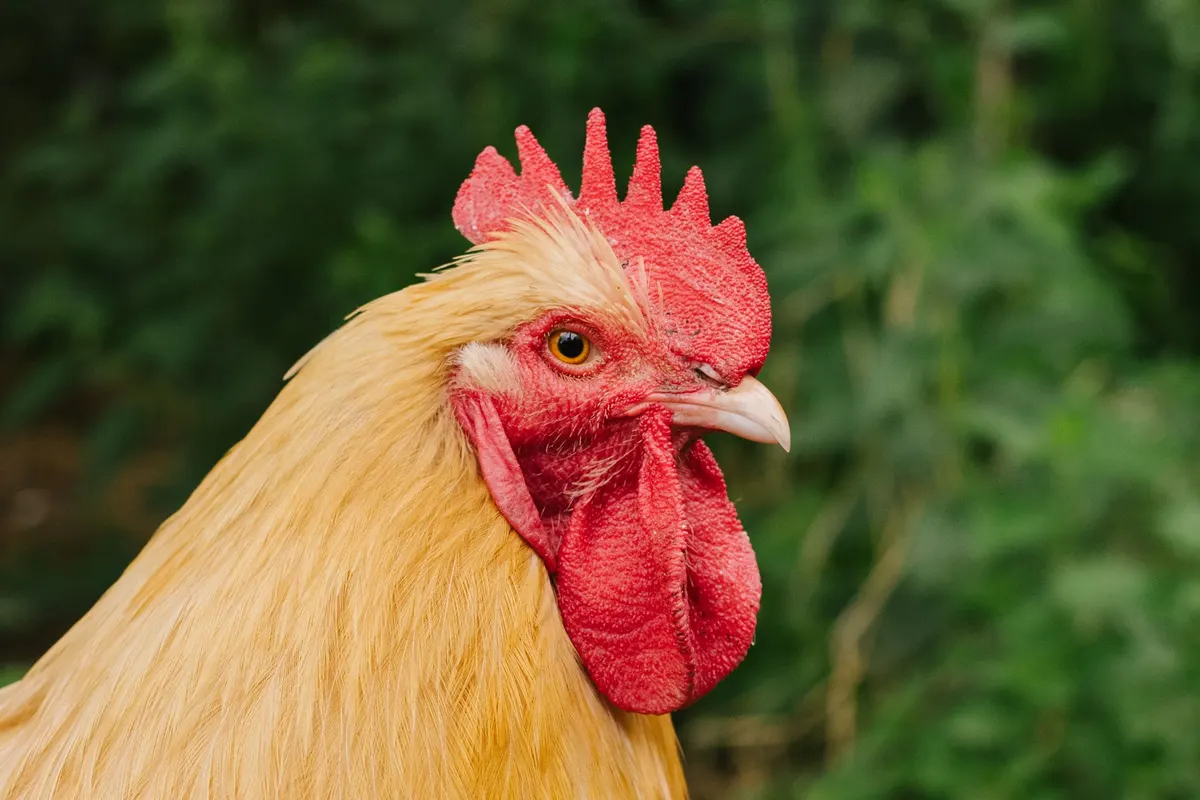
The Orpington is the golden retriever of chickens: calm, friendly, happy to be picked up, superb with children. That's why it is one of the most recommended breeds for family and hobby keeping.
But that gentleness has a cost: in a mixed flock it gets bullied. Dominant breeds — especially the Wyandotte or the RIR — will keep an Orpington off the feeder and pull its feathers. Despite its size, it does not stand up for itself.
Practical advice: keep Orpingtons with calm breeds such as the Brahma, the Australorp or the Silkie. If trouble starts, see our guide to pecking and cannibalism; adding extra feeders and drinkers is the first fix.
Hardiness: Friend of the Cold, Enemy of the Mud
Its dense plumage makes the Orpington very cold-hardy; it keeps laying even through a hard winter. It shares that trait with the Brahma and the Wyandotte.
But the same feathers create two problems:
- Mud and wet: fluffy feathers hold mud and dry slowly once soaked. The coop floor must be kept dry and the area around the drinkers must never stay wet — otherwise skin problems and external parasites take hold under the down.
- Heat: thick feathering plus a big body is a burden in summer. Shade, airflow and cool water are essential.
Care and Housing
- Coop space: 0.5 m² per hen (a large body)
- Run: 2-3 m²; a placid forager
- Perch: low (40-50 cm) — a heavy body bruises its footpad coming down from height (bumblefoot)
- Flying: it can't; a 1-metre fence is enough
- Nest box: wide — it struggles to fit a standard one
- Floor: dry, with deep bedding (not negotiable)
For coop dimensions see how to build a chicken coop, and for vaccination and hygiene our coop biosecurity guide.
Feeding
- Layer feed: 16-18% protein, 130-150 g a day (a large body)
- High risk of fat: a big, placid breed that moves little. Too much corn or table scraps puts fat on fast, and a fat hen stops laying. Give it a run and limit the corn.
- Calcium: in a separate dish
Hatching: A Superb Mother — and a Little-Known Fertility Problem
The Orpington has a strong brooding instinct: it goes broody often and makes an excellent mother. It sits patiently, protects the chicks and raises them well. It is one of the most dependable breeds for natural incubation — not as "chronic" a broody as the Silkie, but with a bigger body, so you can set 10-12 eggs under it.
It is a heavy bird, though, so build the nest with soft, deep bedding to guard against crushed eggs. The details are in our guide to hatching with a broody hen.
A little-known but critical point — fertility: the thick cushion of feathers around the rear of an Orpington (and of other heavily feathered breeds such as the Brahma) forms a physical barrier during mating and lowers the fertility rate. If you're setting eggs from such birds and the hatch rate is poor, the problem may not be your incubator but your breeders.
The fix: trim the feathers around the vent of the breeding cock and hens — tidying a patch of 3-5 cm across with scissors is enough. This is routine practice among serious breeders and lifts fertility noticeably. For the other factors that affect fertility, see our guide on how to improve egg fertility.
In an incubator the period is standard: 21 days, 37.5-37.8 °C, 45-55% humidity, lockdown on day 18. We set out the process in our 21-day incubation guide; to keep the days straight, the Kuluçka Takip app builds the calendar and reminds you of turning and hatch days. You can check out the app here.
Pros and Cons
- + Exceptionally gentle; one of the best breeds for families with children
- + Very cold-hardy; lays through the winter
- + A strong brooding instinct and excellent mothering
- + A large body: serious meat value (dual purpose)
- + Doesn't fly; a low fence is enough
- + A pure breed: you can hatch your own chicks
- − Output collapses in show lines (120-150); always ask about the line
- − Gets bullied in a mixed flock; don't keep it with dominant breeds
- − Dense feathering: mud and wet are a problem, and it struggles in heat
- − Very prone to putting on fat
- − Vent feathering can lower fertility (trimming needed)
Who Is It For?
The Orpington suits you if: you have children and want a calm, affectionate bird; you live somewhere cold; you want to hatch naturally (a strong broody); you want eggs and meat; you keep hobby or ornamental birds.
The Orpington is not for you if: you want maximum eggs → the Lohmann or the Leghorn; you live in a hot climate → the Leghorn; your flock has dominant breeds in it; or you want the same gentleness with more eggs → the Australorp, which is precisely the Orpington re-selected for production.
To compare all the breeds side by side, see our guide to choosing a laying or meat breed.
Frequently Asked Questions
How many eggs does an Orpington lay per year?
It depends on the line: show lines lay 120-150 a year, utility lines 180-250. Always ask which line the stock comes from.
What is the difference between the Orpington and the Australorp?
The Australorp is the Black Orpington re-selected for production in Australia. The Orpington lost its laying ability while being bred for the show ring; the Australorp went on to break the world record in 1922 (364 eggs in 365 days).
Does the Orpington go broody?
Yes — it has a strong brooding instinct, sits often and makes an excellent mother. Its size allows 10-12 eggs under it; because it is heavy, build the nest with soft, deep bedding.
How big is an Orpington?
Cocks reach 4-4.5 kg and hens 3.4-3.6 kg. The fluffy plumage makes the body look even larger than it is.
Why might fertility be low in Orpington eggs?
The thick cushion of feathers around the vent forms a physical barrier during mating. Trimming those feathers on the breeding cock and hens (a patch 3-5 cm across) noticeably improves fertility.
Is the Orpington cold hardy?
Very — and it lays through the winter. But its dense feathers get dirty and soaked in mud, so the coop floor must be kept dry. In hot climates it struggles.
Can Orpingtons be kept in a mixed flock?
Take care: because it is so gentle, dominant breeds (Wyandotte, RIR) will bully it and keep it off the feeder. It does better alongside calm breeds such as the Brahma, the Australorp or the Silkie.
Related Articles
The Australorp: Traits, Egg Production, Productive Life and Care
The record-holding Australorp (364 eggs in 365 days): origin, 250-300 eggs a year, a 4-5 year productive life that outlasts the hybrids, the lifetime-eggs calculation, the summer problem with black plumage, its gentle temperament and how to control broodiness.
The Cochin: The Giant Feathered Breed, Broody Capacity and Care
The Cochin, which set off the Victorian 'Hen Fever' craze and is the ancestor of the Brahma, Orpington and Wyandotte: one of the most reliable broodies (12-15 eggs under one), content in a small space, the bantam as a foster mother for quail and pheasant, and how its feathering affects fertility.
The Wyandotte: Traits, the Rose Comb, Winter Eggs and Care
The Wyandotte's laced plumage, rose comb and cold hardiness: a comb-type frostbite table, laying through winter, its dominant place in the flock, its broodiness and its near-ideal body size for natural incubation.