The Wyandotte: Traits, the Rose Comb, Winter Eggs and Care
The Wyandotte, with its lace-edged feathers, is one of the most striking breeds in the world. But looks aside, what really makes it special sits on its head: the rose comb. That small, close-fitting comb is the genetic answer to a freezing winter — where the Leghorn's big comb risks frostbite, the Wyandotte keeps laying under snow.
Origin and General Traits
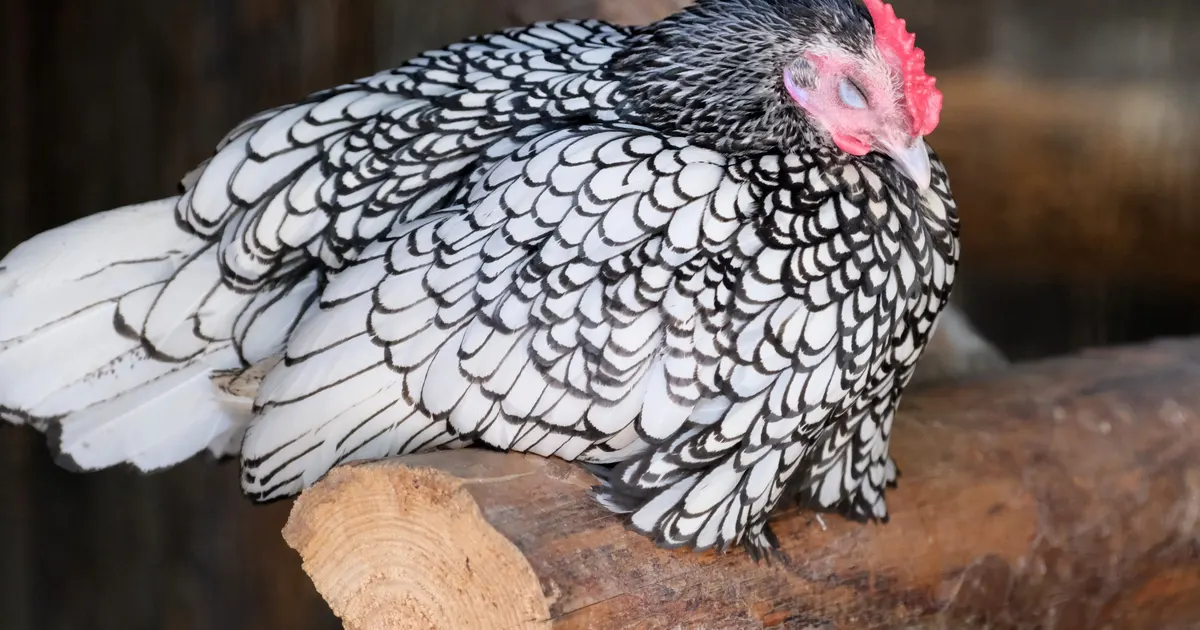
The Wyandotte was one of the first American dual-purpose breeds, developed in the 1870s and named after the Wyandot people. Its original variety — still the most popular — is the Silver Laced: that famous lace pattern where every feather is rimmed in black.
- Cock: 3.9 – 4.5 kg
- Hen: 2.9 – 3.4 kg
- Body: round, stocky, short-legged; dense, fluffy plumage
- Comb: rose comb — small, low, close to the head
- Colour: 17 varieties — Silver Laced, Golden Laced, Blue Laced, Buff, Black, White, Partridge, Columbian, Lavender, Splash…
The Critical Trait: Comb Type and Cold
This is the most overlooked factor in choosing a breed — and the one that matters most in winter. The comb is the chicken's radiator: blood flow through it sheds heat. A big comb is an advantage in summer and an open wound in winter: it goes black with frostbite, hurts, and lowers a cock's fertility.
| Comb type | Example breed | Cold hardiness |
|---|---|---|
| Rose comb (small, flat) | Wyandotte | Very good |
| Pea comb (low, three ridges) | Brahma | Very good |
| Walnut comb (round, solid) | Silkie | Good |
| Single comb (large, upright) | Leghorn, RIR | Poor (frostbite risk) |
If you live somewhere with hard winters, look at the comb when you choose a breed. The Wyandotte's rose comb plus dense plumage makes it one of the safest choices for a cold climate.
Egg Production in Numbers
| Trait | Value |
|---|---|
| Point of lay | 5-6 months |
| Eggs per year | 180-200 |
| Egg weight | 55-60 g |
| Egg colour | Cream / light brown |
| Daily feed intake | 120-140 g |
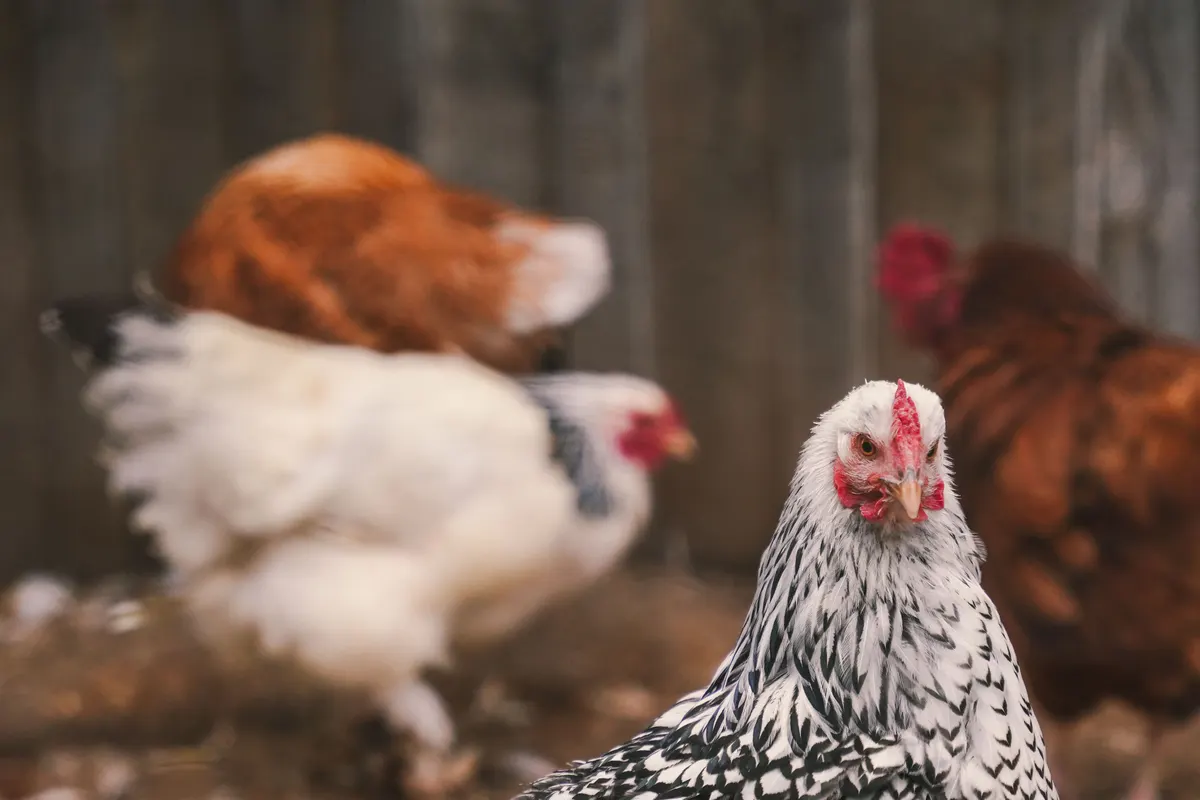
| Winter eggs | Yes — it lays through winter |
The 180-200 figure is far below the Lohmann's 300-320. But there's a catch: most breeds shut down in winter; the Wyandotte doesn't. For a garden keeper with no eggs from December to February, that can matter more than the annual total on paper. The Brahma shares this trait — and both are densely feathered breeds with small combs. That is no coincidence.
Temperament: Friendly to People, Boss of the Flock
The Wyandotte gets on very well with people: calm, docile, happy to be hand-fed. But it has a dominant personality within the flock — it tends to boss the other birds and sits at the top of the pecking order.
The practical consequence: if you're building a mixed flock, be careful keeping a Wyandotte with small, timid breeds such as the Silkie; the weaker birds may not get to the feeder. With breeds of similar standing like the Australorp or the Plymouth Rock, the flock balances out better. If trouble starts, see our guide to pecking and cannibalism.
Care and Housing
- Coop space: 0.4 m² per hen
- Run: 2-3 m²; it is a good forager
- Perch: mid-height (50-60 cm) — a stocky, heavy bird
- Flying: it barely flies; a 1-1.5 m fence is enough
- Summer warning: dense feathers and a small comb are a blessing in winter and a burden in summer. Shade and cool water are essential in the heat.
- Nest boxes: one per 4 hens
For coop dimensions see how to build a chicken coop, and for vaccination and hygiene our coop biosecurity guide.
Feeding
- Layer feed: 16-18% protein, 120-140 g a day
- In winter: cold raises the energy requirement; don't cut the ration of a hen that is laying through the winter
- Calcium: in a separate dish
- Fat: a stocky, placid breed; too much corn or scraps leads to fat and a drop in laying
Hatching: A Good Broody and a Great Mother
The Wyandotte has a moderate-to-strong tendency to go broody and is an excellent mother. It settles easily, sits patiently and protects the chicks. It isn't the "chronic" broody the Silkie is, but nor is it a zero like the Leghorn or the Lohmann — it is a dependable choice for natural incubation.
And because it's bigger than the Silkie, you can set more eggs under it (10-12 chicken eggs). Yet it isn't as heavy as the Brahma, so the risk of crushed eggs is low — it is close to the ideal body size for a broody.
All the detail is in our guide to hatching with a broody hen. In an incubator the period is standard: 21 days, 37.5-37.8 °C, 45-55% humidity, lockdown on day 18. We set out the process in our 21-day incubation guide; to keep the days straight, the Kuluçka Takip app builds the calendar and reminds you of turning and hatch days. You can check out the app here.
The Wyandotte is a pure breed — chicks from your own eggs carry their parents' traits, lace pattern included.
Pros and Cons
- + Rose comb plus dense plumage: outstanding resistance to hard frost
- + Lays through the winter (a rare trait)
- + A good broody and an excellent mother; near-ideal body size for sitting
- + Gets on very well with people; happy to be hand-fed
- + Dual purpose: a 3.9-4.5 kg cock
- + 17 colour varieties; high show and ornamental value
- + A pure breed: you can hatch your own chicks
- − Dominant in the flock: can bully small or timid breeds
- − Low egg output (180-200)
- − Dense plumage is a burden in summer; shade essential in heat
- − A stocky body that puts on fat easily
Who Is It For?
The Wyandotte suits you if: you live somewhere with hard winters and want eggs through them; you want to hatch naturally (a good broody with the right body size); you want a striking, ornamental flock; you want a calm bird you can hand-feed.
The Wyandotte is not for you if: you want maximum eggs → the Lohmann or the Leghorn; you live in a very hot climate → the Leghorn; your flock contains small or timid breeds and you want a peaceful order → the Australorp.
To compare all the breeds side by side, see our guide to choosing a laying or meat breed.
Frequently Asked Questions
How many eggs does a Wyandotte lay per year?
It lays 180-200 cream to light brown eggs a year. The number looks low, but it has a rare virtue: it keeps laying through the winter.
What is a rose comb and why does it matter?
It is a small, low comb that sits close to the head. The comb is the bird’s heat-shedding organ; a large single comb can suffer frostbite in a hard winter, while a rose comb is protected. That is what makes the Wyandotte one of the safest breeds for a cold climate.
Does the Wyandotte lay in winter?
Yes. Thanks to its dense plumage and rose comb it is one of the few breeds that keeps laying through the winter months (the Brahma shares this trait).
What is the Wyandotte’s temperament like?
Calm, docile and friendly with people; it will feed from your hand. But it is dominant within the flock and tends to boss the other birds. Take care when mixing it with small or timid breeds.
Does the Wyandotte go broody?
Yes — it has a moderate-to-strong tendency to sit and makes an excellent mother. Its size is ideal for the job: you can set 10-12 chicken eggs under it, and because it is lighter than a Brahma the risk of crushing them is low.
How big is a Wyandotte?
Cocks reach 3.9-4.5 kg and hens 2.9-3.4 kg. It has a round, stocky, short-legged body.
Is the Wyandotte heat tolerant?
No — its strength is cold. Dense feathers and a small comb are an advantage in winter and a burden in summer. In hot regions shade and cool water are essential; in a very hot climate the Leghorn suits better.
Related Articles
Atak-S Chicken: Traits, Egg Production, Care and Hardiness
The Atak-S's origin (RIR x Plymouth Rock), 260-300 eggs a year, disease resistance, suitability for free-range keeping, its broodiness and day-old chick sexing — a complete breed guide compared with the Lohmann.
Brahma Chicken: Traits, Size, Egg Production and Care
The giant Brahma's origin, its 4.5-5.5 kg size, 150-200 eggs a year, cold hardiness, feathered-leg care, broodiness and hatching — a complete breed guide with pros and cons.
The Orpington: Traits, Show vs Utility Lines, Broodiness and Care
The Orpington's story: bred for utility, ruined for the show ring, and brought back as the Australorp. The show vs utility line gap (120-150 vs 180-250 eggs), the price of being too gentle, its strong broodiness, and how vent feathering lowers fertility.