The Plymouth Rock: Traits, Egg Production and Sex-Link Breeding
The Plymouth Rock, best known in its barred form, is America's most iconic chicken. But its importance runs much deeper than that: this breed is the mother of the world's broiler chickens and of the laying hybrids whose chicks can be sexed on day one.
If the Rhode Island Red is the father of the modern hybrids, the Plymouth Rock is the mother. Put the two together and you get sex-link birds such as Turkey's Atak-S. In this guide we cover the breed's origin, its output, the genetic secret behind its barred feathers, and its care.
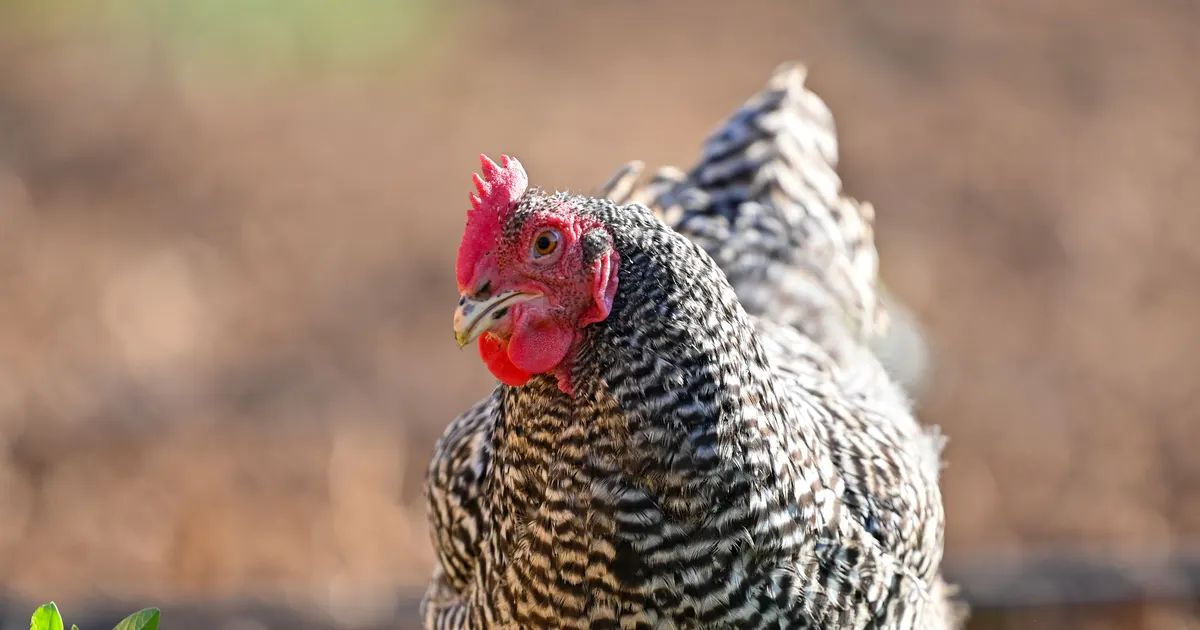
Origin: The Chicken That Fed America
The Plymouth Rock arose in 1800s Massachusetts from crosses of Dominique cocks with black Java and Cochin hens. Through the first half of the 20th century it was America's most common chicken — farms took both their eggs and their meat from this one breed.
- Cock: 4.0 – 4.5 kg
- Hen: 3.0 – 3.5 kg
- Colour: the best known is the Barred variety — black and white cross-bands. There are also white, buff, blue, silver-pencilled and columbian varieties (seven in all).
- Lifespan: 8-10 years (a long-lived breed)
Egg Production in Numbers
| Trait | Value |
|---|---|
| Point of lay | 5-6 months |
| Eggs per year | ~200 (about 4 a week) |
| Egg weight | 55-60 g |
| Egg colour | Light to dark brown |
| Daily feed intake | 120-140 g |
| For meat | Cocks 4-4.5 kg → good meat value |
The numbers sit a little below the RIR's (250-300), but the body is bigger and the temperament calmer. It is the classic dual-purpose breed: neither a production machine like the Leghorn nor an ornamental giant like the Brahma — a balanced working hen between the two.
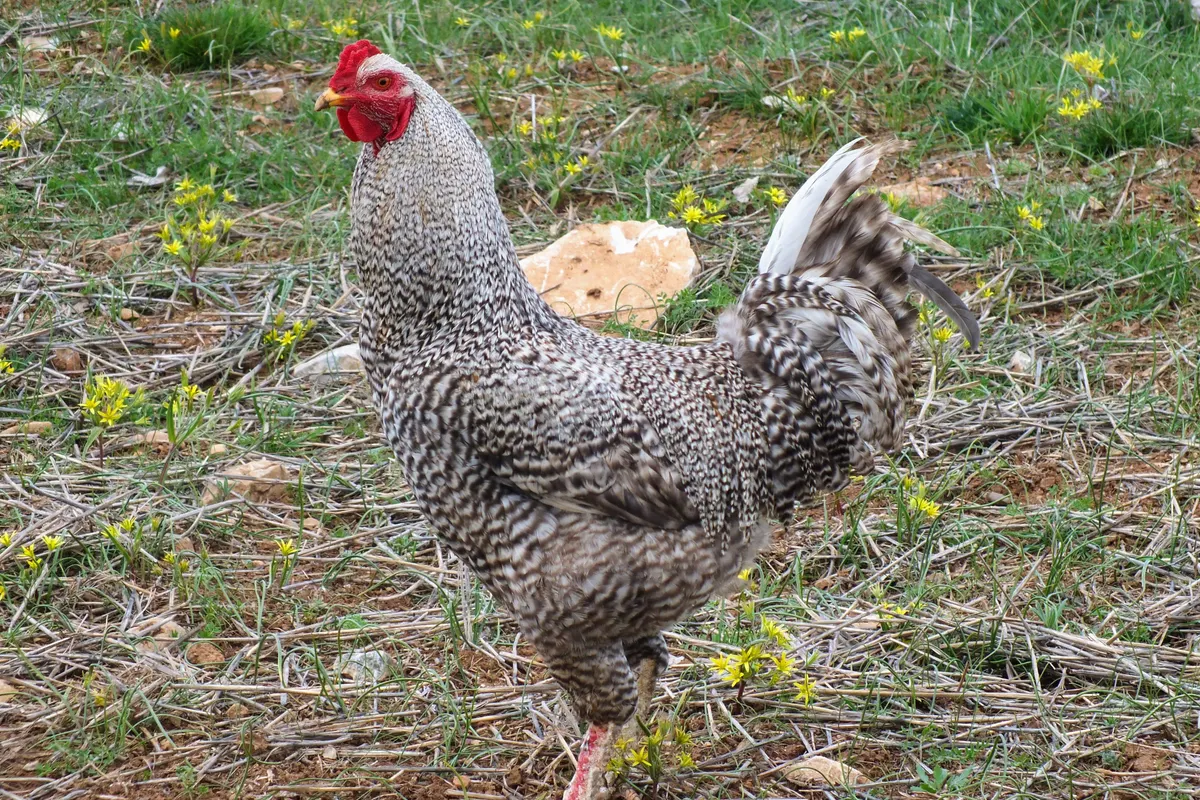
The Genetic Secret: The Barring Gene Is Sex-Linked
This is what makes the Plymouth Rock far more valuable than an ordinary breed. The barred feather pattern (the barring gene) is carried on the sex chromosome in chickens. The practical consequence:
From a Barred Plymouth Rock hen × RIR cock mating:
- Male chicks inherit the barring gene from their mother → they carry a light spot on the head
- Female chicks don't inherit it → they stay solid black
So the chicks can be sorted by sex on the day they hatch, just by looking. That is how the commercial "black sex-link" hybrids are made, and Turkey's Atak-S is exactly this cross. For detail see our guide on how to tell a chick's sex.
Careful — direction matters: for the cross to work, the mother must be barred (Rock) and the father solid-coloured (RIR). Reverse it (barred cock × solid hen) and every chick comes out barred, with no way to read the sex.
A Second Genetic Legacy: The World's Broilers
The white variety (White Rock) is the female line of almost every broiler chicken produced in the world today. The commercial broiler formula is simple:
Cornish cock × White Plymouth Rock hen = broiler
The Cornish brings the broad breast and muscling; the White Rock brings growth rate, body size and fertility. Behind the chicken meat you buy in a shop stands a Plymouth Rock mother.
So this one breed is the mother of both the laying hybrids (sex-links) and the meat birds (broilers). Together with the RIR, the two form the genetic foundation of modern poultry keeping.
Temperament and Hardiness
The Plymouth Rock is calm, docile and quick to get used to people. It is curious but not flighty; it walks about confidently and doesn't panic. It's a good choice for households with children and for mixed flocks — a clear advantage next to the RIR's aggressive cocks.
Climate: it is cold-hardy (dense feathering, solid body). But heat is the greater risk for it — unlike the Leghorn it has no large comb to shed warmth. In summer, provide shade, airflow and cool water.
Care and Housing
- Coop space: 0.4 m² per hen (a large body)
- Run: 2-3 m²; it is a good forager and likes to range
- Perch: mid-height (50-60 cm) — a heavy bird struggles coming down from high up
- Flying: too heavy to fly much; a 1-1.5 m fence is enough
- Nest boxes: one per 4 hens
For coop dimensions see how to build a chicken coop, and for vaccination and hygiene our coop biosecurity guide.
Feeding
- Layer feed: 16-18% protein, 120-140 g a day
- Calcium: in a separate dish — large eggs need a thick shell
- Grit: needed for a ranging bird
- Risk of fat: a big, placid breed; too much corn or scraps leads to fat and a drop in laying. Give it a run.
Hatching: It Goes Broody Occasionally
The Plymouth Rock goes broody now and then and makes a good mother — unlike commercial hybrids, its brooding instinct hasn't been bred out entirely. It isn't as reliable a broody as the Silkie, but nor is it zero like the Leghorn.
For natural incubation, see our guide to hatching with a broody hen. In an incubator the period is standard: 21 days, 37.5-37.8 °C, 45-55% humidity, lockdown on day 18. We set out the process in our 21-day incubation guide; to keep the days straight, the Kuluçka Takip app builds the calendar and reminds you of turning and hatch days. You can check out the app here.
Important: the Plymouth Rock is a pure breed, so chicks from your own eggs carry their parents' traits. But the sex-link chicks from a Rock × RIR cross are F1: breed them among themselves and both the colour-sexing rule and the output scatter. To produce sex-links you must go back to a pure Rock hen and a pure RIR cock each time.
Pros and Cons
- + A balanced dual-purpose bird: ~200 eggs plus a 4-4.5 kg cock
- + The barring gene makes it ideal for breeding sex-links (chick sex readable on day one)
- + Calm, docile, tames easily; good with children and in mixed flocks
- + Cold-hardy, robust and long-lived (8-10 years)
- + Goes broody occasionally → natural incubation is possible
- + A pure breed: you can hatch your own chicks
- − Weak in heat; shade and ventilation are essential in summer
- − Egg output below the Leghorn and the Lohmann
- − A large body: eats a lot and puts on fat easily
- − The sex-link cross only works one way (the mother must be barred); reversing it fails
Who Is It For?
The Plymouth Rock suits you if: you want both eggs and meat; you want a calm flock you can hand-feed; you live somewhere cold; you want to breed your own sex-link chicks (sex readable on day one); you want to keep your own breeding stock going.
The Plymouth Rock is not for you if: you want maximum eggs → the Leghorn or the Lohmann; you live in a very hot climate → the Leghorn; you want a guaranteed broody → the Silkie; you want long-run output → the Australorp.
To compare all the breeds side by side, see our guide to choosing a laying or meat breed.
Frequently Asked Questions
How many eggs does a Plymouth Rock lay per year?
It lays about 200 brown eggs a year (55-60 g) — roughly 4 a week. It is dual purpose: cocks reach 4-4.5 kg, so it also gives good meat.
How do you breed sex-link chicks with a Barred Plymouth Rock?
Mate a Barred Plymouth Rock hen with a RIR cock. The male chicks inherit the barring gene from their mother and hatch with a light head spot; the females come out solid black. Sex is readable on day one.
Why must the mother be the barred bird in a sex-link cross?
The barring gene sits on the sex chromosome. The mother must be barred and the father solid-coloured. Reverse it (barred cock × solid hen) and every chick is barred, so the sex cannot be read.
What is the Plymouth Rock’s connection to broiler chickens?
The White Plymouth Rock is the female line of the world’s commercial broilers: a Cornish cock × White Rock hen is the standard broiler formula.
Does the Plymouth Rock go broody?
Occasionally, and it makes a good mother; its brooding instinct hasn’t been bred out as it has in commercial hybrids. For a guaranteed broody, the Silkie is the better bird.
Is the Plymouth Rock heat tolerant?
It is cold-hardy, but heat is a risk for it — it has no large comb to shed warmth. In summer it needs shade, airflow and cool water.
What is the Plymouth Rock’s temperament like?
Calm, docile and quick to tame; curious but not flighty. A good fit for households with children and for mixed flocks.
Related Articles
Rhode Island Red: Traits, Egg Production, Care and Sex-Link Breeding
The Rhode Island Red, genetic ancestor of the modern laying hybrids: origin, 250-300 eggs a year, dual-purpose body, hardiness, rooster aggression, the heritage vs production line difference, and breeding sex-link chicks with a RIR.
Atak-S Chicken: Traits, Egg Production, Care and Hardiness
The Atak-S's origin (RIR x Plymouth Rock), 260-300 eggs a year, disease resistance, suitability for free-range keeping, its broodiness and day-old chick sexing — a complete breed guide compared with the Lohmann.
The Leghorn Chicken: Traits, Egg Production, Feed Efficiency and Care
The Leghorn, ancestor of the white egg: origin, 280-320 eggs a year, the lowest feed intake of any breed, the earlobe-egg colour rule, its ability to clear a 2-3 m fence, comb frostbite risk, and why it never goes broody.