The Barnevelder: Winter Eggs, a Dark Shell and Double Lacing
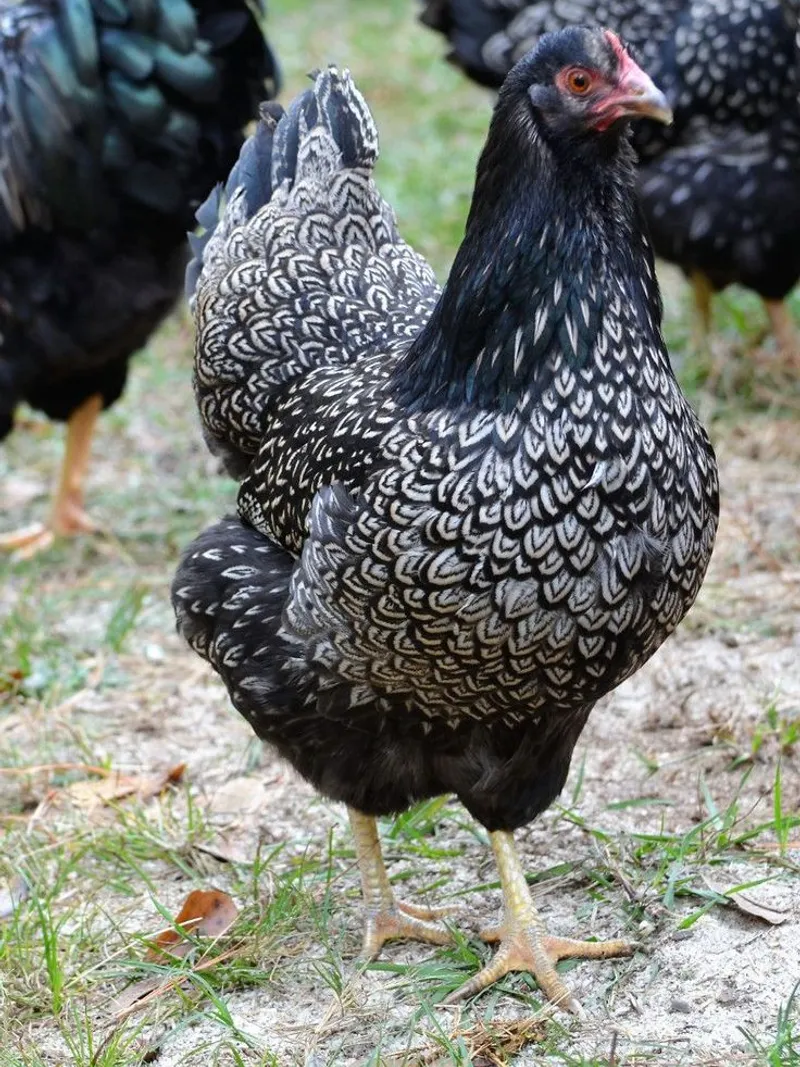
The Barnevelder carries one of the most elegant feather patterns in the poultry world: each feather has a copper centre framed by two black rings — the so-called "double-laced" pattern. In sunlight it throws off iridescent green, purple and bronze.
But what really makes the Barnevelder valuable isn't its looks; it's an ability: it keeps laying through the winter. That is precisely what the breed was created for.
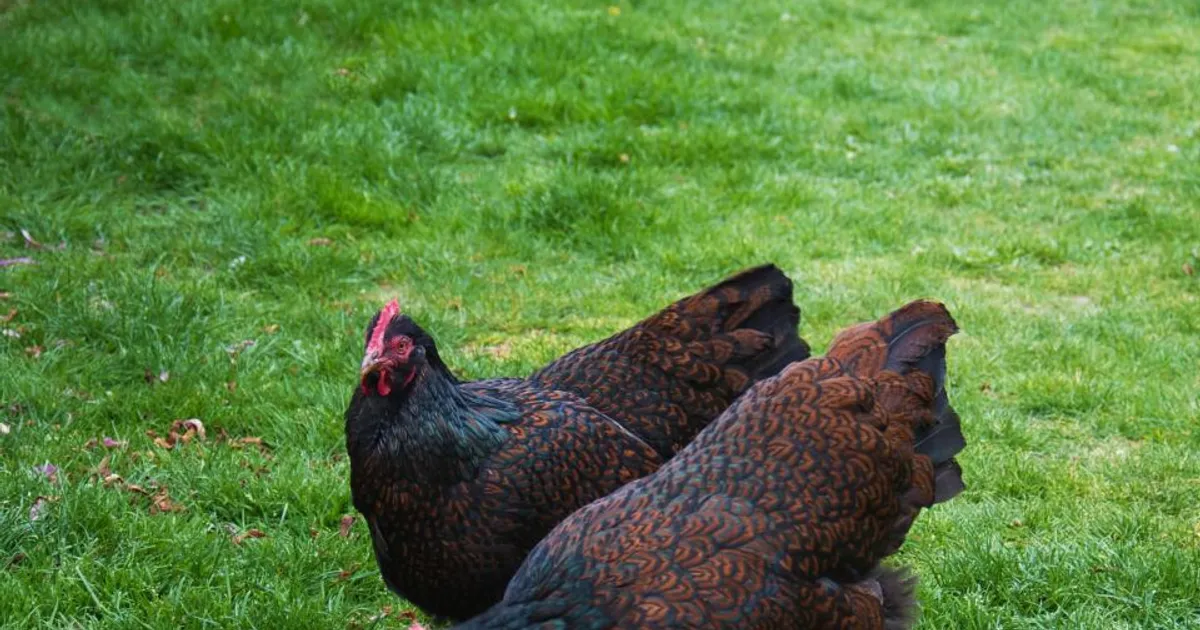
Origin: The Product of a Market Demand
The Barnevelder comes from the Dutch town of Barneveld. The reason it was created in the early 1900s was entirely concrete: the British market wanted dark brown eggs, and Dutch producers went looking for a hen that could supply them.
Local Dutch fowl were crossed with the large Asian imports (Cochin, Brahma, Langshan) and with the Wyandotte. The result: a calm farm hen laying a dark egg and standing up to winter. It comes from the same era and the same country as the Welsummer — the two are Holland's dark-egg siblings.
- Cock: ~3.5 kg
- Hen: 2.75 – 3.0 kg
- Pattern: double-laced partridge is the famous one; silver, blue and black varieties also exist
- Comb: single
- Temperament: very docile, calm, quiet
The Egg in Numbers
| Trait | Value |
|---|---|
| Point of lay | 5-6 months |
| Eggs per year | 180-200 |
| Egg weight | 60-70 g (large) |
| Egg colour | Dark brown |
| Daily feed intake | 120-130 g |
| Winter eggs | Yes — its signature trait |
The egg isn't as dark as the Marans', but it is markedly deeper than an ordinary brown egg. The rule from our Marans guide applies here too: the pigment sits on the surface of the shell, so washing strips it, and the colour fades over the season (resetting dark after the moult).
The Real Subject: Why Do Hens Stop Laying in Winter?
This is the question every garden keeper asks in December. The answer isn't feed — it's light.
A hen's laying cycle is triggered by light entering the eye. Glands in the brain measure the length of the day and release the hormones that set laying in motion. For that mechanism to work, the bird needs 14-16 hours of light a day.
In midwinter, daylight can drop to 9-10 hours. Hormone production slows, and egg production falls or stops altogether. On top of that comes the moult — regrowing feathers takes a great deal of protein, and the hen takes that energy straight out of egg production.
The fixes:
- Coop lighting: use a lamp in the early morning (that is, before natural daylight) to top the total up to 14-16 hours. Prefer morning light over evening light: if the evening light cuts out suddenly, the hens are left in the dark before they can get up onto the perch.
- Choosing the right breed: some breeds carry on laying through winter — that is the permanent solution.
Which Breeds Lay Through Winter?
| Breed | Winter performance | Why |
|---|---|---|
| Barnevelder | Very good | Bred for winter output |
| Wyandotte | Very good | Rose comb plus dense plumage |
| Brahma | Very good | Pea comb plus dense plumage |
| Orpington | Good | Dense feathering |
| Sussex | Good | Tight feathering, robust build |
| Leghorn | Poor | Large comb freezes, light body |
| Lohmann | Poor (without light) | A controlled-coop, lit-shed bird |
A pattern jumps out: every breed that lays through winter is densely feathered with a small comb. A hen that can hold its body heat can put energy into eggs. A hen losing heat through a big comb and thin feathering puts everything into staying alive. The comb-type table is in our Wyandotte guide.
For the other factors behind laying, see when hens lay, and for the season's effect on hatching, our guide to incubating in summer and winter.
Temperament: Quiet and Town-Friendly
The Barnevelder is very docile, calm and quiet. It isn't noisy, doesn't panic and takes to people quickly. It also tolerates a smaller run — it is not hyperactive like the Leghorn or the Welsummer.
Those three traits together (quiet, calm, tolerant of confinement) make it one of the best breeds for a town garden. The risk of a complaint from the neighbours is low. The Cochin offers the same advantage, but lays far fewer eggs.
Care and Housing
- Coop space: 0.4 m² per hen
- Run: 1-2 m² is enough (it tolerates confinement); bigger is still better
- Flying: a heavy body; it barely flies, and a 1.5 m fence is enough
- Damp: having been developed in the Dutch climate, it handles damp cold better than most — though the coop must still be kept dry
- Comb: single; in a severe winter a cock's comb risks frostbite (petroleum jelly helps)
- Nest boxes: one per 4 hens
For coop dimensions see how to build a chicken coop, and for vaccination and hygiene our coop biosecurity guide.
Hatching: It Rarely Goes Broody
Because it was selected for production, the Barnevelder's brooding instinct has largely been bred out: it rarely goes broody. When it does it makes a good mother, but you can't rely on it.
So if you want Barnevelder chicks you need an incubator (or a Silkie or Cochin in the flock).
The period is standard: 21 days, 37.5-37.8 °C, 45-55% humidity, lockdown on day 18. The dark shell makes candling a little harder, though nothing like the Marans; a strong LED in complete darkness does the job (see our candling guide).
We set out the process in our 21-day incubation guide; to keep the days straight, the Kuluçka Takip app builds the calendar and reminds you of turning and hatch days. You can check out the app here.
The Barnevelder is a pure breed — chicks from your own eggs carry the breed's traits, double lacing included.
Pros and Cons
- + Lays through the winter — its real distinction
- + Dark brown, large eggs (60-70 g); 180-200 a year
- + Double lacing: among the most elegant plumage in poultry
- + Very docile, calm and quiet → ideal for a town garden
- + Tolerates confinement; copes with damp cold
- + Easy to keep and robust
- + A pure breed: you can hatch your own chicks
- − Rarely broody → an incubator is needed
- − Moderate output (below the Lohmann and the Leghorn)
- − Single comb: frostbite risk in a severe winter
- − Washing a dark egg strips its colour; the colour fades over the season
Who Is It For?
The Barnevelder suits you if: you want eggs through the winter; you like a dark brown egg; you're in a town or a small garden and need a quiet, calm flock; you want a spectacular bird that is nonetheless undemanding; you're building a basket of coloured eggs (Barnevelder + Welsummer + a blue-egg breed + Leghorn).
The Barnevelder is not for you if: you want maximum eggs → the Lohmann; you want a broody mother → the Silkie or the Cochin; you want the darkest egg of all → the Marans; you want meat too → the Sussex or the Plymouth Rock.
To compare all the breeds side by side, see our guide to choosing a laying or meat breed.
Frequently Asked Questions
How many eggs does a Barnevelder lay per year?
It lays 180-200 dark brown eggs a year (60-70 g). Its great advantage is that, unlike most breeds, it keeps laying through the winter months.
Why do hens stop laying in winter?
The reason isn’t feed, it’s light. The laying cycle is triggered by light entering the eye, and it needs 14-16 hours of daylight. When winter daylight drops to 9-10 hours, hormone production slows and laying stops. The moult also draws energy away from eggs.
What can you do to get eggs in winter?
Two things: (1) light the coop early in the morning to top the total up to 14-16 hours (choose morning light over evening — otherwise the hens are caught in the dark before they can perch); (2) choose a breed that lays in winter, such as the Barnevelder, Wyandotte, Brahma or Orpington.
How dark is a Barnevelder egg?
Dark brown — not chocolate like the Marans, but markedly deeper than an ordinary brown egg. The colour fades over the season and goes dark again after the moult.
Does the Barnevelder go broody?
Rarely. Selected for production, it has largely lost the brooding instinct. If you want chicks you need an incubator (or a Silkie or Cochin in the flock).
Is the Barnevelder suitable for a town garden?
Very. It is quiet, calm and tolerant of confinement, so the risk of complaints is low. The Cochin offers the same advantage but lays far fewer eggs.
What is double lacing?
It means each feather has a copper centre framed by two black rings. In sunlight it throws off iridescent green, purple and bronze; it is considered one of the most elegant patterns in poultry.
Related Articles
The Marans: The Chocolate Egg, Shell Pigment and Hatching Guide
The Marans, layer of the world's darkest egg: how shell colour is made (protoporphyrin IX), why the colour fades over the season, why dark eggs must not be washed, which breed lays which colour, and why a dark shell makes candling nearly impossible.
The Leghorn Chicken: Traits, Egg Production, Feed Efficiency and Care
The Leghorn, ancestor of the white egg: origin, 280-320 eggs a year, the lowest feed intake of any breed, the earlobe-egg colour rule, its ability to clear a 2-3 m fence, comb frostbite risk, and why it never goes broody.
The Wyandotte: Traits, the Rose Comb, Winter Eggs and Care
The Wyandotte's laced plumage, rose comb and cold hardiness: a comb-type frostbite table, laying through winter, its dominant place in the flock, its broodiness and its near-ideal body size for natural incubation.