The Marans: The Chocolate Egg, Shell Pigment and Hatching Guide
The Marans lays the darkest egg in the world. Its shell is as dark as chocolate, almost red-brown — put one beside an ordinary brown egg and you'd think they came from different species. Even James Bond's insistence on Marans eggs in Ian Fleming's novels is part of that fame.
But the Marans is more than a beautiful egg. In this guide we cover the breed's origin, output and care — and explain how eggshell colour is actually made, and the very particular problem a dark shell creates in the incubator.
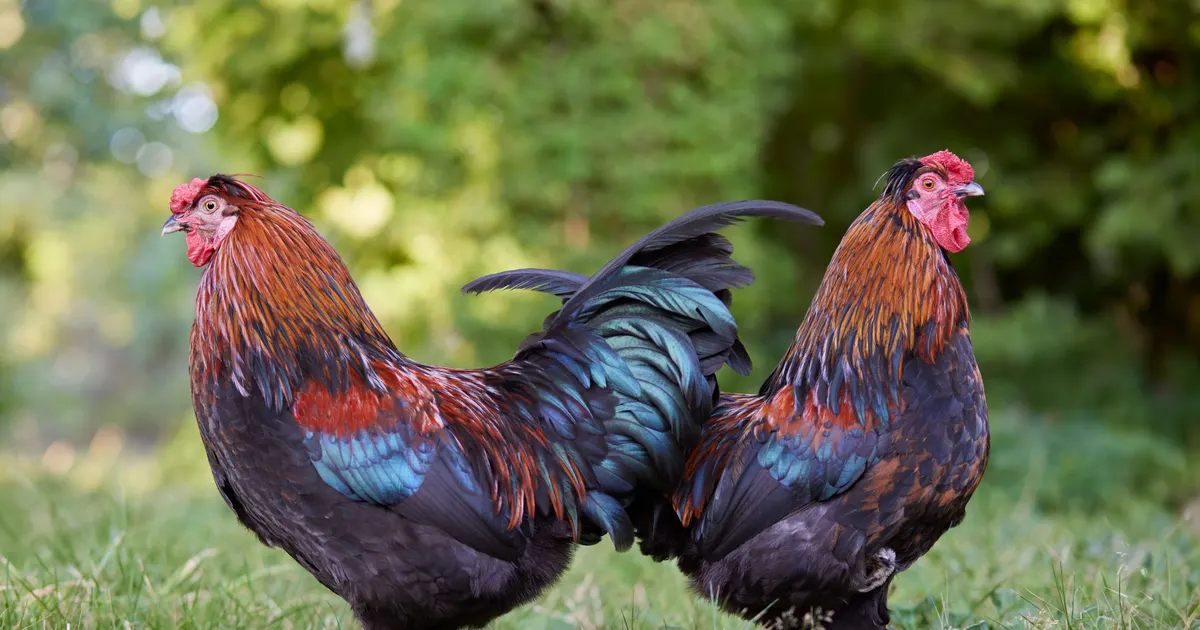
Origin and General Traits
The Marans comes from the port town of Marans on France's Atlantic coast. It arose in the 19th century from crosses of local marsh fowl with Asian game birds brought in by ship. It is now one of France's proudest breeds.
- Cock: 3.5 – 4.0 kg
- Hen: 2.5 – 3.0 kg
- Varieties: Black Copper (the most famous), Cuckoo, Wheaten, Black, White
- Temperament: calm, active, intelligent; a good forager
- Legs: lightly feathered in the French standard, clean-legged in the English
The Egg in Numbers
| Trait | Value |
|---|---|
| Point of lay | 6-7 months (late) |
| Eggs per year | 150-200 |
| Egg weight | 60-65 g (large) |
| Egg colour | Dark chocolate / red-brown |
| Daily feed intake | 120-130 g |
Output is low — about half the Lohmann's. You don't keep a Marans for the number of eggs but for their quality and colour. The French Marans Club grades shell colour on a scale of 1 to 9; to count as standard, an egg must reach at least level 4.
How Is Eggshell Colour Made?
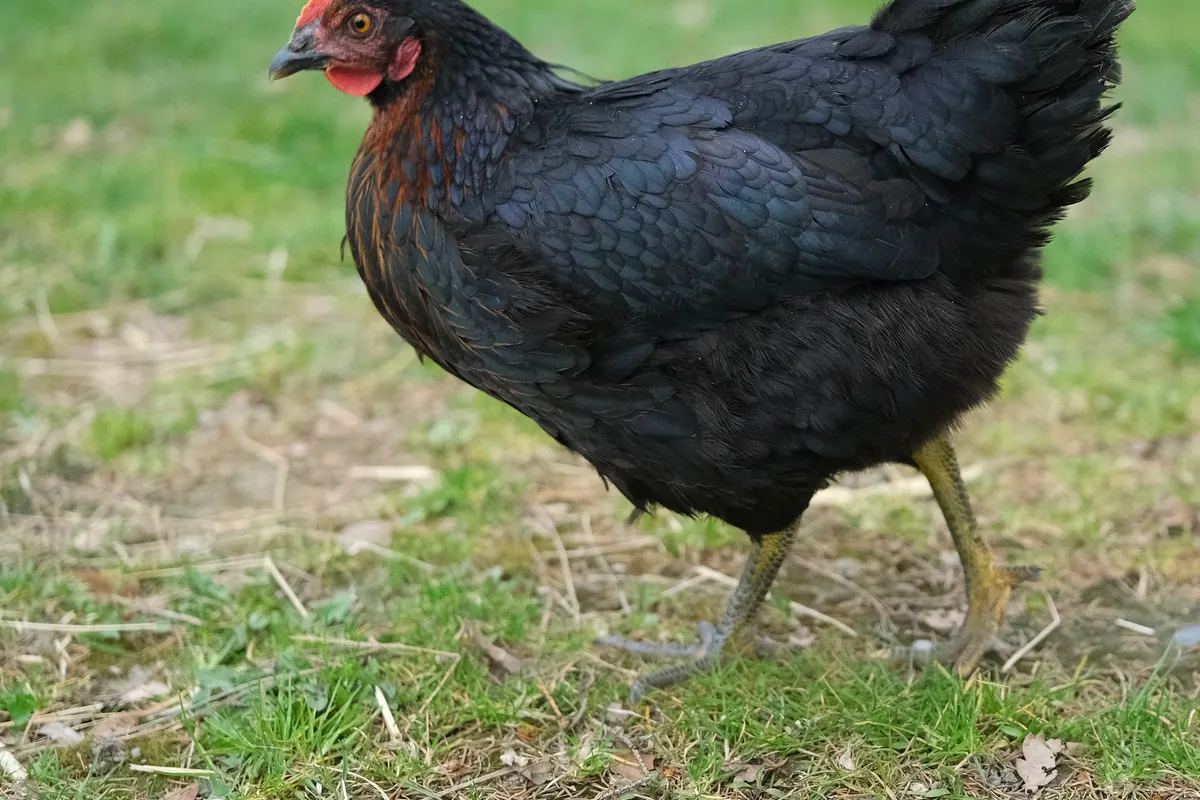
This is one of the most misunderstood subjects in poultry keeping. The truth:
Brown pigment sits on top of the shell, not inside it. Once the shell is fully formed in the oviduct, a pigment called protoporphyrin IX is applied to its outside at the very last stage. That pigment is a relative of haem, the molecule that makes our blood red.
Breeds like the Marans (and the Spanish Penedesenca) lay down an unusually thick coat of it — which is where the chocolate colour comes from.
That has three practical consequences:
- Don't wash a dark egg. The pigment is on the surface; rub it with a wet cloth and the colour comes off, exposing a paler shell underneath. (Hatching eggs shouldn't be washed anyway — see our guide to selecting and storing hatching eggs.)
- Blue eggs are different. Blue pigment (oocyanin) permeates the whole thickness of the shell — scratch a blue egg and it's still blue inside. Scratch a brown one and you find white.
- The colour fades over the season. A Marans hen's first eggs are her darkest; as the laying cycle goes on, her pigment reserves run down and the colour lightens. After the moult it resets to dark. So don't panic when the colour drops — it's normal.
Which Breed Lays Which Colour?
| Egg colour | Breed | Earlobe |
|---|---|---|
| White | Leghorn, Ancona | White |
| Cream / light brown | Sussex, Wyandotte, Orpington | Red |
| Brown | RIR, Lohmann, Plymouth Rock | Red |
| Dark chocolate | Marans, Penedesenca, Welsummer | Red |
| Blue / green | Araucana, Ameraucana, Easter Egger | Varies |
Note: the "earlobe rule" (white lobes → white eggs) we explained in our Leghorn guide does not hold for the blue-egg breeds; blue comes from a separate gene.
The Critical Problem in Incubation: A Dark Shell Cannot Be Candled
This is the single most important thing to know before you set Marans eggs. A dark shell doesn't let light through. In an ordinary chicken egg you can see the vein network easily on day 7; in a Marans egg even a powerful candling lamp struggles to give you a clear image.
We meet the same problem with quail eggs, because of their speckled shells. The practical consequences:
- Select the eggs well from the start. Because you can't cull along the way, only set clean, uncracked, fresh eggs.
- Use a strong, narrow-beam LED candler and try in complete darkness. Shining the light through the blunt end rather than the pointed one sometimes works.
- Try to follow the air cell. Even when the embryo is invisible, the boundary of the air cell can often be made out through a dark shell — and that tells you whether your humidity is right.
- Use smell and weight instead. Remove any egg that smells or stays noticeably light.
For the full detail see our candling guide, and for the period and settings our 21-day incubation guide. The period is standard: 21 days, 37.5-37.8 °C, 45-55% humidity, lockdown on day 18. To keep the days straight, the Kuluçka Takip app builds the calendar for you. You can check out the app here.
Care, Temperament and Hardiness
The Marans is calm, active and intelligent; it forages well and likes to range. In the flock it is neither a bully nor a victim. It is cold-hardy and robust.
- Coop space: 0.4 m² per hen
- Run: 2-3 m²; a capable forager
- Feathered legs (French line): the floor must be kept dry — in mud the leg feathers become prone to fungus and scaly leg mite (the same problem as in the Brahma)
- Perch: mid-height (50-60 cm)
- Nest boxes: one per 4 hens
For coop dimensions see how to build a chicken coop, and for vaccination and hygiene our coop biosecurity guide.
Hatching and Breeding
The Marans goes broody moderately; it is not a guaranteed broody mother (the Silkie is the bird for that).
The critical point when breeding: the dark egg colour is produced by many genes acting together and it is easily lost. Cross a Marans with another breed and the resulting hens lay noticeably paler eggs. To keep the colour you must breed pure line — and selecting breeders from the hens that lay the darkest eggs is the whole basis of improving the breed.
The Marans is a pure breed: chicks from your own eggs (if you used pure stock) carry the breed's traits.
Pros and Cons
- + The darkest, most striking egg in the world
- + Large eggs (60-65 g) with a thick, strong shell
- + Calm, intelligent, a good forager; balanced in the flock
- + Cold-hardy and robust
- + A pure breed: you can hatch your own chicks
- + Dual purpose: its meat is highly prized in France
- − Low egg output (150-200) and a late start (6-7 months)
- − The dark shell makes candling all but impossible
- − The colour fades over the season (normal, but it needs expectation management)
- − Washing a dark egg strips its colour
- − Crossbreeding loses the dark colour; pure stock is essential
Who Is It For?
The Marans suits you if: the look of the egg matters more than the count; you're a collector or hobbyist; you want a basket of coloured eggs (Marans + Leghorn + a blue-egg breed gives you dark, white and blue); you live somewhere cold; you want a calm flock.
The Marans is not for you if: you want maximum eggs → the Lohmann or the Leghorn; you rely on candling to cull eggs during incubation and don't want to give that up; you want a guaranteed broody → the Silkie; you want one balanced all-rounder → the Sussex.
To compare all the breeds side by side, see our guide to choosing a laying or meat breed.
Frequently Asked Questions
How many eggs does a Marans lay per year?
It lays 150-200 dark chocolate eggs a year (60-65 g) and starts at 6-7 months. You keep a Marans for the colour and quality of the egg, not the count.
Why is a Marans egg so dark?
After the shell forms, a pigment called protoporphyrin IX is applied to its surface. The Marans lays down an unusually thick coat of it, which gives the chocolate colour. The pigment sits on the surface — scratch it and a paler shell shows underneath.
Why is my Marans egg getting lighter?
That is normal. A hen’s first eggs are her darkest; as the laying cycle goes on her pigment reserves run down and the colour lightens. After the moult it goes dark again.
Should dark eggs be washed?
No. The pigment is on the surface of the shell and a wet cloth rubs it off. Hatching eggs should never be washed in any case — it destroys the protective cuticle.
Can Marans eggs be candled?
Only with great difficulty. The dark shell blocks light, so seeing the vein network is nearly impossible. Try a strong, narrow-beam LED candler in total darkness; the boundary of the air cell can sometimes be made out. Selecting good eggs from the start is critical.
What happens to the egg colour if you crossbreed a Marans?
It lightens. The dark colour comes from many genes working together and is easily lost in a cross. Pure-line breeding is essential to keep it.
What is the difference between blue and brown eggs?
Brown pigment (protoporphyrin) sits only on the shell surface — scratch it and the shell is white underneath. Blue pigment (oocyanin) permeates the whole shell, so a scratched blue egg is still blue.
Related Articles
The Leghorn Chicken: Traits, Egg Production, Feed Efficiency and Care
The Leghorn, ancestor of the white egg: origin, 280-320 eggs a year, the lowest feed intake of any breed, the earlobe-egg colour rule, its ability to clear a 2-3 m fence, comb frostbite risk, and why it never goes broody.
The Barnevelder: Winter Eggs, a Dark Shell and Double Lacing
The Barnevelder, which lays through winter: why hens stop laying in the cold (the 14-16 hour light rule), coop lighting, a table of breeds that lay in winter, the dark brown egg and the double-laced pattern.
How to Recognize a Broody Hen: The Guide to Hatching Chicks Naturally
How to recognize a broody hen, how many eggs to set under her and how to manage 21 days of natural incubation. Nest setup, post-hatch care and incubator comparison.