The Sussex: Traits, Egg Production, Foraging Power and Care
The Sussex is poultry's great all-rounder. It is not first in any single category — it doesn't lay as much as the Lohmann, isn't as big as the Brahma, doesn't eat as little as the Leghorn. But it comes second in all of them — and wins on the total. That is why it is the dual-purpose breed most often recommended to beginners.
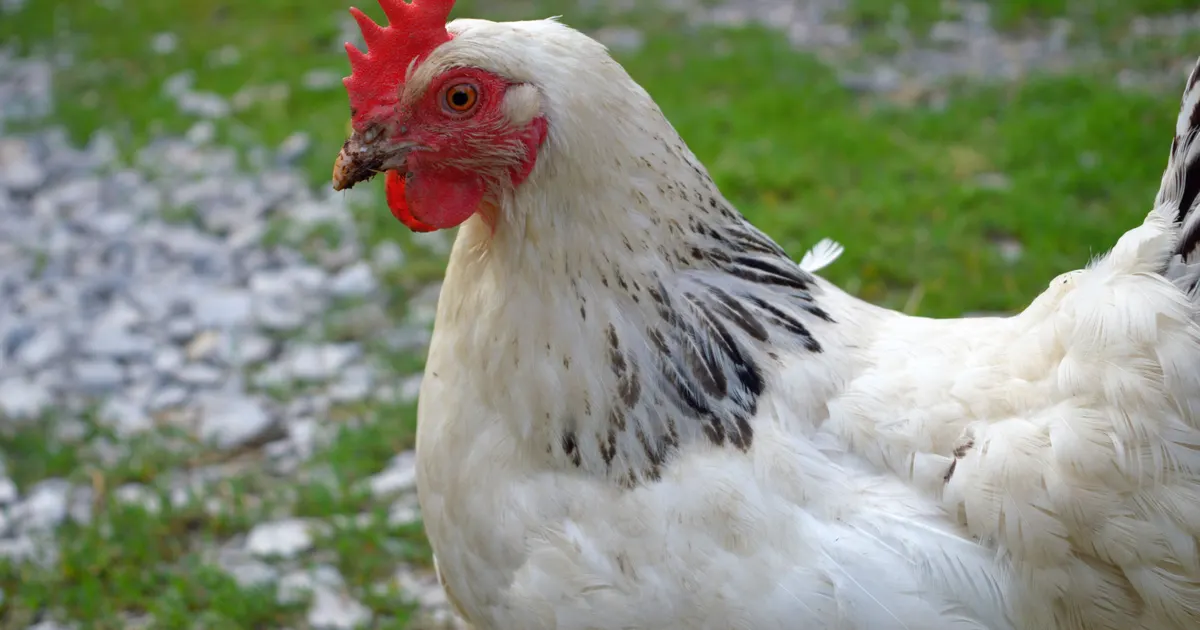
Origin: Britain's Oldest Chicken
The Sussex takes its name from the English county of Sussex and is one of Britain's oldest breeds — its origins are thought to reach back to Roman times. Before the broiler industry existed, the table bird sent to the London markets was the Sussex.
Its best-known variety is the Light Sussex: a white body with a black neck hackle and black tail (the columbian pattern). There are also Speckled, Red, Buff, Silver and Coronation varieties.
- Cock: 4.0 – 4.5 kg
- Hen: 3.0 – 3.5 kg
- Temperament: calm, curious, people-oriented — it will follow you round the garden
- Feathers: dense and tight; good in the cold
Egg Production in Numbers
| Trait | Value |
|---|---|
| Point of lay | 4.5-5 months (early) |
| Eggs per year | 180-200 (up to 250 in layer strains) |
| Egg weight | 55-65 g |
| Egg colour | Cream / light brown |
| Daily feed intake | 120-130 g |
| Persistence | 3-4 years without a marked drop |
| Winter eggs | Yes, it lays through winter |
That table is why the Sussex is special: it starts early, lays plenty, keeps going for years and doesn't stop in winter. Where commercial hybrids are spent after their second year, the Sussex holds up for three or four — one of the strongest illustrations of the "lifetime eggs" argument we made in our Australorp guide.
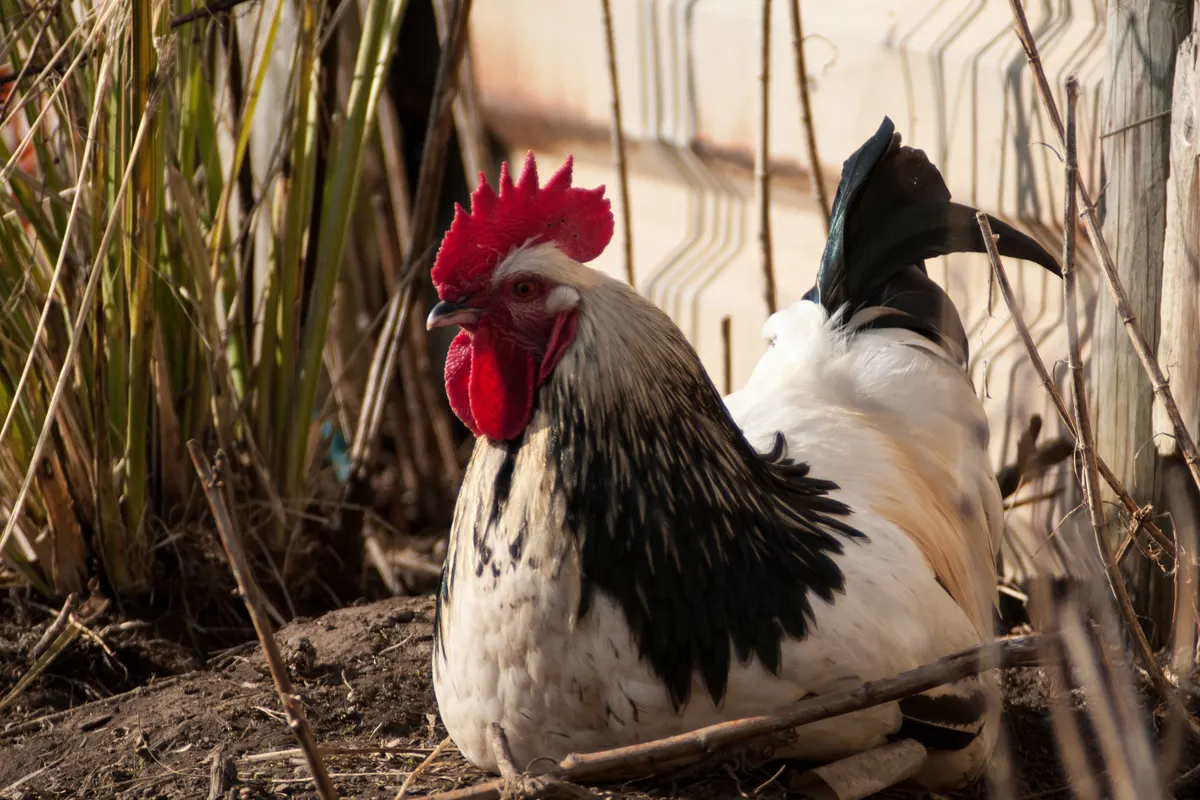
Its Real Superpower: Foraging
Of all the breeds on this site, the Sussex is the best forager. It scratches the ground all day, hunts insects and worms and eats greens. A Sussex flock with room to range cuts your feed bill noticeably.
That matters economically. The Leghorn has the best feed conversion on paper (100-110 g a day) — but that figure is for a bird in a closed coop on a full ration. If you have a decent garden, the Sussex finds part of its own feed, and the real cost table changes.
| Breed | Eggs per year | Foraging | Fit for free range |
|---|---|---|---|
| Sussex | 180-200 | Excellent | Best |
| Atak-S | 260-300 | Very good | Very good |
| Leghorn | 280-320 | Very good (but it flies!) | Good (needs a covered run) |
| Lohmann | 300-320 | Poor | Poor (a closed-coop bird) |
Temperament: Curious and Clingy
The Sussex is calm, docile and intensely curious — it will trail after you while you work in the garden and wait for worms wherever your spade lands. That friendliness makes it a favourite in hobby keeping.
In the flock it sits nicely in the middle: not dominant like the Wyandotte, not a pushover like the Orpington. It causes no trouble in mixed flocks — which makes it ideal for a first flock.
Hardiness
Its dense plumage makes it very cold-hardy, and it lays through the winter. It resists disease well and forgives husbandry mistakes. In heat it copes better than the Brahma or the Orpington (its feathering is tighter and its body more athletic), though it still needs shade and cool water in summer.
Vaccinations (Marek's, Newcastle, Gumboro) and hygiene rules apply to the Sussex too — see our coop biosecurity guide.
Care and Housing
- Coop space: 0.4 m² per hen
- Run: the bigger the better — 3-5 m² per hen. This is where the breed's advantage shows.
- Fence: it barely flies; 1.5 m is enough
- Perch: mid-height (50-60 cm)
- Nest boxes: one per 4 hens
For coop dimensions see our guide on how to build a chicken coop.
Feeding
- Layer feed: 16-18% protein, 120-130 g a day — though in a ranging flock the real intake falls below that
- Calcium: in a separate dish
- Grit: essential. A bird eating a lot of coarse material (grass, insects, grain) needs grit for the gizzard to grind it. Never skip grit with a ranging Sussex.
- Caution: foraging supplements the ration; it does not replace it. Don't cut the layer feed entirely.
Hatching
The Sussex goes broody moderately often and makes a good mother. It isn't as dependable a broody as the Silkie or the Orpington, but nor is it a zero like the Leghorn. For natural incubation see our guide to hatching with a broody hen.
In an incubator the period is standard: 21 days, 37.5-37.8 °C, 45-55% humidity, lockdown on day 18. We set out the process in our 21-day incubation guide; to keep the days straight, the Kuluçka Takip app builds the calendar and reminds you of turning and hatch days. You can check out the app here.
The Sussex is a pure breed — chicks from your own eggs carry the same traits as their parents. That is impossible with F1 hybrids like the Lohmann or the Atak-S, so your flock can renew itself.
Pros and Cons
- + A balanced dual-purpose bird: 180-200 eggs plus a 4-4.5 kg cock
- + Comes into lay early (4.5-5 months)
- + Output holds up for 3-4 years (hybrids: two)
- + Lays through the winter
- + The best forager — cuts the feed bill on free range
- + Calm and curious; balanced in the flock (neither bully nor victim)
- + Cold-hardy, disease-resistant, forgiving of mistakes
- + A pure breed: you can hatch your own chicks
- − First in nothing (very good everywhere, best nowhere)
- − Moderate broodiness; not a guaranteed broody mother
- − In a cramped, closed space it can't show its strengths (the foraging advantage disappears)
Who Is It For?
The Sussex suits you if: you're starting out and want one breed to cover every need; you have a garden or land and want your hens to range; you want eggs and meat; you want output over three or four years; you want eggs in winter too.
The Sussex is not for you if: you want maximum eggs in a closed coop → the Lohmann; you want a guaranteed broody → the Silkie; you want the lowest feed cost in a closed system → the Leghorn; you want the biggest body → the Brahma.
To compare all the breeds side by side, see our guide to choosing a laying or meat breed.
Frequently Asked Questions
How many eggs does a Sussex lay per year?
It lays 180-200 cream to light brown eggs a year (layer strains can reach 250) and comes into lay early, at 4.5-5 months. It also keeps laying through the winter.
For how many years does a Sussex stay productive?
It lays for 3-4 years without a marked decline. Commercial hybrids last about two, which is why the Sussex gives more eggs over a lifetime in backyard keeping.
Why is the Sussex recommended for beginners?
Because it is very good at everything: a dependable egg yield (180-200), good meat (a 4-4.5 kg cock), early lay, long persistence, cold hardiness, a calm temperament and a forgiving nature. It is first in nothing, but it is the best-balanced breed overall.
Is the Sussex a good forager?
One of the best. It scratches all day, hunts insects and worms and eats greens. Given room to range it noticeably lowers the feed bill — the breed’s biggest economic advantage.
Does the Sussex go broody?
Moderately, and it makes a good mother. It isn’t as dependable a broody as the Silkie or the Orpington; if you want guaranteed natural incubation, choose one of those.
What does "Light Sussex" mean?
It is the breed’s most common colour variety: a white body with a black neck hackle and black tail (the columbian pattern). Speckled, red, buff and silver varieties also exist.
How big is a Sussex?
Cocks reach 4-4.5 kg and hens 3-3.5 kg. That weight makes it a genuine dual-purpose (egg and meat) breed.
Related Articles
Rhode Island Red: Traits, Egg Production, Care and Sex-Link Breeding
The Rhode Island Red, genetic ancestor of the modern laying hybrids: origin, 250-300 eggs a year, dual-purpose body, hardiness, rooster aggression, the heritage vs production line difference, and breeding sex-link chicks with a RIR.
The Silkie Chicken: Traits, Broodiness, Egg Production and Care
The Silkie's silky plumage, black skin and five toes; why it is the best broody hen, how many eggs to set under it, hatching duck and quail eggs, Marek's susceptibility and the danger of getting wet — a complete breed guide.
The Leghorn Chicken: Traits, Egg Production, Feed Efficiency and Care
The Leghorn, ancestor of the white egg: origin, 280-320 eggs a year, the lowest feed intake of any breed, the earlobe-egg colour rule, its ability to clear a 2-3 m fence, comb frostbite risk, and why it never goes broody.