The İspenç: Turkey's Five-Toed, Feather-Legged Bantam (a Booted Bantam Relative)
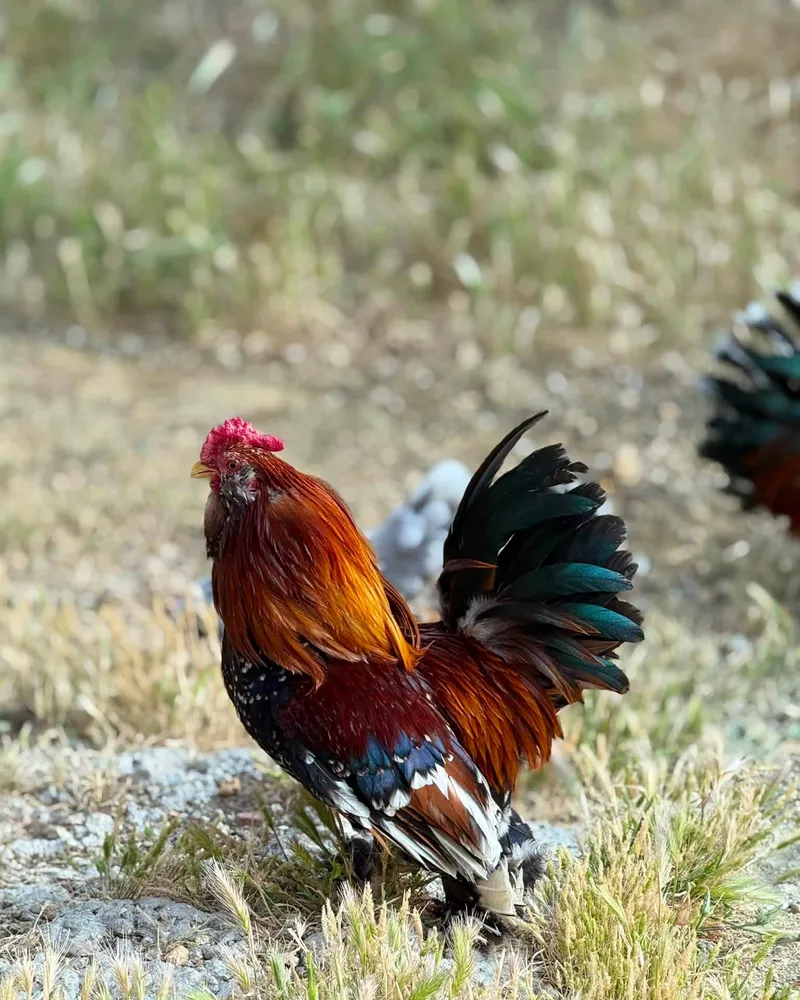
Across the chicken articles on this site we have followed two separate threads: five-toed breeds (the Faverolles, the Silkie) and feather-legged breeds (the Cochin, the Brahma). The İspenç joins those two threads in one bird: five-toed and feather-legged at once — and small enough to sit in your palm.
The İspenç is Turkey's native ornamental bantam (a miniature fancy fowl). It is the Turkish relative of Europe's feather-legged miniature family — the Booted Bantam (Dutch: Sabelpoot) and the Barbu d'Uccle. But note: scientific studies show the İspenç is morphologically distinct from both. So it is not "the Turkish Booted Bantam" — it is a separate breed within the same family.
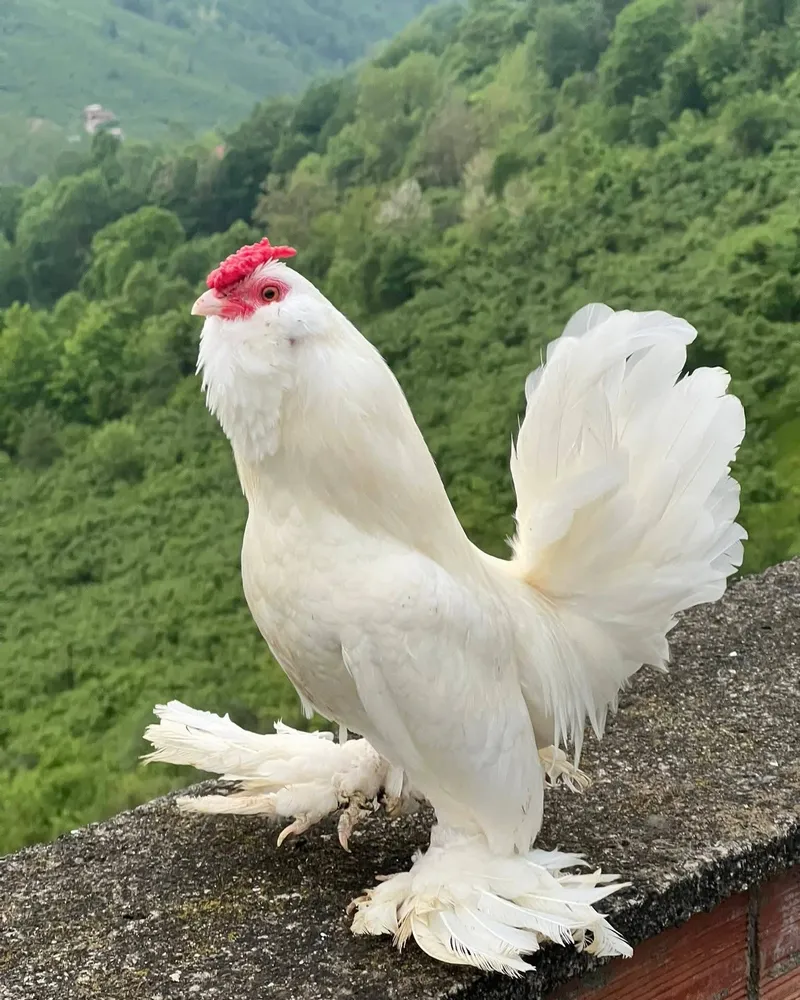
Five Toes: Joining a Rare Club
The overwhelming majority of chickens have four toes. The fifth is a minority trait produced by the polydactyly gene — and the İspenç is in that minority. In the İspenç the fourth and fifth toes are well separated, a point called for in the breed standard.
| Breed | Toes | Extra trait |
|---|---|---|
| Faverolles | 5 | Beard + feathered legs |
| Silkie | 5 | Silky plumage + feathered legs |
| Dorking | 5 | Large body |
| Houdan | 5 | Crest |
| Sultan | 5 | Crest + feathered legs |
| İspenç | 5 | Feathered legs + bantam body |
| Most other breeds | 4 | — |
If the toe-count thread across poultry interests you: the ostrich has two toes, the emu and rhea have three, the chicken four — and the İspenç five.
Feathered Legs and Soft Plumage: A Cochin in Miniature
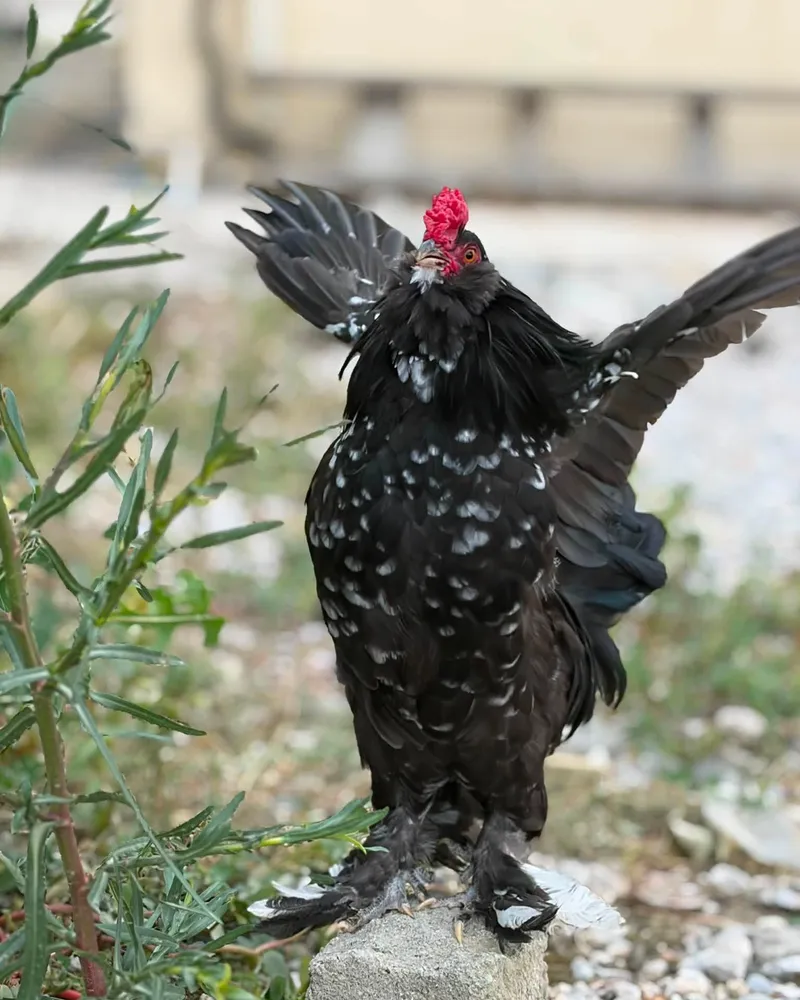
Both sexes of the İspenç carry foot feathering at the ankles; the outer and middle toes are covered in long, well-rounded feathers. The plumage is dense, soft and fluffy, and the legs are short. That gives the bird a small, rounded silhouette.
The description recalls the Cochin and the Brahma — they too are feather-legged and fluffy. The difference is scale: where a Cochin is a 4-5 kg giant, an İspenç cock is under one kilo. The İspenç is the miniature edition of that soft, booted aesthetic.
Measurements
- Cock: ~0.73 kg · body length ~41.9 cm
- Hen: ~0.58 kg · body length ~35.6 cm
- Comb: low and close-fitting, extending back towards the rear of the skull, with distinct papillae (a rose-comb type). A flat comb without distinct papillae counts as a serious fault in the standard.
- Toes: 5 (the 4th and 5th well separated)
- Legs: short, feathered
The Surprise: An Ornamental That Really Lays
This is the İspenç's most surprising side. Ornamental breeds usually trade away output — the Silkie stops at 100-120 eggs a year. The İspenç lays 180-200 eggs a year — and does it on only 60-65 g of feed a day.
| Breed | Eggs per year | Daily feed | Body |
|---|---|---|---|
| Lohmann | 300-320 | 110-120 g | ~2 kg |
| Leghorn | 280-320 | ~110 g | ~2 kg |
| İspenç | 180-200 | 60-65 g | ~0.6-0.7 kg |
| Silkie | 100-120 | ~90 g | ~1.5 kg |
The eggs are small (bantam eggs), but on feed-to-egg efficiency the İspenç is remarkable: on half of what a Lohmann eats, it lays about two thirds as many eggs. If you want a bird for a small garden that eats little, pleases the eye and still fills the breakfast basket, the equation works. To see the breeds side by side, look at our guide to choosing a laying or meat breed.
Colours: 17 Varieties and a European Cousin's Palette
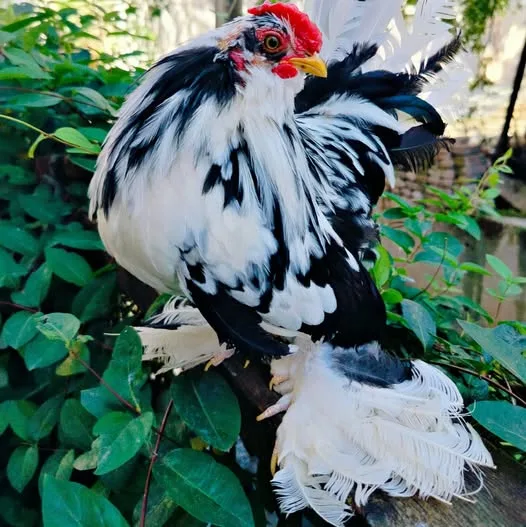
One of the İspenç's best-loved qualities is its range of colour. At shows it is judged in the 17 colour categories recognised by the EE (Entente Européenne):
Black · White · Buff · Blue · Gold · Splash · Brown · Red · Buff Mottled · Black Mottled · Brown Mottled · Blue Mottled · Gold Mottled · Partridge · Porcelain · Mille Fleur · Isabel
The names Mille Fleur, Porcelain and Isabel on that list are no coincidence: they are precisely the classic colours of the Booted Bantam (Sabelpoot) and the Barbu d'Uccle. The shared palette shows these breeds come from the same feather-legged miniature family — even though they are separate breeds.
History: A Bird from the Fifth Century
The İspenç is a very old breed. Figures of İspenç fowl have been found in the floor mosaics of the Dağ Pazarı Church, dated to the 5th century — so this bird has been in Anatolia for at least fifteen hundred years.
The origin of its name is curious too: "ispenç" was the name of a kind of land tax levied on non-Muslim subjects in the Ottoman Empire. That a tax's name passed to a breed of chicken is itself a hint of how long and how settled the breed's history in Anatolia has been.
Temperament and Care
The İspenç is a lively, active breed; for all its small body it is energetic. Its cocks are aggressive in temperament — so keeping several cocks in one pen causes trouble; plan a pen each, or housing with hens only. For pen dimensions see our guide on how to build a chicken coop.
The number-one care rule for feather-legged breeds applies here too: foot feathers get dirty and matted on wet, muddy ground, creating a risk of frostbite and infection. The run must be kept dry and the bedding changed often. We covered the same problem in our Cochin article — foot feathering is the price of that beauty.
- Space: small body → little space; content in a narrow garden
- Feed: 60-65 g a day; low intake
- Ground: must be kept dry (foot feathering)
- Cocks: a pen each
Incubation
İspenç eggs are small, but incubation takes the standard chicken time: 21 days, 37.5-37.8 °C, 45-55% humidity, stop turning and lock down on day 18. We cover the process in our 21-day incubation guide; for natural incubation see hatching with a broody hen. To keep the days straight, the Kuluçka Takip app sets up the calendar and reminds you of turning and hatch days. You can take a look at the app here.
A breeding note: the İspenç is a pure native breed; chicks from your own eggs carry their parents' traits. Keeping a given colour variety pure protects both its show value and a native genetic resource.
Pros and Cons
- + Five toes plus feathered legs: two rare traits in one bird
- + An ornamental breed that still lays 180-200 eggs — a rare balance
- + Very low feed intake (60-65 g/day); suits a small garden
- + 17 recognised colour varieties → rich for collecting and showing
- + A uniquely Turkish native resource with fifteen centuries behind it
- − The eggs are small (bantam); pointless for meat
- − Cocks are aggressive → a pen for each male
- − Foot feathering demands dry ground and extra care
Who Is It For?
The İspenç suits you if: you want both ornament and eggs from a small garden on little feed; you are a show/hobby fancier interested in colour varieties; you want to keep a native breed alive; special traits like five toes and feathered legs appeal to you.
The İspenç is not for you if: you want large eggs or meat → the Lohmann, the Leghorn or a dual-purpose breed; you cannot keep the ground dry (foot feathering becomes a problem) → a clean-legged breed; you must keep several cocks in one coop.
For Turkey's other famous native, see our Denizli rooster article: two natives, one known for its long crow, the other for its five toes and feathered legs.
Frequently Asked Questions
What is the İspenç, and is it a game breed?
No, the İspenç is not a game breed. It is Turkey's native ornamental bantam (a miniature fancy fowl), kept in hobby and ornamental poultry keeping. It is a small bird with five toes, feathered legs, dense soft plumage and short legs.
Are the İspenç and the Booted Bantam (Sabelpoot) the same breed?
No. The İspenç is close to Europe's feather-legged miniature family (the Booted Bantam/Sabelpoot and the Barbu d'Uccle) and shares colours with them (Mille Fleur, Porcelain, Isabel). But scientific studies show the İspenç is morphologically distinct from both — a Turkish breed of its own.
How many toes does the İspenç have?
The İspenç has five toes (polydactyly). While most chickens have four, the İspenç joins the five-toed minority alongside the Faverolles, Silkie, Dorking, Houdan and Sultan. The standard calls for the fourth and fifth toes to be well separated.
How many eggs does an İspenç lay per year?
It lays 180-200 eggs a year, which is high for an ornamental breed (the Silkie stops at 100-120). The eggs are small (bantam eggs), but feed intake is low too: only 60-65 g a day. On feed-to-egg efficiency it is remarkable.
How big is an İspenç?
The İspenç is a bantam. In studies the cock's average live weight was measured at ~0.73 kg and the hen's at ~0.58 kg. Body length is ~41.9 cm in the cock and ~35.6 cm in the hen.
How many colour varieties does the İspenç have?
At shows it is judged in the 17 colour categories recognised by the EE (Entente Européenne): Black, White, Buff, Blue, Gold, Splash, Brown, Red, Buff/Black/Brown/Blue/Gold Mottled, Partridge, Porcelain, Mille Fleur and Isabel.
What should you watch out for in İspenç care?
Two points stand out. First the foot feathering: it gets dirty and matted on wet, muddy ground, risking frostbite and infection — the ground must be kept dry and the bedding changed often. Second the cocks' aggressive temperament: do not keep several cocks in one pen; plan a pen for each.
Related Articles
Brahma Chicken: Traits, Size, Egg Production and Care
The giant Brahma's origin, its 4.5-5.5 kg size, 150-200 eggs a year, cold hardiness, feathered-leg care, broodiness and hatching — a complete breed guide with pros and cons.
The Denizli Rooster: Traits, Crow Length, Egg Production and Care
The Denizli rooster's origin, its 20-25 second crow, kohl-lined eye, six colour types, 90-130 eggs a year, why humidity shortens the crow, and how to select pure breeding stock — a complete native-breed guide.
Budgerigar Care and Breeding: The Day-by-Day Calendar
The full budgerigar care guide: cage (horizontal bars, the right perch), diet (seed alone kills), sexing by the cere, and — in its most detailed section — the DAY-BY-DAY breeding calendar: eggs laid on alternate days, the hen sitting from the first egg, the first chick hatching on day 18 and the last on day 26 (eight days apart), and how the staggered hatch starves the smallest chick.