Emu and Rhea Farming: The Male Does the Incubating
The ostrich is not alone. Two other members of the ratite family — the great flightless birds — are farmed too: the emu from Australia and the rhea from South America.
The three look alike but they are three different businesses: the ostrich's money is in the hide, the emu's is in oil, the rhea's in meat. And all three share one strange trait: the male does the incubating.
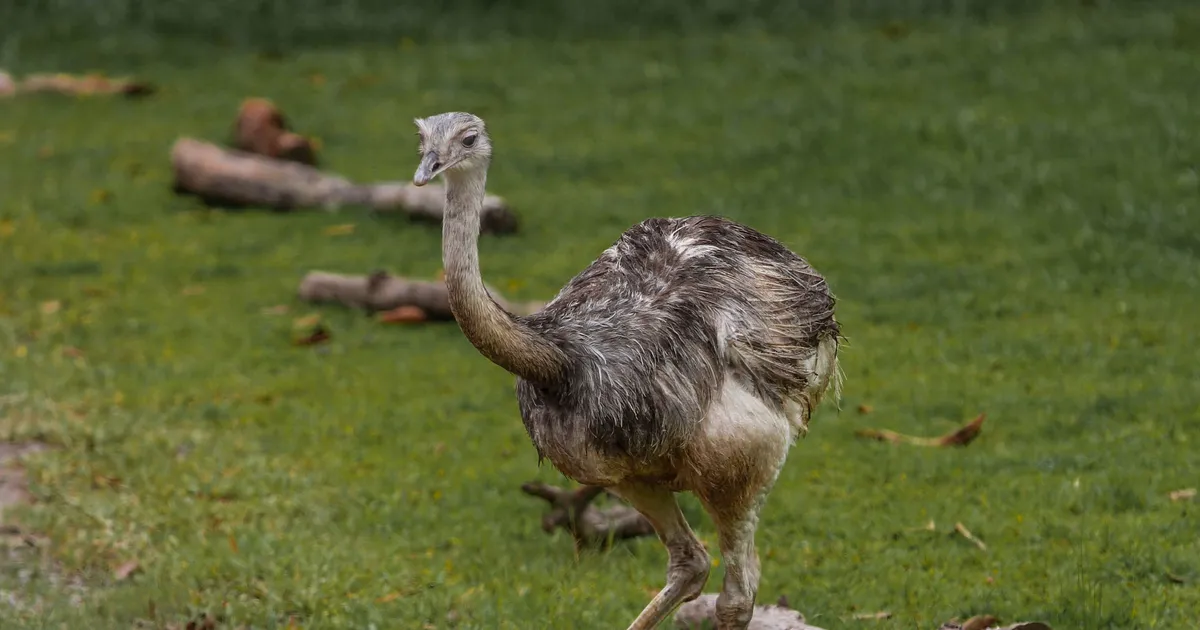
Three Ratites, One Table
| Ostrich | Emu | Rhea | |
|---|---|---|---|
| Origin | Africa | Australia | South America |
| Weight | 100-150 kg | 30-55 kg | 20-40 kg |
| Height | 2-2.7 m | 1.6-1.9 m | 1.4-1.7 m |
| Toes | 2 | 3 | 3 |
| Egg | 1.4-1.6 kg, cream | 500-650 g, dark green | 550-650 g, cream-yellow |
| Incubation | 42 days | 50-56 days | 36-40 days |
| Who incubates? | Male by night, female by day | The male alone | The male alone |
| Main product | Leather | Oil | Meat and leather |
| Danger | Very high | Moderate | The sitting male is fierce |
A note on toes: counting toes has become a habit in this series. Five in the Faverolles, four in an ordinary hen, three in the emu and rhea, two in the ostrich. The faster the bird runs, the fewer toes it keeps.
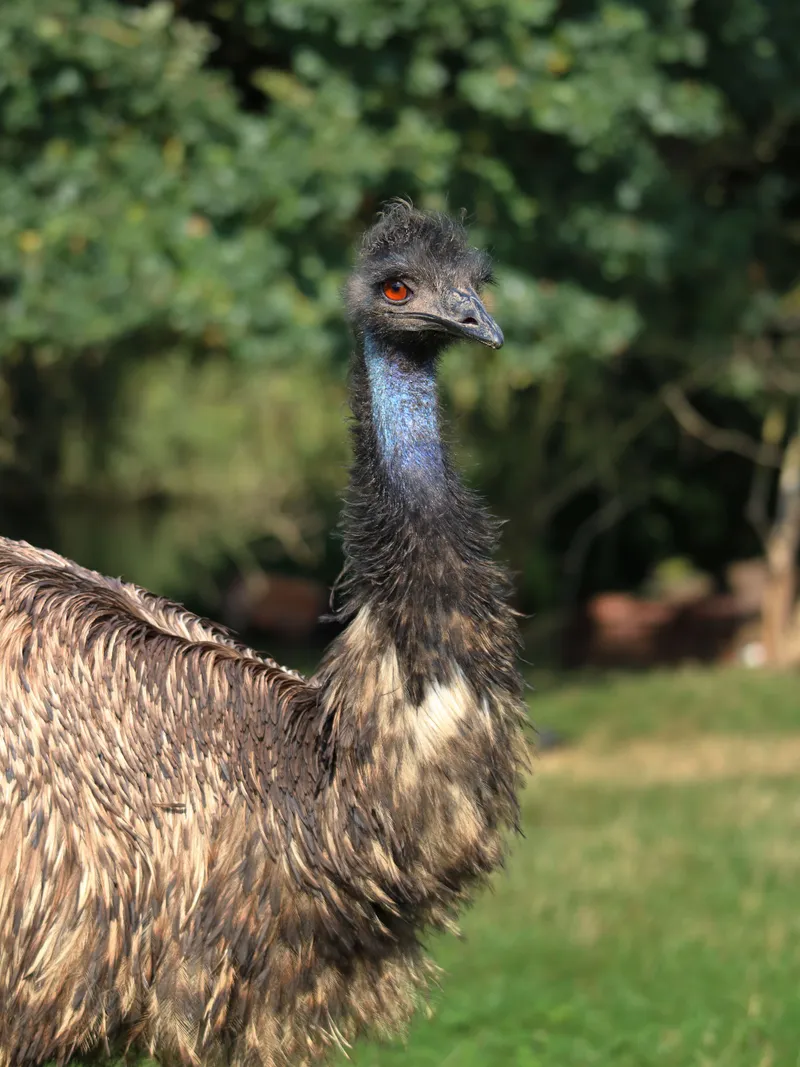
Incubation at Its Extreme: The Male Emu
Throughout this series we have asked who sits on the eggs. In chickens, geese and turkeys it is entirely the female's job. In pigeons the pair take shifts. In the ostrich the male takes the night and the female the day (he is black and vanishes in the dark; she is grey-brown and hides by daylight).
The emu goes one step further: the male does all of it — and destroys himself doing it.
- The male sits on the eggs and barely leaves the nest for 50-56 days
- Through that whole period he does not eat or drink; he burns body fat
- He can lose up to a third of his body weight
- The female walks away — and may mate with other males and lay in other nests
The rhea is more extreme still: the male builds the nest, several females lay in that one nest (10-60 eggs), and he incubates the lot alone and then raises the chicks alone. While he does, he is ferociously aggressive — he charges anything that approaches, including female rheas.
The practical consequence: do not enter a rhea paddock in the nesting season. Lifting the eggs into a machine is the standard commercial choice, for safety as much as for output.
The Emu's Real Product: Oil
The ostrich's money was in the hide. The emu's is in oil.
An emu carries a thick fat pad on its back — a survival store for the Australian dry season. Rendered, it becomes emu oil:
| Product | Per bird | Note |
|---|---|---|
| Oil | 6-10 litres | The main product. Used in cosmetics and skincare |
| Meat | 14-25 kg | Red meat; as lean as the ostrich's |
| Leather | ~1 m² | Known by its quill pattern; the leg skin is separately prized |
| Eggshell | — | Dark green to black; highly valued for carving |
Careful: the market for emu oil, like the market for ostrich leather, is one that must already exist. With no access to a plant that renders and processes it, you cannot capture the emu's real value. The single question from our ostrich guide applies here too: "Who will buy the product?"
Sexing an Emu: By Ear
Male and female emus look almost identical (the female is a little larger). But there is a clear difference in voice — and it echoes the test we set out for the guinea fowl:
- The female: using an inflatable neck sac, she makes a deep, drumming "boom" that carries for kilometres.
- The male: he grunts — a hoarse, pig-like sound.
So the loud, deep-voiced one is the female. Another line for the series' sexing table:
| Bird | How you tell |
|---|---|
| Pilgrim goose | Hatch day — by the down |
| Guinea fowl | By call — the hen's is two-syllable |
| Emu | By call — the female drums |
| Ostrich | By plumage — the male black and white, the female grey |
| Rhea | Hard; the male is larger with a darker neck |
Incubation: A Green Egg, and No Candling
The emu egg is dark green, almost black. It makes a beautiful ornament — and a problem for the hatchery:
- Candling is impossible. With the ostrich the obstacle was a 2 mm shell; with the emu it is the colour — no light gets through at all.
- The answer is the same: instead of candling, use an accurate scale. Weigh regularly and follow the 13-15% weight-loss curve.
The settings:
- Emu: 50-56 days; 35.5-36 °C (lower than for chickens); 25-40% humidity
- Rhea: 36-40 days; 36-36.5 °C; 30-45% humidity
- In both, low humidity is the rule — as with the ostrich, raise it out of chicken habit and you drown the embryo
The Kuluçka Takip app builds the calendar by species and reminds you of turning and hatch days — a 56-day emu calendar is not something you hold in your head. You can check out the app here.
Care and Safety
The emu is markedly safer than the ostrich — but it is not safe:
- Emus are curious: they approach and peck at anything bright. They are far less aggressive than ostriches.
- Even so, they kick, and they have claws. A grown emu can injure a person badly. The same rule holds: don't stand in front of the bird, and back away rather than turn.
- The rhea is timid — except for the male on the nest. In that season, entering the paddock is dangerous.
Paddocks and housing:
- Space: at least 300-500 m² per pair or trio (less than an ostrich, still generous)
- Fence: 1.5-1.8 m and visible — a panicking bird that runs into a fence breaks its neck
- No corners: round off the paddock corners
- Nothing bright on the ground: like the ostrich, emus and rheas swallow nails, wire and stones and die of an impacted gizzard. Comb the paddock.
- Chicks: a slippery floor splays their legs; the floor must give grip. Feed a ratite starter; the logic of our brooder guide applies on a far bigger floor.
- Hygiene: the rules in our biosecurity guide apply.
The Legal Position — and the Market Reality
The emu is native to Australia and the rhea to South America. Outside their homelands they count as exotics almost everywhere, not as native wildlife. Check your own country's rules on keeping, transport and sale — a different regime from the game-bird licence in our pheasant and partridge guide.
And let's be honest — the real question is the market. Emu oil does have a genuine global market (a few hundred million dollars a year, sold into cosmetics, nutraceuticals and pharmaceuticals). But production is concentrated in very few countries: more than half of it in Australia, most of the rest in North America and China — and even Australia has only about a dozen commercial farms nationwide.
So profitability depends entirely on the processing and buying infrastructure where you live. If there is no plant to render the oil and no channel for the meat in your country, you do not have a sellable product; there, these birds are kept mostly as curiosities. A "commercial" model built in such a place risks repeating exactly what happened with the ostrich: a bubble in which farms sell breeding stock to one another. Find your buyer before you build your flock.
Who Is It For?
The emu suits you if: you have land; you have a real buyer or processor for emu oil; you want a ratite more manageable than the ostrich; and you can wait two or three years.
The rhea suits you if: you want a shorter incubation (36-40 days) and a smaller bird; and you have a niche buyer for meat and leather.
Neither suits you if: you don't know who will buy the product; your land is small; you're thinking of it as a hobby (these birds weigh 30-50 kg and they kick); or you need income soon.
If you want a big bird and a real market: the turkey (20 kg, an established trade) or the goose (pasture, meat and down) are far sounder choices.
Frequently Asked Questions
What is the difference between an emu and an ostrich?
The ostrich is African, 100-150 kg, with two toes; the emu is Australian, 30-55 kg, with three. The ostrich egg is 1.4-1.6 kg and cream; the emu’s is 500-650 g and dark green. Ostrich incubation runs 42 days (male by night, female by day); the emu’s is 50-56 days and the male sits alone. The main product is leather for the ostrich, oil for the emu.
Does the male emu really incubate alone?
Yes, and it is the most extreme case in poultry. The male barely leaves the nest for 50-56 days; through that time he does not eat or drink and can lose up to a third of his body weight. The female walks away and may mate with other males and lay in other nests.
Where does the money in emu farming come from?
From oil. A bird yields 6-10 litres of emu oil, used in cosmetics and skincare, plus 14-25 kg of red meat and about 1 m² of leather. But as with ostrich leather, without access to a plant that renders and processes the oil, you cannot capture the bird’s real value.
Can an emu egg be candled?
No. The emu egg is dark green to black and lets no light through (with the ostrich the obstacle was a 2 mm shell; with the emu it is the colour). The answer is the same: use an accurate scale instead of a candler and follow the 13-15% weight-loss curve.
How do you sex an emu?
By ear. Male and female look almost identical (the female is slightly larger), but she uses an inflatable neck sac to make a deep, drumming "boom" audible for kilometres, while he grunts like a pig. The loud, deep-voiced one is the female.
How long is rhea incubation?
36-40 days — the shortest of the three ratites (ostrich 42, emu 50-56). The male builds the nest, several females lay in it (10-60 eggs), and he incubates the lot alone. While sitting he is extremely aggressive; stay out of the paddock.
Is emu or rhea farming profitable?
Outside Australia, usually not. Plants that render emu oil and buyers for rhea meat are scarce to nonexistent, so there is no established product market. In practice the birds are kept as curiosities, and a commercial model risks repeating the ostrich story: a bubble in which farms sell breeding stock to one another.
Related Articles
Ostrich Farming: Three Products, Two Toes and a Kick That Kills
An ostrich farm’s profit usually comes from the hide (1-1.5 m²), not the meat. It is poultry that yields red meat; the 10 cm claw on the larger of its two toes, driven by a forward-and-down kick, can kill a person. Incubation runs at 20-30% humidity and is managed by weighing, not candling; the three causes behind 30-50% chick mortality; and the one question to answer first: who will buy the products?
Keeping Peafowl: The Train, Three Years of Patience and Blackhead
The peacock’s famous fan is not a tail but the train — elongated upper tail coverts — and it is moulted every year, so the bird never needs plucking. The cock’s train takes three years and the hen’s first egg two; the call carries over a kilometre; and peafowl raised on chicken ground die of blackhead.
The Faverolles: Five Toes, a Beard and the Gentlest Temperament
The five-toed, bearded French Faverolles: the table of five-toed breeds (Silkie, Dorking, Houdan, Sultan), the special care its beard needs because it hides lice, the bullying risk that comes with extreme gentleness, winter laying, and chick sexing in the Salmon variety.