The Guinea Fowl: Tick Hunter or Alarm System? Traits and Care
The guinea fowl (Numida meleagris) is the wildest bird in the yard. It comes from the West African savannah: it flies, it roosts in trees, it moves as a flock, and it will never belong to you the way a chicken does.
It is increasingly sold as "the tick killer". How much of that claim is true? This guide takes the guinea fowl without the hype: what it really does, what it doesn't, why its sex can only be told by its call, and why it may cost you your neighbours.
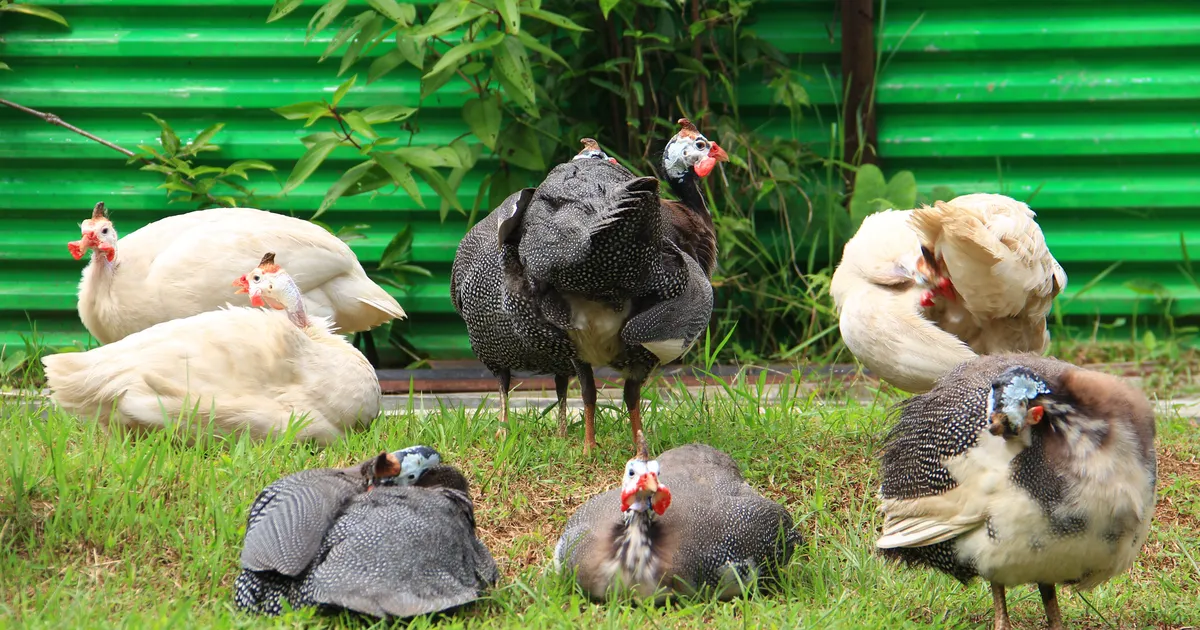
Set Your Expectations First: This Bird Is Half-Wild
The chicken has been domestic for 8,000 years. The guinea fowl stopped halfway down that road. In practice that means:
- It flies. Well, too: over the fence, onto the roof, and up into the trees to roost.
- It will not leave the flock. You cannot keep one guinea fowl; a group of fewer than six is unhappy and stressed.
- It is not a pet. It is skittish and keeps its distance — don't expect a lap bird like the Faverolles or the Orpington.
- It hides its nest. The hen builds a hidden nest in the brush and lays there — you won't find the eggs, and she will be taken by a predator.
- It ranges. A free flock will work a radius of 1-2 km.
The Tick Question: The Honest Answer
This is the most misunderstood thing about guinea fowl, so let's be plain.
What's true: the guinea fowl is a formidable insect hunter. It eats grasshoppers, ticks, caterpillars, spiders, scorpions, even small snakes; birds have been recorded taking hundreds of ticks in a day. And unlike a chicken it does not scratch — it won't dig up your beds and tear out roots. It walks between the rows, picks off insects, and leaves the crop alone.
But: the claim that "get guinea fowl and your ticks are gone" is overreach. Research confirms that guinea fowl (and chickens) eat ticks; but the evidence that they actually reduce the tick population on a property is mixed. Ticks live mostly in long grass and places the birds don't work, and the wild animals that carry them — rodents, deer — keep coming back.
The honest summary: a guinea fowl lowers the insect load, but it is not a tick treatment. Buy it as a bird that forages without wrecking the garden — not as a pest-control device.
Its Real Talent: An Alarm System
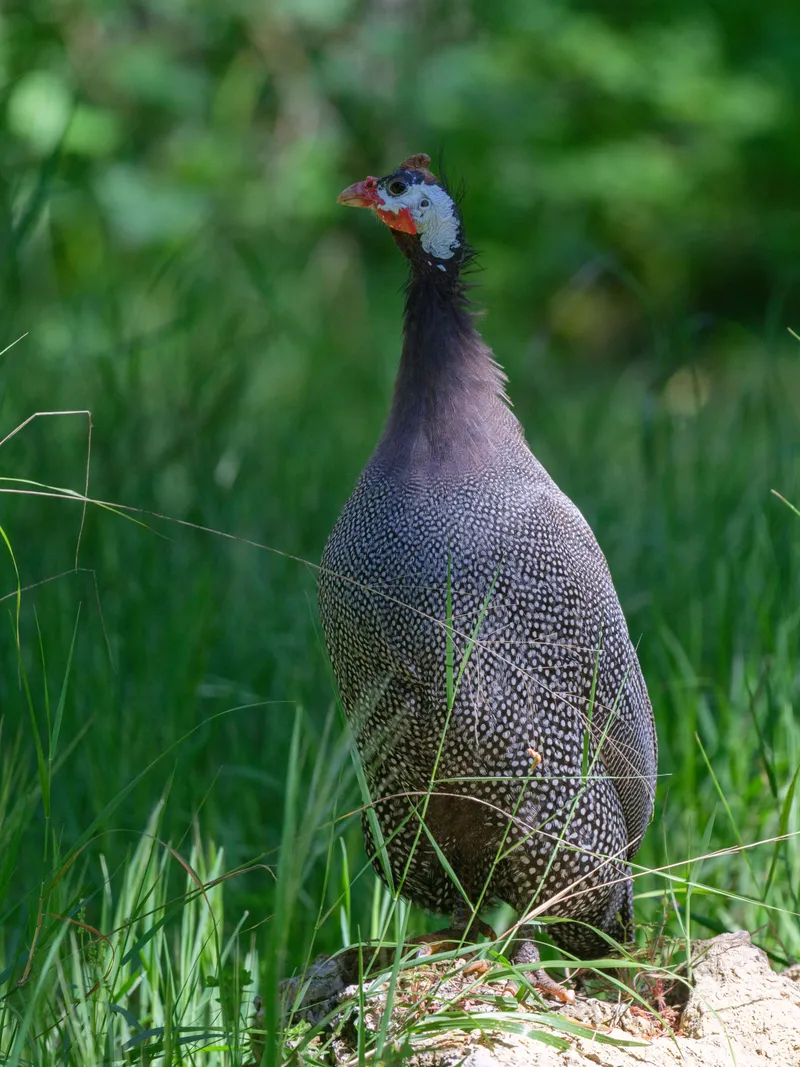
This is the guinea fowl's undisputed strength. The flock shouts at anything it doesn't recognise: a fox, a snake, a hawk, a strange car, the postman.
Its call is very loud — audible half a kilometre away, and far sharper and more piercing than any hen's cackle. It guards like a goose, but louder.
That cuts both ways:
- The plus: it announces a predator to you and to your chickens; the flock uses a distinct call for real danger.
- The minus: in town, or anywhere with close neighbours, it is a serious problem. Of all poultry, the guinea fowl is the most likely to cost you a friendship. They also shout at nothing at all.
Sexing: Only by the Call
This is the strangest sex test in poultry.
Male and female guinea fowl look almost identical. The plumage is the same; the male's helmet and wattles may be a little larger, but that needs a comparison and it misleads. There is no marker like the duck's curled drake feather.
The only reliable method is the voice:
- The hen: a two-syllable call — the classic rendering is "buck-wheat, buck-wheat". Only the female can make it.
- The cock: a one-syllable call — a repeated "chit, chit, chit". He can never produce the two-syllable call.
So you sex a guinea fowl with your ears, not your eyes — and only once the bird is two or three months old and starts calling.
Set against the rest of the series:
| Bird | When and how |
|---|---|
| Pilgrim goose | Hatch day — by the down colour |
| Pharaoh quail | Week 3-4 — by the breast feathers |
| Duck | Week 6-8 — by voice; month 3-4 by the curled feather |
| Guinea fowl | Month 2-3 — by the CALL only |
| Turkey | At maturity — snood, beard, spurs |
Output: Eggs and Meat
| Trait | Value |
|---|---|
| Weight | 1.3-2.0 kg (the hen slightly heavier) |
| Eggs per season | 80-100 |
| Laying period | March–October (seasonal) |
| Egg weight | 40-45 g (smaller than a hen's) |
| Shell | Very hard and thick, pointed, speckled |
| Incubation | 26-28 days |
| Meat | Dark, lean, gamey |
The egg is seasonal, as with the goose and the turkey — if you want eggs all year, get a laying hen.
The hard shell is the guinea fowl's signature: you have to press to crack one. It makes candling harder too — you need a strong light. But that same hardness keeps the egg fresh for a remarkably long time.
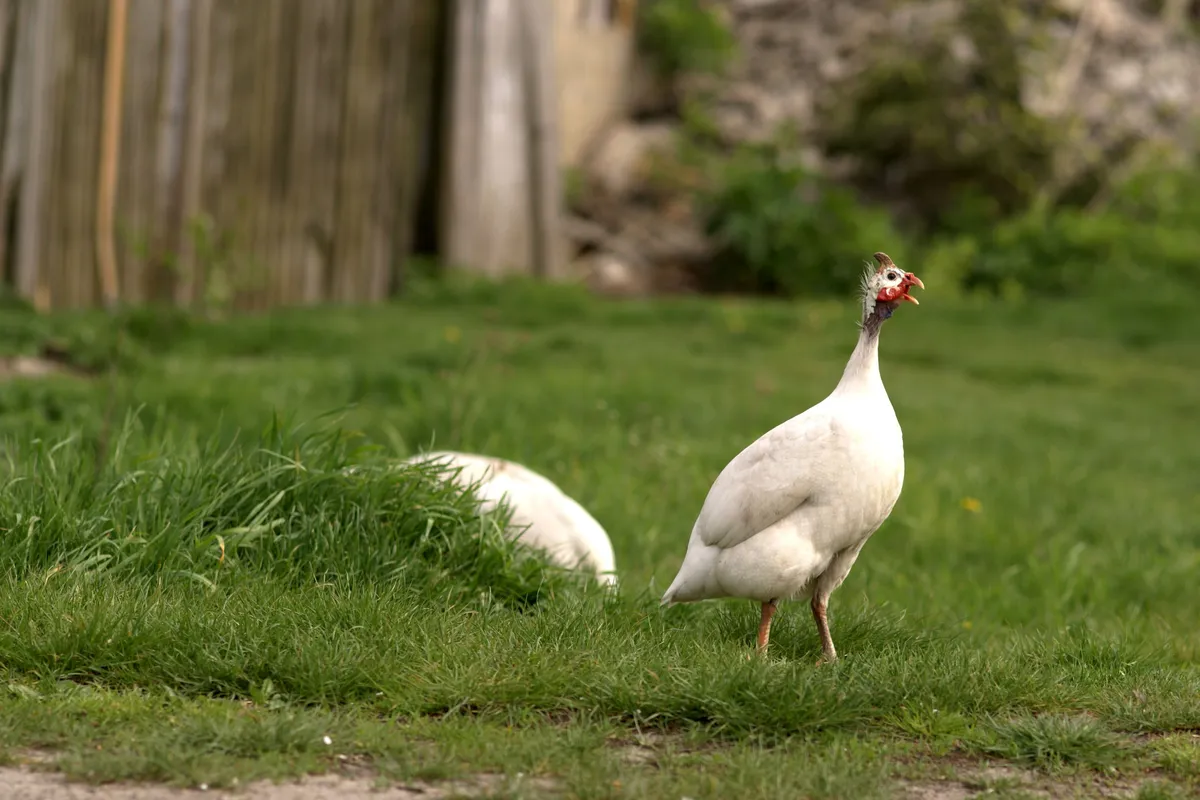
Colour Varieties
- Pearl: the classic — dense white dots on a grey-black ground
- White: pure white; no dots
- Lavender: white dots on a pale blue-grey; among the handsomest
- Royal purple, coral blue, pied: rarer ornamental varieties
Colour changes neither behaviour nor output — it is the same bird throughout.
Critical: The Shared-Ground Risk with Chickens
The blackhead (histomoniasis) we set out in our turkey guide applies to guinea fowl too. Guineas are susceptible to it; chickens are symptomless carriers and shed the parasite into the soil.
Keeping guineas with chickens is not as lethal as it is for turkeys, but it is risky. To lower the odds:
- Give them a separate run if you can
- Keep the ground dry and avoid crowding
- Run a regular worming programme (the caecal worm carries the disease)
- Follow the rules in our coop biosecurity guide
There is also a behavioural clash: guinea cocks chase roosters and hens and keep them off the feeder. In a mixed flock, add extra feeders and drinkers (see pecking and cannibalism).
Rearing Keets: The First Six Weeks Are Hard
A guinea chick is called a keet, and rearing one is as demanding as rearing a turkey poult:
- Wet kills: a soaked keet chills fast and dies. Keep drinkers shallow and put marbles or pebbles in them so the keets can't drown.
- High protein: starter must be 24-28% protein; chick feed (20%) is not enough.
- Heat: 35-37 °C in the first week; use the schedule in our brooder setup guide and shift it up.
- A LID IS ESSENTIAL: keets start flying at two to three weeks. The brooder must be covered — or you will find the birds around the room in the morning.
Past six weeks the guinea fowl turns into an extremely tough bird: it doesn't get sick, it ignores cold, it finds its own food.
Coop Training: The Step You Cannot Skip
Buy guinea fowl, turn them loose in the yard, and they leave and never come back. The bird has to learn where home is:
- Keep the new birds shut in the coop for four to six weeks. They can't escape, and they learn the coop is home.
- Then release one single bird — it will not leave the flock, so it comes back at dusk and teaches the rest.
- A few days later let the group out, and feed them in the coop every evening. Feed is the reason to come home.
- Call them with the same sound or the same tin each night; the flock learns it.
Skip this and the birds roost in the trees, lay in the brush and are picked off by predators one by one.
Incubation
- Period: 26-28 days (longer than a hen, close to a turkey)
- Hard shell: a keet struggles to pip it; humidity management matters
- Natural incubation: a guinea hen does go broody but she is a poor mother — she marches the keets through wet grass and loses them. The usual fix is to set the eggs under a broody chicken, which rears keets far more safely.
The detail is in our guinea fowl incubation guide. The Kuluçka Takip app builds the calendar by species and reminds you of turning, lockdown and hatch days. You can check out the app here.
Who Is It For?
The guinea fowl suits you if: you have land and no close neighbours; you want a bird that forages your garden or vineyard without scratching it up; you want a living alarm system against predators; you like lean, gamey meat; and you can let a flock be a flock.
It is not for you if: you live in a town or near neighbours (the noise is a real problem); you want eggs all year; you want a calm bird you can handle; you have a small enclosed garden (it will fly out and go); or you can't keep your chickens on separate ground.
And once more: don't buy guinea fowl for the ticks alone. They lower the insect load; they do not end ticks. Their real worth is as a hardy, non-scratching forager and a superb alarm.
Frequently Asked Questions
Do guinea fowl really get rid of ticks?
Partly. The guinea fowl is a formidable insect hunter and it does eat ticks (birds have been recorded taking hundreds in a day). But the research on whether they actually reduce the tick population on a property is mixed: ticks live mostly in long grass, and the carriers — rodents and deer — keep coming back. They lower the insect load, but they are no substitute for tick treatment.
How do you tell a guinea fowl’s sex?
Only by its call. Male and female look almost identical. The hen makes a two-syllable call ("buck-wheat, buck-wheat"); the cock only ever makes a one-syllable "chit, chit" and can never produce the two-syllable call. You can tell once the bird is two or three months old and starts calling.
Are guinea fowl very noisy?
Yes — the noisiest of poultry. The call carries half a kilometre, and they shout at anything they don’t recognise: a fox, a strange car, the postman. That makes them a superb alarm system against predators, but a serious problem in town or with close neighbours.
Will guinea fowl damage the garden?
No — and that is their great advantage. Unlike chickens they do not scratch: they don’t dig up soil or tear out roots. They walk between the rows picking off insects. For anyone with a garden or a vineyard they are the ideal forager.
How many eggs does a guinea hen lay a year?
80-100 in a season, but it is seasonal: she lays from March to October, not all year. The egg is small (40-45 g) with a very hard shell, and that hardness keeps it fresh for a long time.
Can I keep guinea fowl with chickens?
It’s risky. Guineas are susceptible to blackhead (histomoniasis), and chickens are symptomless carriers that shed the parasite into the soil. It isn’t as lethal as it is for turkeys, but give them a separate run if you can. Guinea cocks also chase roosters and hens, so add extra feeders.
Will guinea fowl run off, or come home to the coop?
Without training they leave and never return. Shut new birds in the coop for four to six weeks, then release a single bird first — it won’t leave the flock, so it comes back at dusk and teaches the others — then let the group out and feed them in the coop every evening. Skip this and they roost in the trees and get picked off by predators.
Related Articles
The Leghorn Chicken: Traits, Egg Production, Feed Efficiency and Care
The Leghorn, ancestor of the white egg: origin, 280-320 eggs a year, the lowest feed intake of any breed, the earlobe-egg colour rule, its ability to clear a 2-3 m fence, comb frostbite risk, and why it never goes broody.
The Silkie Chicken: Traits, Broodiness, Egg Production and Care
The Silkie's silky plumage, black skin and five toes; why it is the best broody hen, how many eggs to set under it, hatching duck and quail eggs, Marek's susceptibility and the danger of getting wet — a complete breed guide.
Budgerigar Care and Breeding: The Day-by-Day Calendar
The full budgerigar care guide: cage (horizontal bars, the right perch), diet (seed alone kills), sexing by the cere, and — in its most detailed section — the DAY-BY-DAY breeding calendar: eggs laid on alternate days, the hen sitting from the first egg, the first chick hatching on day 18 and the last on day 26 (eight days apart), and how the staggered hatch starves the smallest chick.