Goose Breeds: The Grazing Bird (Embden, Toulouse, Chinese, Pilgrim)
The goose is the only true grazer in poultry. A chicken only pretends to eat grass and a duck hunts insects; a goose digests grass, and on good pasture it can take 80% of its diet from what it grazes.
That makes it the cheapest bird you can feed — if you have grass. Without it the story reverses. This guide compares the breeds in numbers, explains why goose eggs are seasonal, and covers the one goose breed whose sex you can read on hatch day.
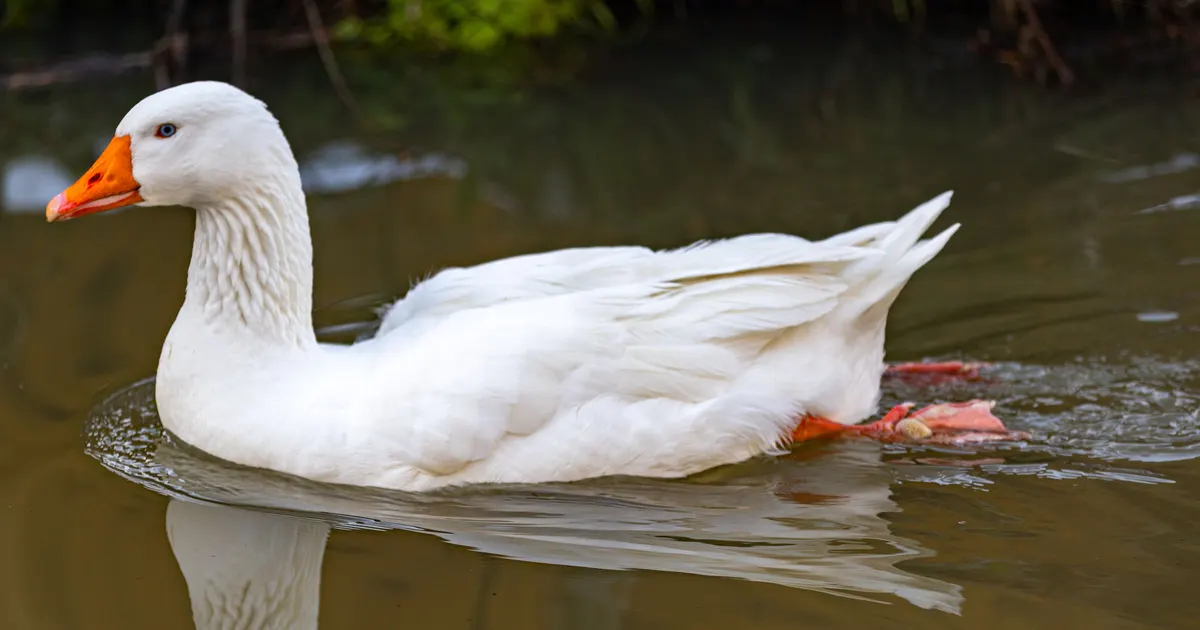
What Sets the Goose Apart: It Grazes
A goose's gut can process grass. The consequences are entirely practical:
- Feed costs collapse: on good pasture an adult goose feeds itself through the summer on almost no grain. Winter and the laying season need supplementing.
- Mowing: a goose clips grass, it doesn't pull the roots out — it won't scratch the ground to pieces the way a hen does.
- Weeding: the Chinese goose in particular is a fine "weeder goose", used in gardens and orchards.
- But: with no pasture, a goose is an expensive bird. A big body plus bought grain equals high cost and low egg output.
Two Ancestors — but the Cross Is Not Sterile
Domestic geese descend from two different wild species:
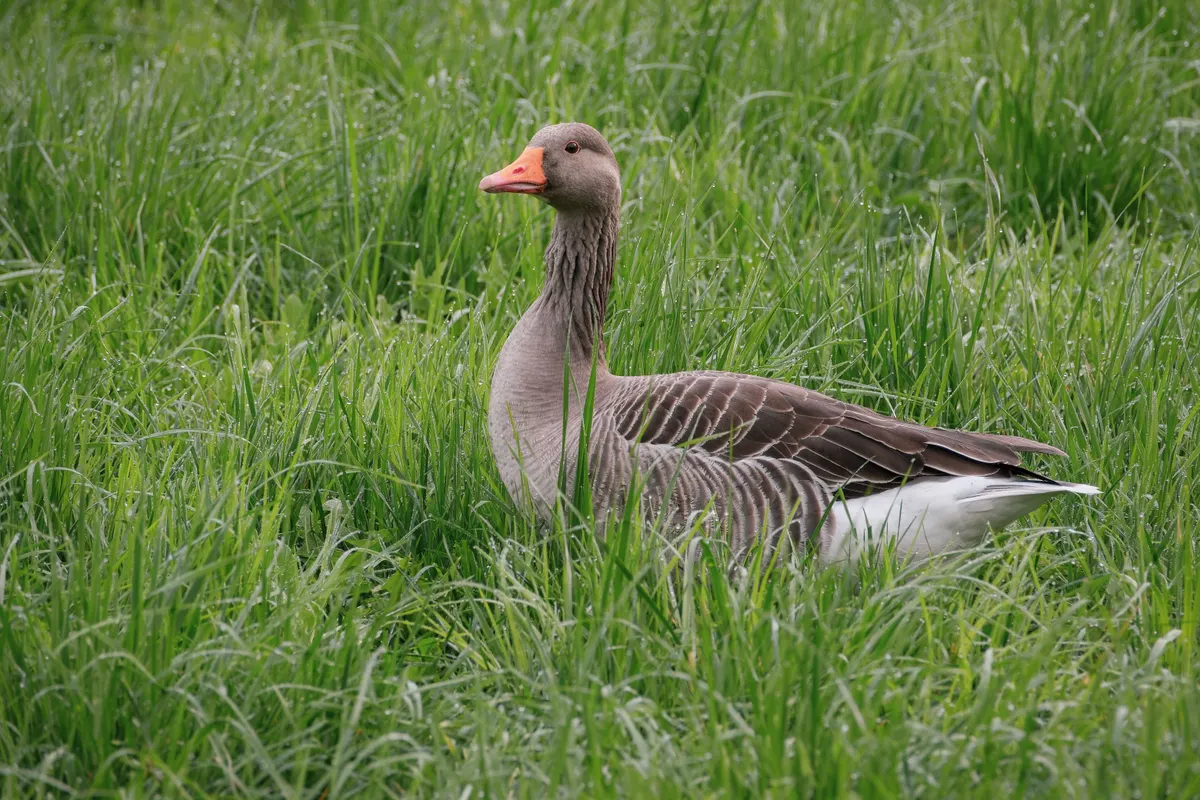
- The greylag (Anser anser): ancestor of the European breeds — Embden, Toulouse, Pilgrim, Sebastopol
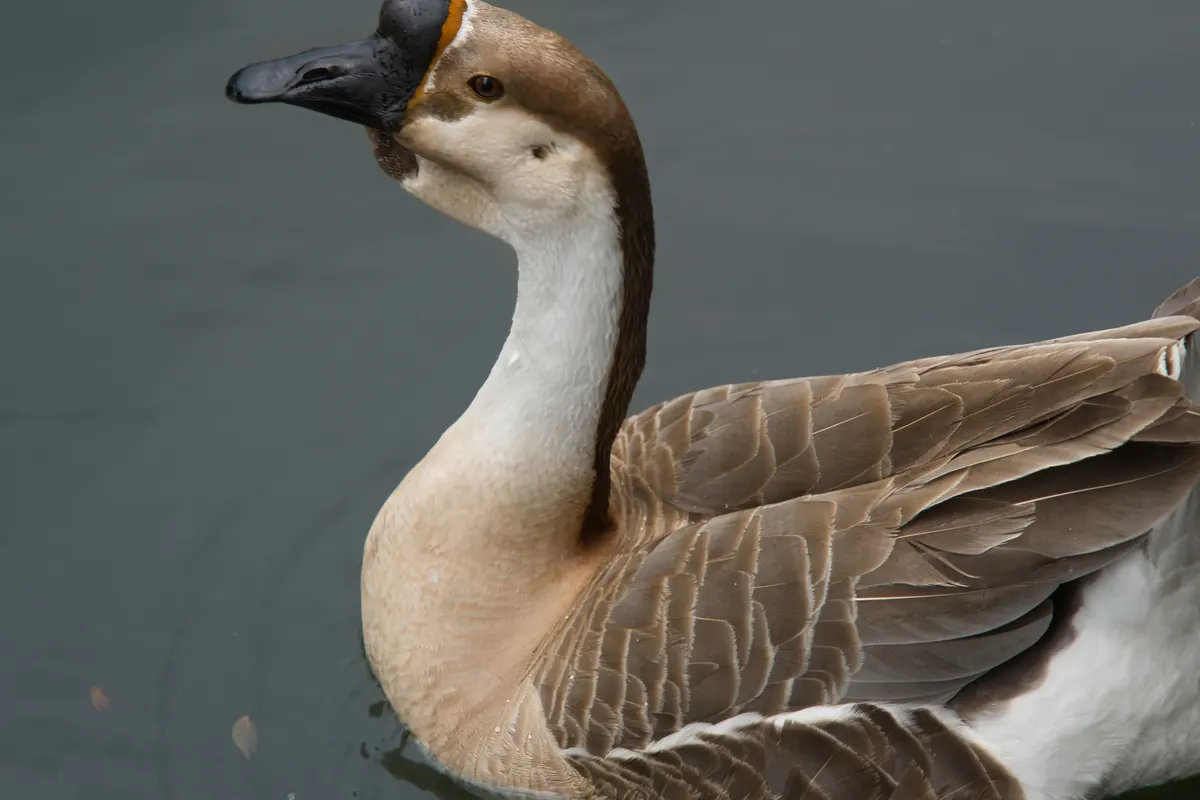
- The swan goose (Anser cygnoides): ancestor of the Asian breeds — the Chinese and the African. The knob on the bill comes from this line.
Here is a difference that matters if you have followed this series. In our duck guide we explained that crossing a Muscovy with an ordinary duck gives the mulard, which is sterile. Geese hold no such trap: cross a greylag-derived Embden with a swan-goose-derived Chinese and the offspring are fertile and will breed on.
| Quail | Duck | Goose | |
|---|---|---|---|
| How many species? | One | Two | Two ancestral species |
| The cross | Fertile | Sterile (the mulard) | Fertile |
| The consequence | The flock renews itself | You must buy stock | The flock renews itself |
If you want a pure line, though, still keep the breeds apart: in a mixed flock the Embden's whiteness and the Toulouse's size blur within a few generations.
Goose Breeds Compared
| Breed | Weight (gander) | Eggs/season | Strength |
|---|---|---|---|
| Embden | 11-14 kg | 35-40 | Meat. White feathering, fast growth |
| Toulouse | 10-12 kg | 25-40 | Meat + fat. The heaviest; calm, a lazy grazer |
| Chinese | 4-5 kg | 40-60 | Eggs + weeding. Nimble, noisy |
| African | 8-10 kg | 35-45 | Meat + guarding. Knob and dewlap |
| Pilgrim | 6-7 kg | 35-45 | Sexable at hatch! Calm |
| Native / landrace | 4-5 kg | 15-25 | Hardy, grazes, broody; a down crop |
The Embden is the commercial meat goose, and its white feathering carries the advantage we set out for the Pekin duck and the Texas A&M quail: no feather-root marks, so a clean carcass.
The Toulouse is the heaviest and is traditionally the bird for foie gras. But it is placid, even lazy; it won't work a big pasture as thoroughly as the Chinese.
The Chinese goose is light and nimble: it is both the best layer among geese and the best weeder. It is also loud — a plus if you want a guard, a minus if you have neighbours.
A Critical Expectation: Goose Eggs Are Seasonal
This is the disappointment goose keepers meet most often.
Hens and ducks lay all year. The goose does not. She lays for one season in spring (February–June), and then she stops:
| Eggs | Period | |
|---|---|---|
| Hen (a laying breed) | 280-320 | All year |
| Duck (Khaki Campbell) | 250-340 | All year |
| Goose | 15-60 | Spring only |
So you do not buy a goose for eggs. You buy it for meat, fat, down, grazing and guarding. The egg (140-170 g, two to three times a hen's) is a bonus — prized in baking, but there are few of them.
Sexing: Hard in Geese — With One Exception
The goose is among the hardest poultry to sex. Neither of the duck's two clear markers exists here:
- Geese have no curled tail feather
- There is a difference in voice, but it is unreliable (the gander's call tends to be higher and shorter, the goose's lower and hoarser — it takes experience)
- The gander is a little larger and longer in the neck, but that needs a comparison; it is no use on a single bird
The certain method is the vent check, and it takes experience: done wrong, it injures the bird.
The exception: the Pilgrim goose. This breed is autosexing — sex is read on hatch day, from the down:
- The gander: white or pale, with blue eyes
- The goose: grey, with brown eyes
That is a rare thing in poultry. Sex shows in week 3 in the Pharaoh quail and in week 6-8 in ducks; in the Pilgrim it shows on day one. For a smallholder that makes setting up a breeding group far easier. For the general methods see our guide on how to tell a chick's sex.
Breeding: A Goose Chooses a Mate
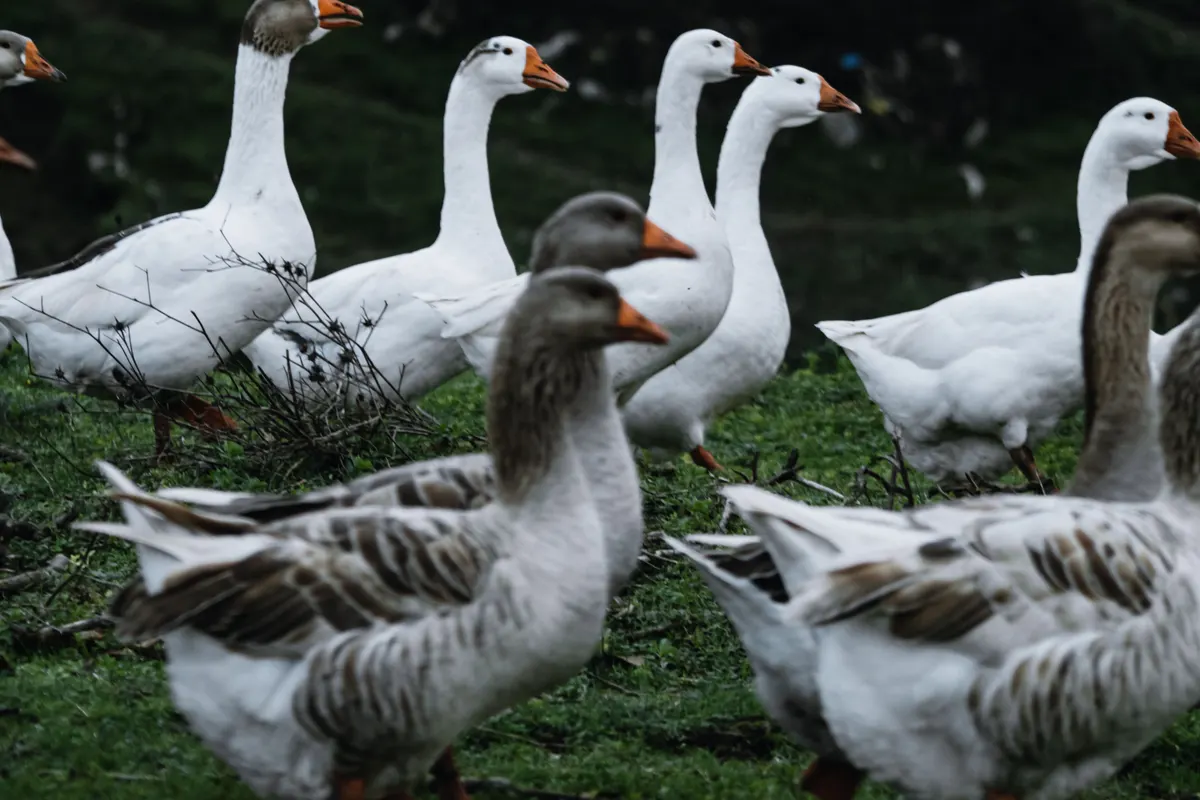
The goose is a far more social animal than a hen. It pair-bonds, and the bond can last for years. The "turn the cock loose with the flock and you're done" logic does not work here:
- Heavy breeds (Embden, Toulouse): 2-3 geese per gander
- Light breeds (Chinese): 4-6 geese per gander
- If a gander bonds with one goose he may ignore the others — and fertility drops. Put the breeding group together months before the laying season so the bond settles.
- Geese live long (15-20+ years) and stay in the breeding pen for years; they aren't spent after two seasons the way a hen is.
Guarding: Why a Goose Raises the Alarm
The goose is territorial, sees sharply and shouts when a stranger appears. The story of the geese that woke the Capitol in Rome is no accident.
The best guards are the Chinese, the African and the Embden. A goose is not a dog — it will not chase off an intruder — but it announces one at volume. It is an early-warning system against a fox, a marten or a stranger.
The same trait cuts both ways: geese can turn aggressive toward small children and neighbours, especially while they are sitting.
Care
- Pasture: at least 10-15 m² of grass per goose; the more there is, the less feed you buy
- Water: a pond is not essential, but as with ducks water deep enough to dunk the head is (for cleaning eyes and nostrils). A pond does raise fertility.
- Housing: a simple, dry, draught-free shelter is enough. No perches — a goose sleeps on the floor. It is very cold-hardy.
- Feed: pasture in summer; grain plus greens in winter and while laying. Goslings, like ducklings, need plenty of niacin (B3) — plain chick feed alone brings on leg weakness.
- Hygiene: the rules in our coop biosecurity guide apply.
Incubation
Goose eggs are among the hardest in poultry to hatch:
- Period: 28-35 days by breed (Chinese ~30, Toulouse and Embden ~30-34)
- Cooling: the egg is large and its shell membrane oily; a daily cooling plus misting lifts the hatch rate substantially
- Candling: the shell is thick, so candling needs a strong light
- Natural incubation: landrace geese and the Toulouse go broody well; the light commercial lines less so. A goose defends her young fiercely — a more aggressive mother than any broody hen.
The detail is in our goose incubation guide. To keep the days straight, the Kuluçka Takip app builds the calendar by species and reminds you of turning, cooling and hatch days. You can check out the app here.
Which Goose for Whom?
- Meat (commercial) → the Embden. Fast growth, white feathering, clean carcass.
- The biggest body / foie gras → the Toulouse.
- Eggs plus weeding → the Chinese (40-60 eggs, a nimble grazer). Be ready for the noise.
- Guarding → the African or the Chinese.
- Setting up a breeding group / a beginner → the Pilgrim. Sexable at hatch, and calm with it.
- No pasture → think again about geese. Without grass a goose is an expensive bird with little to show for it.
Frequently Asked Questions
Do geese really live on grass?
Yes. The goose is the only true grazer in poultry — it digests grass, and on good pasture it can take 80% of its diet from what it grazes. That makes it the cheapest bird to feed if you have grass. Without pasture it is an expensive bird with little to show for it.
How many eggs does a goose lay a year?
Between 15 and 60 in a season, depending on the breed. Unlike hens and ducks, a goose does NOT lay all year: she lays for one season in spring (February–June). So you don’t buy geese for eggs — you buy them for meat, fat, down, grazing and guarding.
Which goose lays the most?
The Chinese goose: 40-60 eggs a season. It is also the best weeder — but it is noisy. The meat breeds (Embden, Toulouse) lay far fewer.
Which is the meat goose?
The Embden (11-14 kg): it grows fast, and its white feathering leaves no feather-root marks, giving a clean carcass. The Toulouse is even heavier — the traditional foie gras bird — but slower and lazier.
How do you sex a goose?
It’s hard: geese have no curled tail feather as ducks do, and the difference in voice is unreliable. The certain method is the vent check, and it takes experience. The one exception is the Pilgrim: it is autosexing, so sex is read on hatch day from the down (the gander white with blue eyes, the goose grey with brown eyes).
Are goose crosses sterile, as with the Muscovy duck?
No. Domestic geese descend from two ancestral species (the greylag and the swan goose), but their crosses are fertile and will breed on. The mulard trap of the duck world does not exist in geese. Even so, keep the breeds apart if you want a pure line.
How many geese per gander?
Two to three for the heavy breeds (Embden, Toulouse), four to six for the light ones (Chinese). Geese pair-bond: a gander attached to one goose may ignore the rest. Put the breeding group together months before the laying season.
Related Articles
Turkey Breeds: Commercial (Broad Breasted) vs Heritage
The commercial (Broad Breasted) turkey CANNOT mate naturally: its breast is so heavy that artificial insemination is required. Commercial versus heritage compared, the number-one fatal mistake in turkey keeping (raising them on chicken ground = blackhead, 50-100% mortality), why poults are so fragile, and the 28-day incubation.
Duck Breeds: Meat and Laying (Pekin, Khaki Campbell, Muscovy)
The Pekin, Khaki Campbell, Indian Runner, Rouen and Muscovy compared: a laying duck outlays a hen (250-340), the Muscovy is a SEPARATE SPECIES whose cross (the mulard) is sterile, sexing by voice and by the curled drake feather, whether you need a pond, and the niacin requirement.
Cockatiel Colour Mutations: Why Is Albino Two Genes?
Cockatiel mutations follow the same three inheritance rules but with two twists: some colours are two mutations stacked (albino = whiteface + lutino) and mutations both hide and reveal sex. The sex difference in wild grey, whiteface, how cocks lose the pearl pattern, the lutino bald spot and sex-linked pairing.