Duck Breeds: Meat and Laying (Pekin, Khaki Campbell, Muscovy)
The duck is the most underrated bird in poultry keeping. It is hardier than a chicken, indifferent to cold, resistant to disease — and a good laying duck outlays a good hen.
But before you start there is a distinction you must grasp, and it is the exact opposite of what we set out for quail lines. In quail every "breed" was one species and they all interbred to give fertile young. In ducks your flock may contain two different species — and if you cross them, the offspring are sterile.
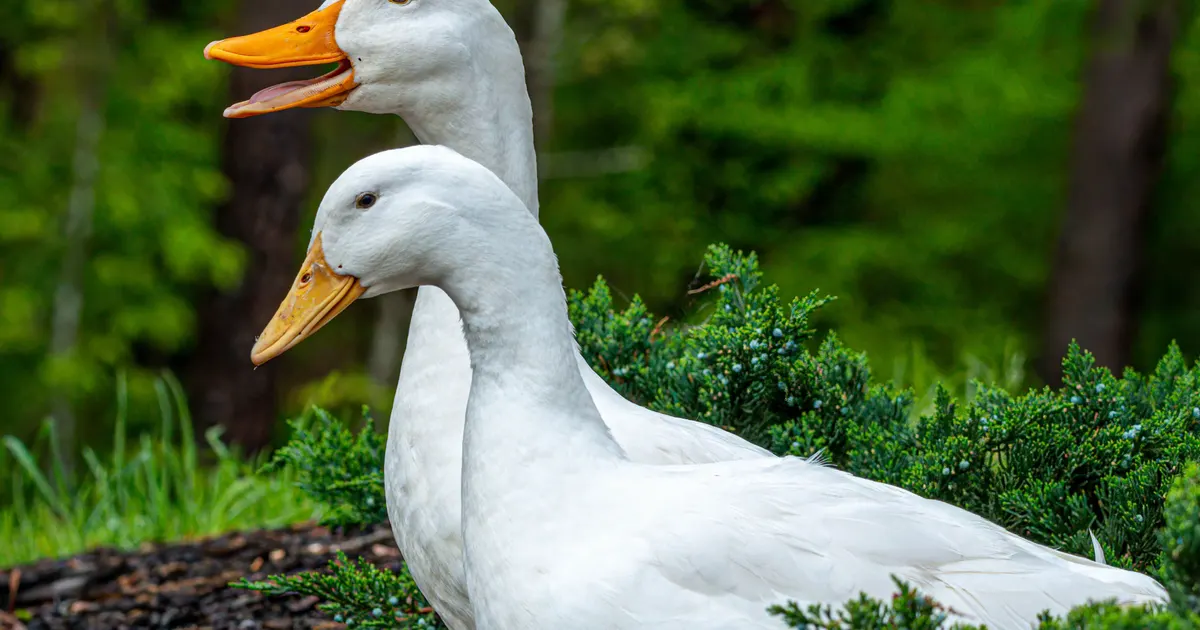
First, Sort the Species: The Muscovy Is Not Like the Others
Every domestic duck — the Pekin, the Khaki Campbell, the Indian Runner, the Rouen, the Aylesbury — descends from one wild ancestor: the mallard (Anas platyrhynchos). Their colours, bodies and output differ, but the species is the same.
The Muscovy (Cairina moschata) is a different species. It comes from South America and is not even a close relation of the mallard. The differences are plain to see:
- It does not quack — it hisses. It is a quiet bird (a serious advantage if you have neighbours)
- It has red, warty skin (caruncles) on the face
- It has claws; it perches, climbs trees and flies (the females especially)
- Its incubation runs 35 days — every other duck takes 28
- Its meat is leaner and darker; nothing like the Pekin's fatty flesh
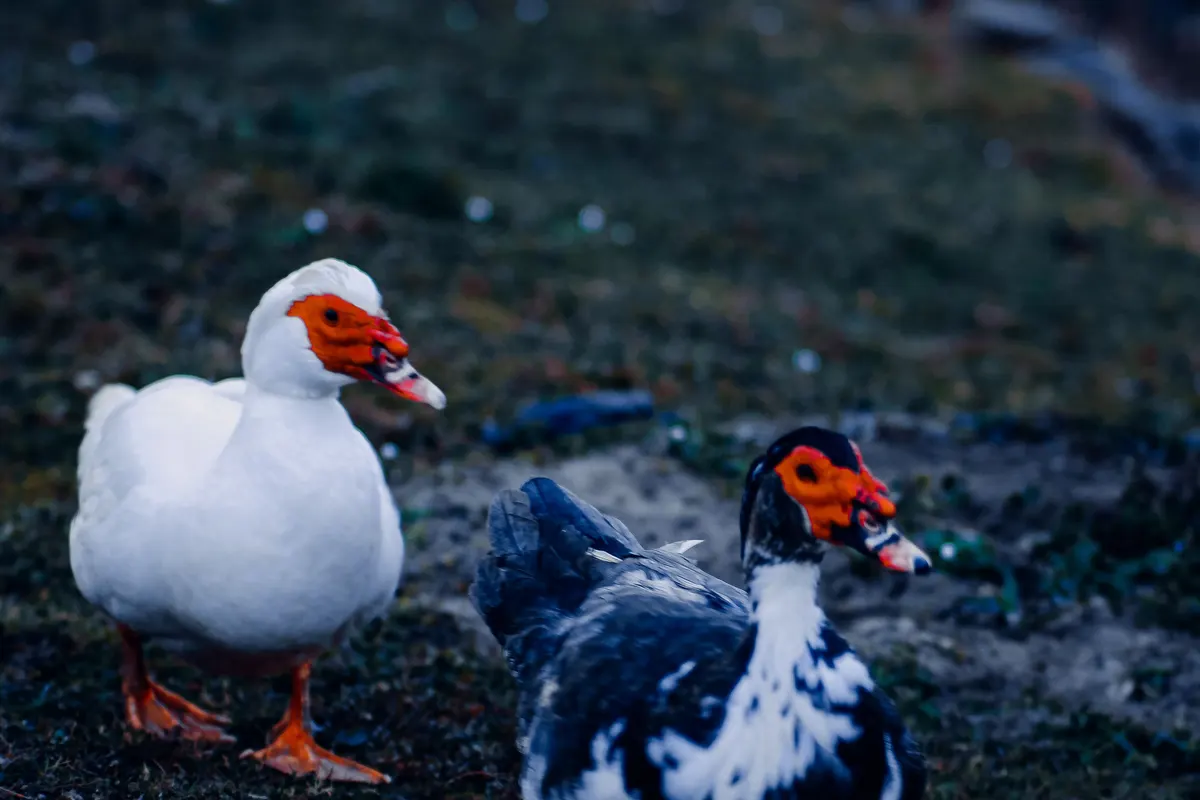
Critical: Muscovy × Ordinary Duck = a Sterile Bird (the Mulard)
This is the costliest misunderstanding in duck keeping.
Cross a Muscovy drake with an ordinary (mallard-derived) duck and you do get offspring — the mulard, or mule duck. It is big, grows fast and gives good meat. But it is completely sterile. Neither the males nor the females breed.
| Quail lines | Duck species | |
|---|---|---|
| The different "breeds" | One species | Two separate species |
| The cross | Fertile, breeds on | The mulard: sterile |
| The consequence | The flock renews itself | You must buy stock every generation |
The practical upshot: if a Muscovy drake runs with Pekin ducks, you cannot renew your flock from what hatches. You raise it, you eat it, and that's all. If you intend to breed, pen the two species separately.
Commercially, that sterility is used on purpose: the mulard takes the Muscovy sire's size and the Pekin dam's growth rate. For a small keeper it is usually a trap.
Meat or Eggs? The Breed Table
| Breed | Weight (female) | Eggs/year | Purpose | Note |
|---|---|---|---|---|
| Pekin | 3.6-4.1 kg | 150-200 | Meat | 2.5-3 kg by 7-8 weeks; doesn't fly |
| Khaki Campbell | 2.0-2.2 kg | 250-340 | Eggs | The laying champion |
| Indian Runner | 1.5-2.2 kg | 180-250 | Eggs | Upright carriage; a superb forager |
| Rouen | 3.0-4.0 kg | 35-125 | Meat | Slow-growing; mallard markings |
| Aylesbury | 3.0-3.5 kg | 100-150 | Meat | White; the Pekin's British rival |
| Muscovy | 2.0-3.0 kg | 60-120 | Meat + broody | A separate species; drake 4-6 kg |
A Laying Duck Beats a Hen
Most people don't know this: the Khaki Campbell lays 250-340 eggs a year. That is the same league as a commercial layer such as the Lohmann — and the duck egg is bigger (70-80 g).
- Hardiness: a duck doesn't care about cold or wet; it keeps laying in weather that shuts a hen down
- Winter: ducks pause less in winter than hens do
- Disease: ducks resist most chicken diseases and are barely touched by lice
- Time of lay: a duck lays early in the morning — collect before you let them out and you won't be hunting eggs across the garden
The Indian Runner has a talent of its own: upright as a wine bottle and always on the move, it sweeps up the slugs, snails and insects in your garden. For anyone with a vegetable patch, that means eggs plus pest control. Unlike a chicken it does not scratch and won't tear up your roots.
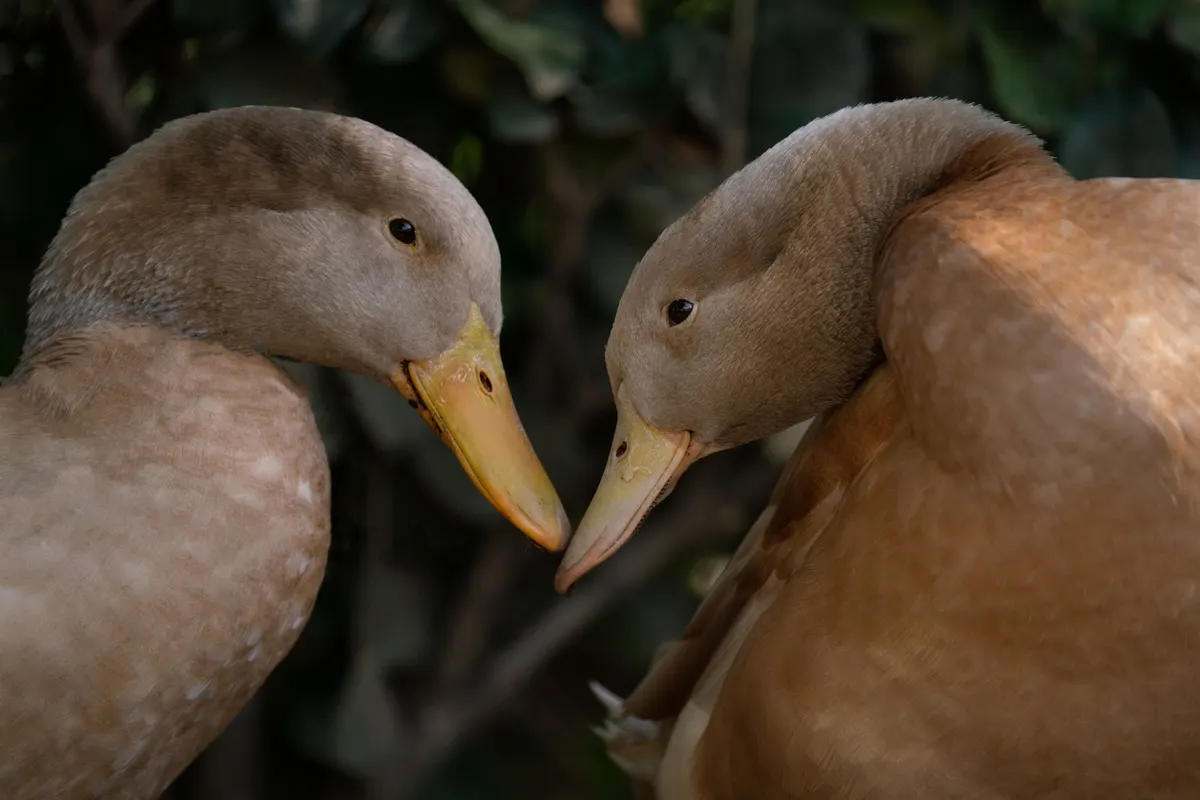
Meat: Why Is the Pekin White?
The Pekin is not white by accident — it's the same logic as the Texas A&M quail:
Pluck a dark-feathered bird and the skin keeps feather-root marks. A white bird leaves none: a clean, pale carcass. The Rouen's meat is every bit as good as the Pekin's, but its mallard markings make the carcass look "dirty", so commerce passes it by.
The Pekin is also fast: 2.5-3 kg in 7-8 weeks. A Rouen takes months to get there. If you're thinking of ducks for meat on a small scale, the answer is almost certainly the Pekin.
How Do You Sex a Duck?
Ducks give you two markers that are far more certain than anything in chickens — but neither works on a Muscovy.
1. The voice (from week 6-8):
- The female: quacks loudly and clearly
- The male: cannot quack; he makes a hoarse, raspy whisper
It is one of the most reliable sex tests in all of poultry. The noisy one is the female.
2. The drake feather (month 3-4): one or two feathers on top of the drake's tail curl upward. If that curl is there, the bird is a male. Full stop.
The Muscovy has neither: none of them quack (both sexes hiss) and no curled tail feather forms. In the Muscovy you read sex off the body: the male is nearly twice the female (4-6 kg against 2-3 kg). It is one of the largest sex differences in all poultry.
For the general methods see our guide on how to tell a chick's sex.
Care: Do You Need a Pond?
No — but you do need water. This is the commonest myth. A duck can live without swimming; what it always needs is water deep enough to dunk its head in:
- It cleans its eyes and nostrils with water; deprived of that, it gets eye and sinus infections
- It wets its feed in order to swallow it — there must always be water beside the feeder
- A deep bucket or tub is enough; a pond is a luxury (though it does raise fertility: ducks mate more easily on water)
Other notes on care:
- Housing: no perches needed — a duck sleeps on the floor. A dry floor with plenty of bedding is enough. The logic in our coop-building guide still applies (allow a little more space per duck)
- Wet litter: ducks soak bedding fast; change it more often than you would for chickens
- Flight: Pekins and Runners don't fly; Muscovy females do (you may need to clip a wing)
- Niacin (B3): ducklings need more niacin than chicks. Raise them on plain chick feed and you'll see leg weakness — adding brewer's yeast to the feed is the usual fix
For hygiene rules see our coop biosecurity guide.
Incubation: 28 Days — but 35 for the Muscovy
Duck incubation differs from the chicken's on two points:
- The period: 28 days for mallard-derived ducks; 35 days for the Muscovy
- Cooling and misting: the duck egg has an oilier shell membrane than the hen's; a daily cooling plus a misting of water lifts the hatch rate noticeably
The detail, species by species, is in our guides to the duck incubation period and Muscovy incubation.
Candling: the duck eggshell is thicker than a hen's, so candling needs a stronger light. White shells (Pekin, Campbell) are easy; the Muscovy's can be darker.
Natural incubation: the Muscovy is a superb broody — she sits out the 35 days patiently and rears her ducklings well. The commercial laying breeds (Campbell, Runner) have largely lost the instinct.
To keep the days straight, the Kuluçka Takip app builds the calendar by species (28 days for ducks, 35 for the Muscovy) and reminds you of turning, cooling and hatch days. You can check out the app here.
Which Duck for Whom?
- Maximum eggs → the Khaki Campbell (250-340). The same league as the laying hens, with a bigger egg.
- Garden plus eggs → the Indian Runner. It clears slugs and insects, doesn't scratch and won't wreck the beds.
- Meat → the Pekin. Table-ready at 7-8 weeks, and the white feathering gives a clean carcass.
- Quiet, a broody mother and lean meat → the Muscovy. It doesn't quack, hatches its own young and eats flies. But it flies, and it sits for 35 days.
- Meat and eggs both (a balance) → the Aylesbury or the Rouen; though on eggs both are far below the Campbell.
For the chicken-side comparison, see our guide to choosing a laying or meat breed.
Frequently Asked Questions
Which duck breed lays the most eggs?
The Khaki Campbell: 250-340 eggs a year. That is the same league as a commercial laying hen — and the duck egg is bigger (70-80 g). The Indian Runner is close behind at 250-300.
Which is the meat duck?
The Pekin. It reaches 2.5-3 kg live weight in 7-8 weeks, and its white feathering gives a clean carcass. The Rouen and the Aylesbury are meat birds too, but the Rouen grows far more slowly.
What happens if a Muscovy crosses with an ordinary duck?
You get offspring, but they are completely sterile — the mulard, or mule duck. The Muscovy is a separate species (Cairina moschata); every other duck descends from the mallard. If you mean to breed, pen the two species apart, or you will not be able to renew your flock from what hatches.
How do you tell a duck’s sex?
Two certain markers: (1) the voice — the female quacks loudly, the drake cannot quack and makes a hoarse, raspy whisper (from week 6-8); (2) the drake feather — a feather on top of the male’s tail curls upward at 3-4 months. The Muscovy has neither; there the male is nearly twice the female (4-6 kg against 2-3 kg).
Do ducks need a pond?
No, but they do need water. A duck needs water deep enough to dunk its head: it cleans its eyes and nostrils, and it wets its feed in order to swallow. A deep bucket will do. A pond raises fertility but is not a requirement.
How long is duck incubation?
Twenty-eight days for mallard-derived ducks (Pekin, Campbell, Runner, Rouen) and 35 days for the Muscovy. Cooling the eggs daily and misting them with water lifts the hatch rate noticeably.
Can ducklings be fed chick starter?
They can, but it falls short: a duckling needs more niacin (B3) than a chick. On plain chick feed you will see leg weakness. The usual fix is to add brewer’s yeast to the feed.
Related Articles
Quail Types: Meat and Laying Lines (Pharaoh, Jumbo, Texas A&M)
The Pharaoh, Jumbo, Texas A&M, English White, Italian and Tuxedo are not separate breeds but lines of one species: a weight and egg comparison table, the meat-versus-eggs trade-off, why the white lines cannot be feather-sexed (the cloacal gland test), and the different incubation periods of the Bobwhite and the Button quail.
Goose Breeds: The Grazing Bird (Embden, Toulouse, Chinese, Pilgrim)
The goose is the only bird in poultry that digests grass: on pasture it takes 80% of its diet from grazing. The Embden, Toulouse, Chinese, African and Pilgrim compared; why goose eggs are seasonal (she does not lay all year), the one breed sexable on hatch day (the Pilgrim), and why the duck's sterile-mulard trap does not exist in geese.
Layer or Meat Bird? How to Choose a Chicken Breed for Your Goal
Layer, meat and dual-purpose chicken breeds compared: top laying breeds, the hybrid-versus-purebred difference, broodiness and climate criteria for choosing by goal.