Pigeon Farming: Crop Milk, the Pair System and Squab
The pigeon is fundamentally unlike every other bird in this series. With chickens, ducks, geese, turkeys and quail the formula is the same: put the egg in the incubator, and rear the hatchling under a lamp on feed.
With pigeons that does not work. A squab cannot peck at feed; it drinks milk. And only its parents can make that milk.
This guide builds pigeon keeping on that single fact: crop milk, the pair system, the arithmetic of squab production, the one breed that reveals its sex at hatch in a bird that is otherwise near-impossible to sex, and why the pigeon you just bought flies back to its old home.
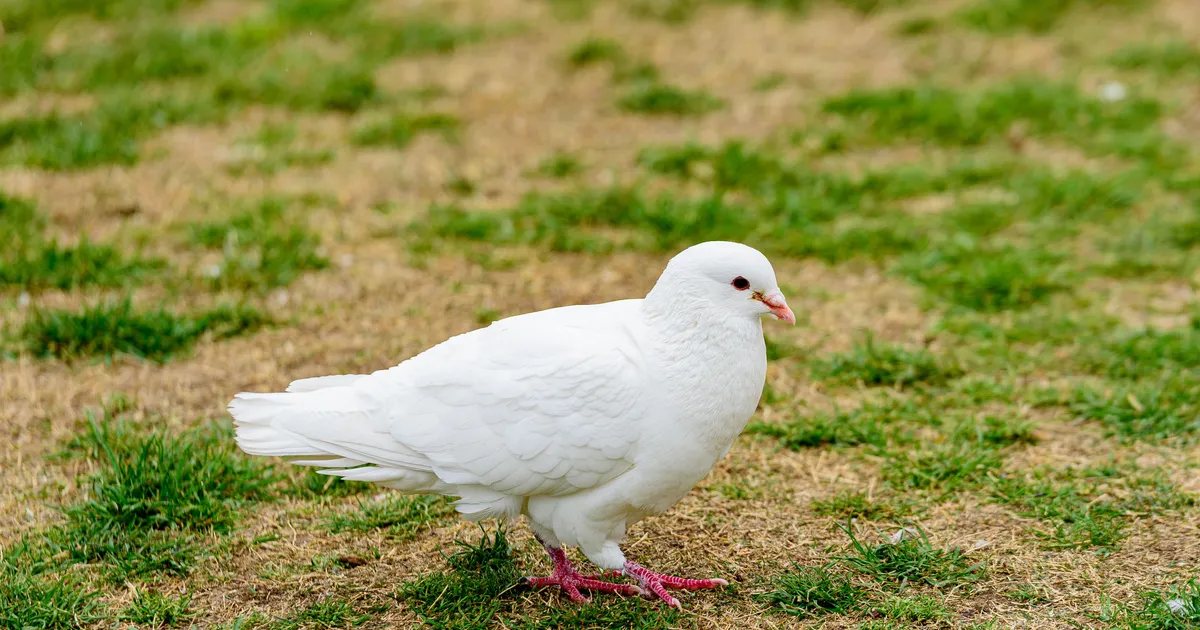
Crop Milk: The Only Bird in Poultry That "Nurses"
A squab hatches naked, blind and utterly helpless. It cannot peck at feed on day one the way a chick can.
Instead, both the cock and the hen produce crop milk (pigeon milk) in the crop and feed the squab from the beak. This is not a metaphor; it is a real secretion:
- Up to 60% protein
- Up to 35% fat
- A little carbohydrate, minerals — and antibodies
- It evolved independently of mammalian milk, but it does the same job
The critical consequence: a broody hen or an incubator can hatch a pigeon egg — but you cannot then feed what hatches. Hand-rearing (tube-feeding formula) is possible, but it is laborious, risky and pointless at any scale.
| Other poultry | The pigeon | |
|---|---|---|
| Incubation | The machine suffices | The machine hatches it… |
| Rearing | Lamp plus feed | …but the parents are essential |
| The unit of production | The flock | The PAIR |
So in pigeons the unit of production is not the flock but the pair. Your output is exactly as large as your number of breeding pairs.
The Pair: A Lifelong Mate and a Shared Incubation
The pigeon is monogamous, and the bond lasts years — often for life. Like the partridge, it is kept in pairs; there is no harem.
But here is the truly unusual part: both parents incubate — and they take shifts:
- The cock: roughly the daytime (mid-morning to late afternoon)
- The hen: evening and night
That is rare in poultry. In geese, turkeys and chickens, incubation is entirely the female's job. The cock pigeon sits on the eggs — and then feeds the young on his own milk.
Incubation: 17-18 days — among the shortest in this series (it rivals the quail). The detail is in our pigeon incubation guide.
The Arithmetic: Two Eggs, but Twelve Squabs
A pigeon lays only two eggs per clutch. At first glance that looks hopeless — a quail lays 300 eggs a year, so why keep pigeons at all?
The answer is the repeat rate:
| Figure | |
|---|---|
| Eggs per clutch | 2 |
| Incubation | 17-18 days |
| Squab harvest age | 26-30 days |
| Clutches per year | 6-8 (more when well managed) |
| Squabs per pair per year | 12-14 |
| Squab weight at harvest | 450-700 g |
The practical rule — two nests per pair: the hen starts the next clutch while the current squabs are still in the nest. Give a pair only one nest and production stops. Give every pair two nest bowls: one for the growing squabs, one for the new eggs. It is the most-skipped detail in pigeon keeping, and the one that costs the most output.
Squab: Why 26-30 Days?
A squab is harvested before it ever flies. The reason is texture and flavour:
- It has never flown — the breast muscle has not worked and the connective tissue has not toughened
- The meat is therefore very tender, dark and rich; it is a delicacy in kitchens worldwide
- After about day 30 the bird begins to fly, the muscle firms and the value drops
So in squab production the calendar cannot slip. Record the hatch date and don't miss the 26-30 day window. The Kuluçka Takip app builds the calendar by species and reminds you of hatch and harvest days. You can check out the app here.
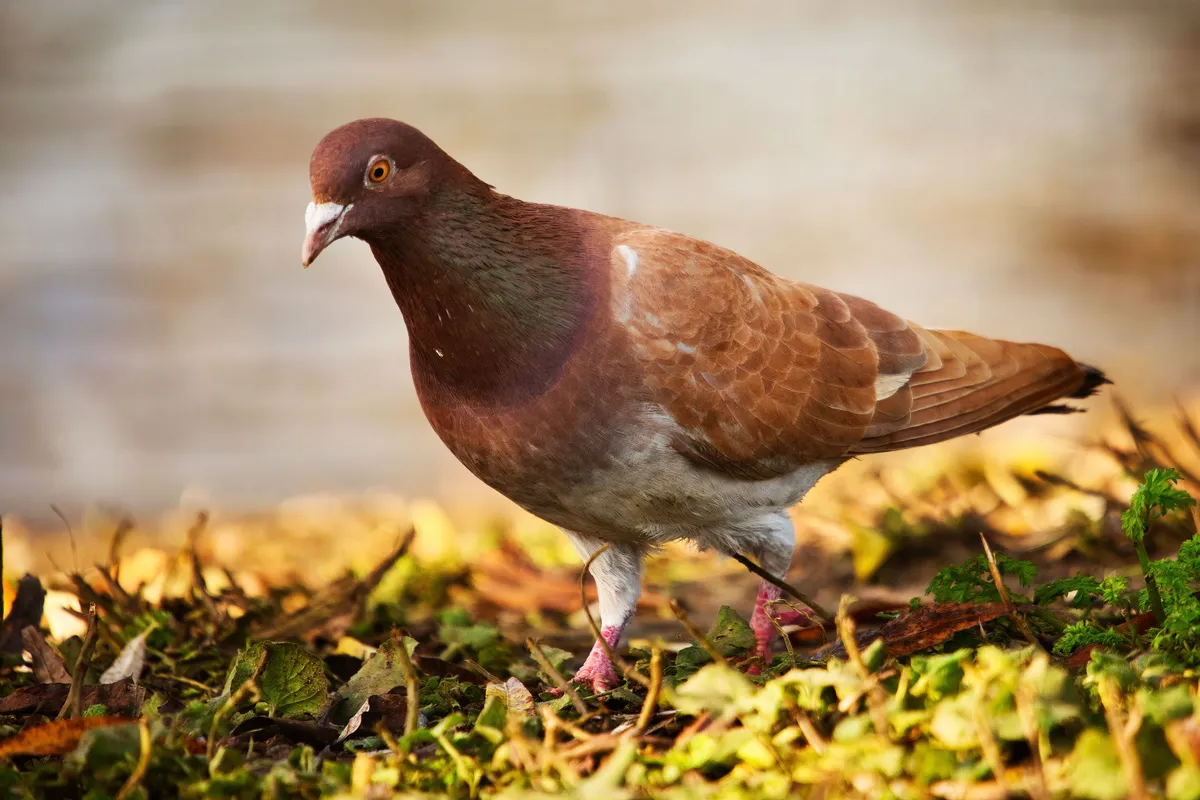
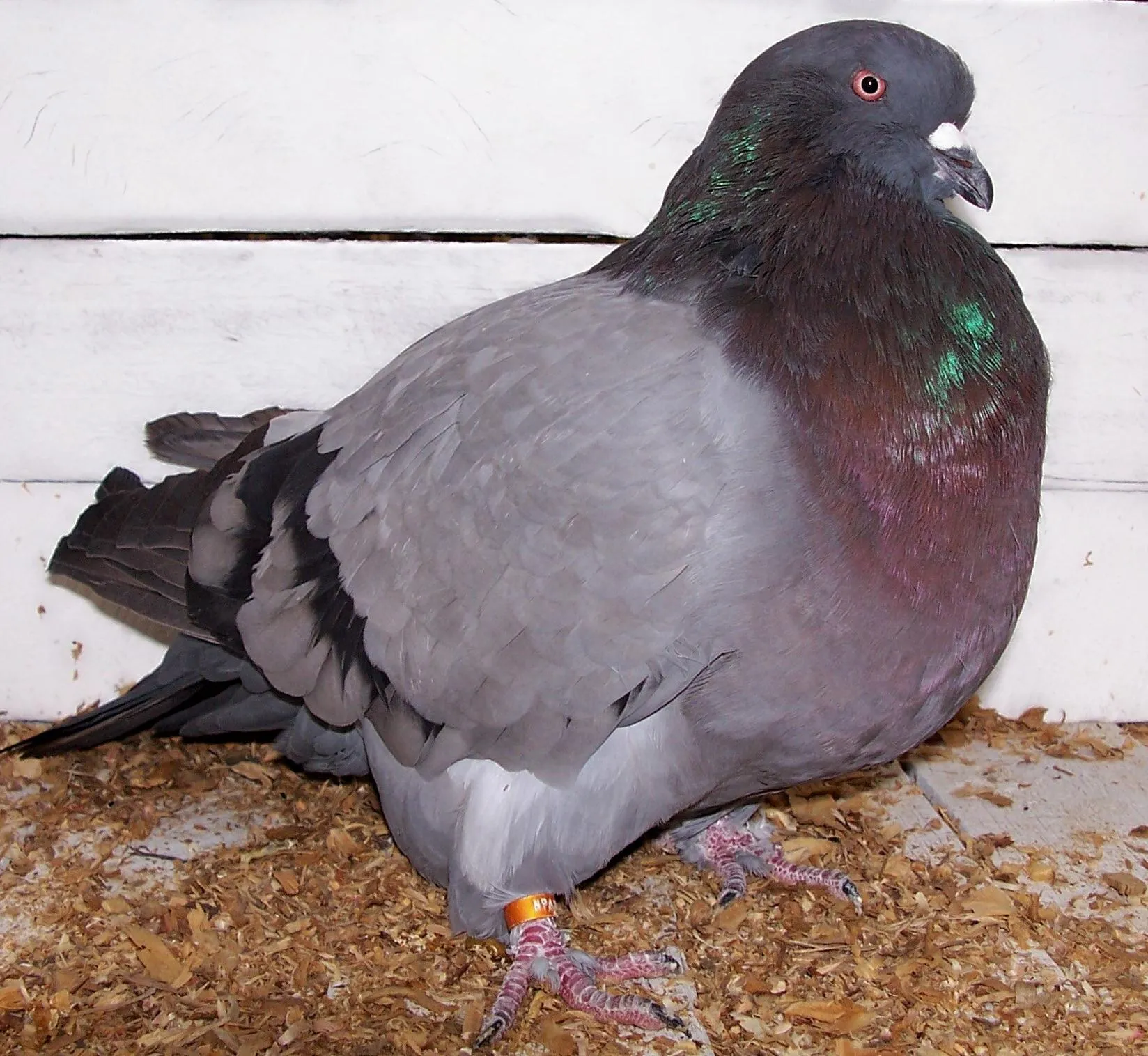
The Breeds
| Breed | Adult weight | Purpose | Note |
|---|---|---|---|
| White King | 750-850 g | Meat | The commercial standard; big, fast-growing |
| Texan Pioneer | 700-800 g | Meat | AUTO-SEXING — sex shows at hatch |
| Carneau | 700-800 g | Meat | French; red or white |
| Mondain | 800-900 g | Meat | Very large; fewer clutches |
| Runt | 900-1100 g | Meat (show) | The biggest; but slow to produce |
| Homer | 400-500 g | Racing / message | Not a meat bird; a navigator |
The Texan Pioneer's design is instructive: the breed was deliberately selected for a small head and small feet. The logic is blunt — there is no sense adding weight to the parts you throw away at slaughter. We saw the same commercial logic in the Broad Breasted turkey and the Pekin duck.
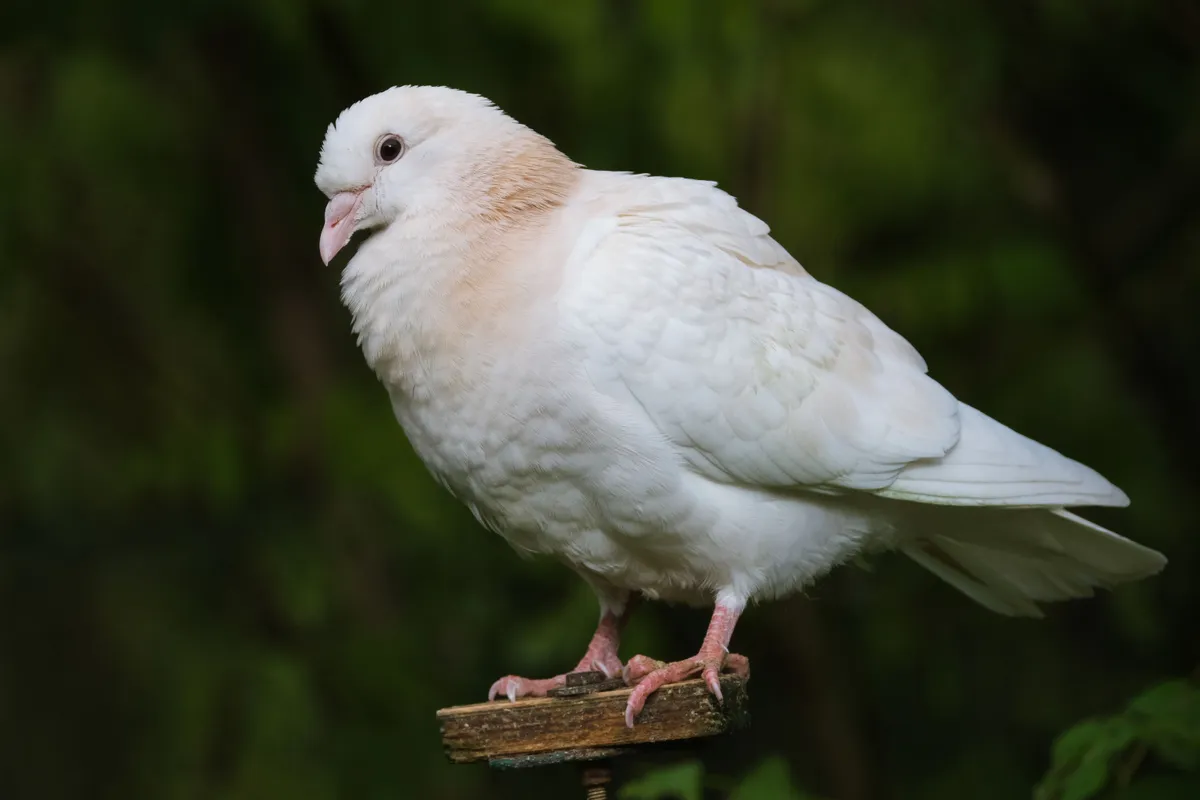
Sexing: Very Hard — With One Exception
The pigeon is among the hardest of all poultry to sex: cock and hen look the same. Feather, colour and size tell you nothing.
You go by behaviour:
- The cock: puffs up, fans his tail, coos while turning in circles, drives the hen, and is the aggressive one
- The hen: calmer; in courtship she crouches and accepts the cock's beak
- A hard clue: if two birds are both laying, they are both hens (hen-hen pairs do lay, but the eggs are infertile) — a commonly missed cause of an apparent fertility problem
The exception: the Texan Pioneer. This breed is auto-sexing — the squab's sex can be read from the down and feather colour right after hatching. Very few breeds in all of poultry can do that.
The series' sexing table now reads:
| Bird | When |
|---|---|
| Pilgrim goose | Hatch day — by the down |
| Texan Pioneer pigeon | At hatch — by the down |
| Pharaoh quail | Week 3-4 — by the breast feathers |
| Guinea fowl | Month 2-3 — by the call only |
| Other pigeons | By behaviour alone |
The Pigeon You Bought Will Fly Home
This is the bitter lesson beginners learn on day one.
The pigeon is a master navigator — it returns to its own loft from hundreds of kilometres away. So buy an adult pigeon, let it out, and it flies back to the seller. That very ability was the basis of the message pigeon for centuries.
The remedies:
- Safest: never release adult breeding stock. Keep them in a closed loft; squab production needs no free flight anyway.
- If you want them out: confine new birds for at least four to six weeks, then try one or two. Even then you risk losses.
- The real answer: birds hatched in your own loft know it as home and come back. Build your flock from your own squabs.
It is a harsher version of the coop-training problem we set out for the guinea fowl.
Feed, Water and the Loft
- Feed: a grain mix (wheat, maize, barley, peas or vetch). Legumes are essential — they are the protein behind the crop milk. A pair fed on wheat and maize alone rears weak squabs.
- Grit and minerals: pigeons swallow grit for digestion, and they need a mineral or pick stone.
- Water: the pigeon is one of the few birds that drinks by suction — head down, like drinking through a straw. The drinker must be deep, and the water clean.
- The loft: two nests per pair (see above), perches, a dry floor, good ventilation. Crowding means fighting and disease.
- Bathing: a shallow bath once or twice a week; it matters for parasite control.
Health: Canker and PMV
Two problems are characteristic of pigeons:
- Canker (trichomoniasis): cheesy yellow lesions in the mouth and throat. The parent passes it to the squab in the crop milk, which makes it the commonest cause of squab losses. It also spreads through drinkers — change the water daily.
- Paramyxovirus (PMV): a pigeon-specific virus that attacks the nervous system (twisted neck, loss of balance). There is a vaccine, and breeding stock should have it.
For the general rules see our coop biosecurity guide. Contact with feral pigeons is the main source of disease — keep wild birds out of the loft.
Who Is It For?
Pigeons suit you if: you want to produce high-value meat in a small space (a closed loft); you have no land for birds to range on; you can keep pair-by-pair records; or racing and fancy pigeons interest you.
They don't suit you if: you want eggs (a pair lays only 12-16 a year — it makes no sense); you plan to incubate and hand-rear (impossible without crop milk); or you intend to buy adult birds and let them fly free (they will leave).
If you came for meat, the alternatives are the quail (killed at 6-8 weeks, easy) or the Pekin duck (3 kg in 7-8 weeks).
Frequently Asked Questions
Can squabs be reared from an incubator?
The egg will hatch in a machine, but you cannot feed what comes out. A squab cannot peck at feed; for its first days it lives on "crop milk" made in its parents’ crops (up to 60% protein). That is why the unit of production in pigeons is not the flock but the PAIR: the parents must rear the young.
What is crop milk?
A genuine secretion produced in the pigeon’s crop: up to 60% protein, up to 35% fat, plus minerals and antibodies. Both the cock and the hen make it and feed the squab from the beak. It evolved independently of mammalian milk but does the same job — the pigeon is the only bird in poultry that "nurses".
How many squabs does a pair produce a year?
Twelve to fourteen. A pigeon lays only two eggs per clutch, but a pair goes through 6-8 clutches a year. The critical detail: give every pair TWO nests — the hen starts the next clutch while the current squabs are still in the nest, and with only one nest production stops.
Why is a squab harvested at 26-30 days?
Because it has never flown: the breast muscle has not worked and the connective tissue has not toughened, which is exactly why the meat is so tender and valuable. After about day 30 the bird starts to fly, the muscle firms up and the value drops.
How do you sex a pigeon?
It is very hard: cock and hen look identical. You go by behaviour — the cock puffs up, fans his tail and coos while turning in circles; the hen crouches in courtship. A hard clue: if both birds lay, both are hens (and the eggs are infertile). The one exception is the Texan Pioneer, which is auto-sexing: the sex shows in the down at hatch.
Will a pigeon I bought fly away?
Yes. The pigeon is a master navigator, and an adult released will fly straight back to its old loft. The safest course is never to release breeding stock (keep a closed loft). If you do want to fly them, confine new birds for four to six weeks — but the real answer is to build your flock from squabs hatched in your own loft, because those know it as home.
Why do squabs die?
The commonest cause is canker (trichomoniasis): cheesy yellow lesions in the mouth and throat, passed straight to the squab in the crop milk. It also spreads through drinkers, so change the water daily. Breeding stock should also be vaccinated against the pigeon-specific paramyxovirus (PMV).
Related Articles
How Many Days Is Pigeon Incubation? Natural Incubation, Crop Milk and Squab Care
Pigeon incubation takes about 18 days. A complete guide to supporting the pair's natural incubation, why artificial incubation is hard, crop milk and squab care.
Breeding Cage Birds: Budgies, Canaries, Cockatiels and Lovebirds
Cage-bird chicks hatch naked and blind (altricial): an incubator will hatch the egg, but you cannot feed what comes out. The incubation of all four species, four different ways to sex them (the cere in budgies; in canaries the one that sings is the male; in cockatiel mutations only DNA works), why breeding too young and egg binding kill, and the lethal gene in the dominant white canary.
Quail Types: Meat and Laying Lines (Pharaoh, Jumbo, Texas A&M)
The Pharaoh, Jumbo, Texas A&M, English White, Italian and Tuxedo are not separate breeds but lines of one species: a weight and egg comparison table, the meat-versus-eggs trade-off, why the white lines cannot be feather-sexed (the cloacal gland test), and the different incubation periods of the Bobwhite and the Button quail.