Breeding Cage Birds: Budgies, Canaries, Cockatiels and Lovebirds
The budgerigar, the canary, the cockatiel and the lovebird obey a fundamentally different rule from every other bird on this site.
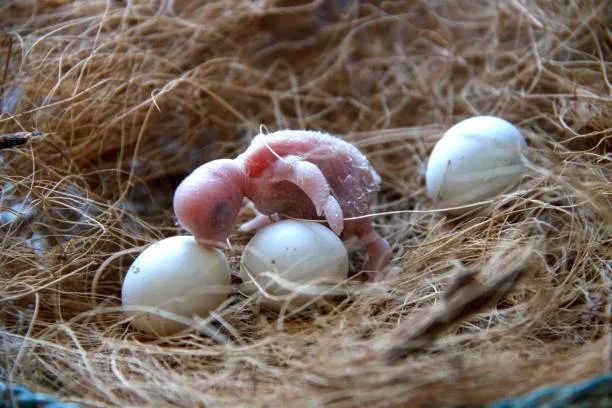
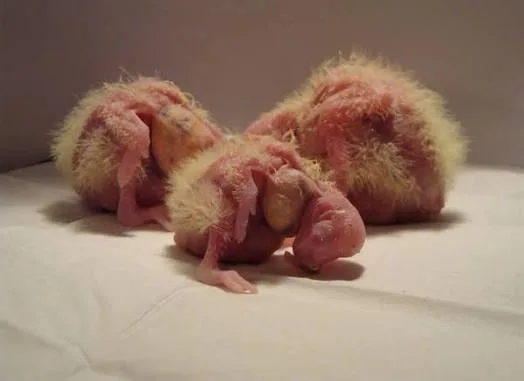
With chickens, ducks, geese and quail you put the egg in a machine and what hatches is feathered, open-eyed, walking within hours and eating on its own. Cage birds do nothing of the sort. Their young hatch naked, blind and utterly helpless.
That single difference rewrites every rule of breeding them. This guide covers the incubation of all four species, how to sex them, the fatal mistakes people make most often, and why an incubator alone will not do.
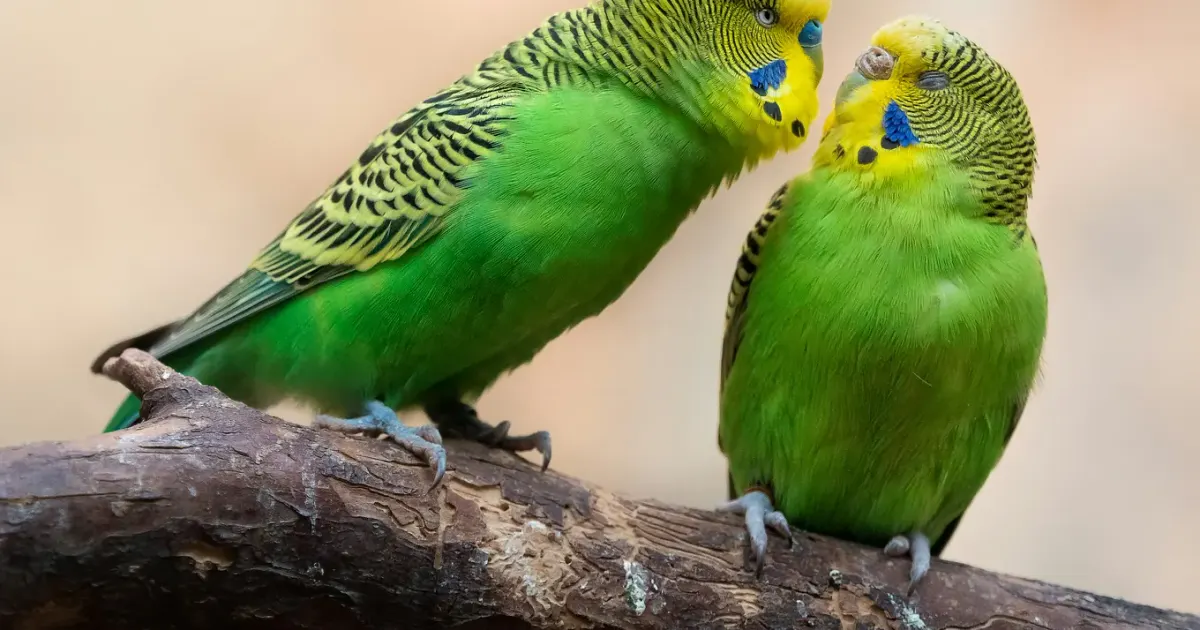
The Basic Divide: Precocial and Altricial
Birds fall into two camps by how their young develop — and it decides everything:
| Precocial (poultry) | Altricial (cage birds) | |
|---|---|---|
| Who? | Chickens, ducks, geese, turkeys, quail | Budgies, canaries, cockatiels, lovebirds (and pigeons) |
| At hatching | Feathered, eyes open | Naked, blind |
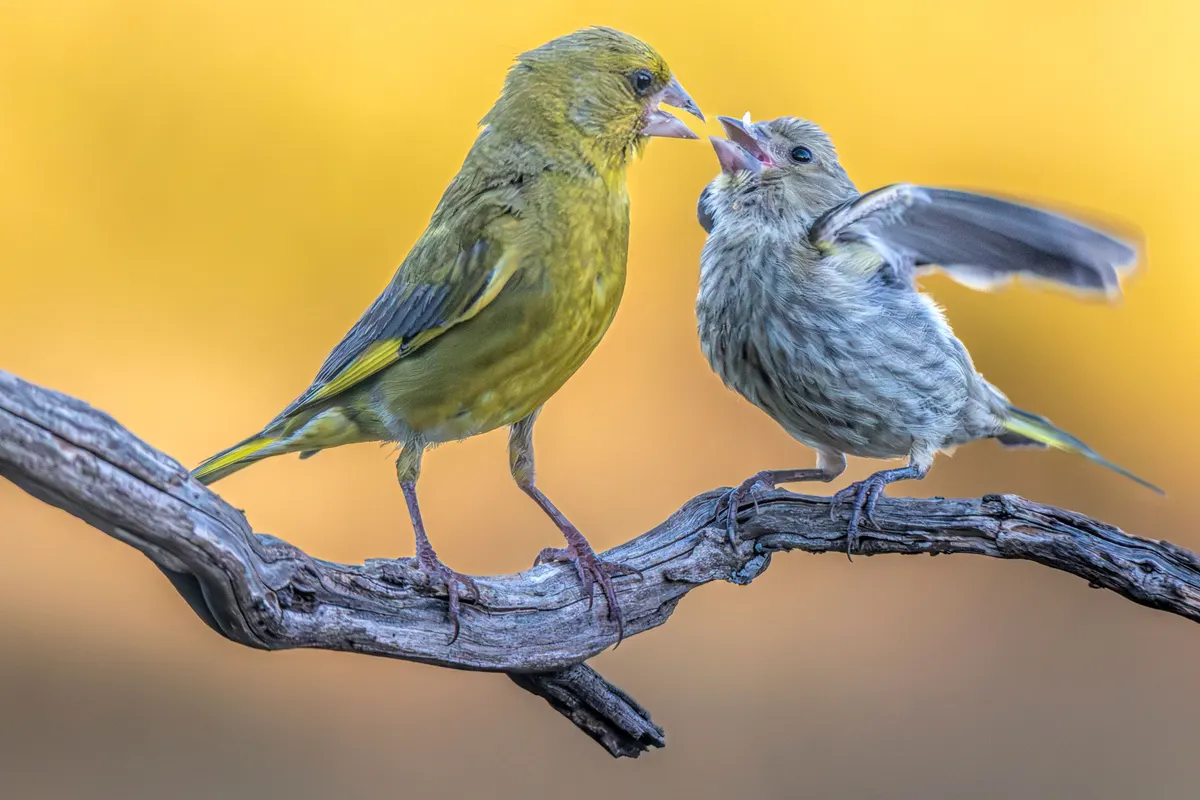
| Day one | Walks and feeds itself | Cannot move; the parents feed it beak to beak |
| An incubator | Is enough on its own | Is not — something must feed the chick |
| Leaving the nest | Immediately | After 4-6 weeks |
The critical consequence: you can put a budgie egg in an incubator and it will hatch. But you cannot feed what comes out. Either the parents feed it, or you do — with formula, every two hours, through the night, for weeks.
It is exactly the logic of the crop milk in our pigeon guide: the unit of production is not the machine but the pair.
Four Species, Four Incubations
| Bird | Incubation | Eggs | Who sits? | Fledging |
|---|---|---|---|---|
| Canary | 13-14 days | 3-5 | The hen alone | ~18 days |
| Budgerigar | 18 days | 4-6 | The hen sits, the cock feeds her | ~30 days |
| Cockatiel | 18-21 days | 4-6 | Both (male by day, female by night) | ~35 days |
| Lovebird | 21-23 days | 4-6 | The hen alone | ~40 days |
The canary's 13-14 days is the shortest incubation on this site — shorter even than the quail's 17-18.
The cockatiel is the interesting exception: both parents incubate, in shifts — the male by day, the female by night. It is the same arrangement we found in the pigeon.
How they lay: in all four species the eggs come every other day, and the hen usually starts sitting after the second or third egg. So the chicks do not hatch together — there can be two to six days between first and last. The result is a nest holding big chicks and tiny ones at once, and the smallest can be trampled or starved out. It is the commonest loss in cage-bird breeding.
Sexing: Four Species, Four Methods
We have talked a great deal about sexing in this series. In cage birds there are four separate answers:
1. The budgerigar: the cere
This is the easy one. The fleshy skin above the beak is the cere, and in an adult bird its colour tells you the sex:
- Male: the cere is blue or deep purple
- Female: the cere is beige, brown or whitish (it turns brown and crusty in breeding condition)
A warning: the test is unreliable before four to six months — in young birds the cere can look pinkish-mauve in both sexes. And in some colour mutations (albino, lutino, ino) the male's cere stays pink and the method simply fails.
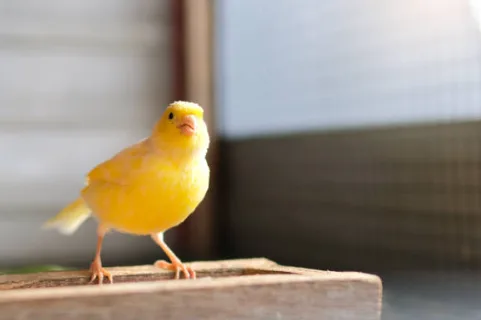
2. The canary: the one that sings is the male
The canary is the hardest cage bird to sex — the sexes look identical. But one marker is certain:
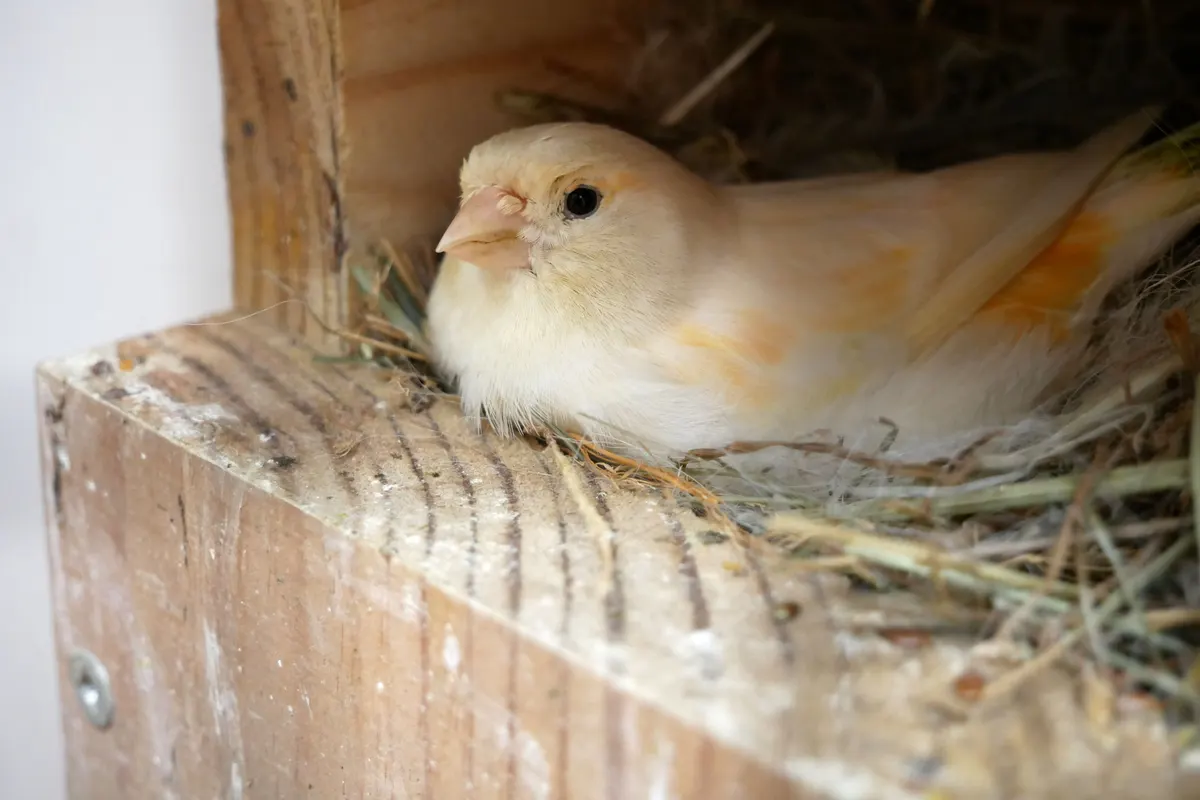
Only the male canary sings. The hen chirps, calls and makes plenty of noise — but she cannot produce the long, rolling, melodic song of the cock.
It is the inverse of the test we set out for the guinea fowl (where the two-syllable caller was the female). In the canary, the singer is the male.
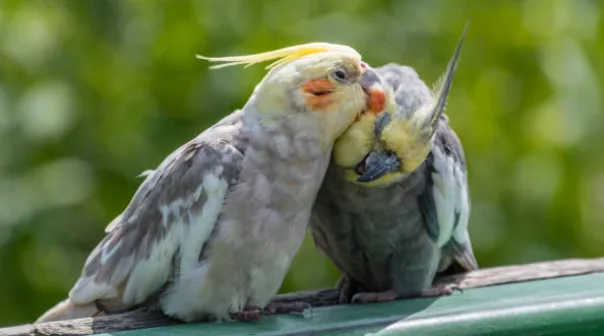
3. The cockatiel: face and tail — except in mutations
In the normal grey (wild type) the sexes are easy:
- Male: a bright yellow face with vivid orange cheek patches; the underside of the tail is plain
- Female: a duller, greyish-yellow face; barred yellow markings under the tail and spots under the wings
But: in colour mutations — lutino, albino, white-face, pied — those markers vanish and visual sexing becomes impossible. The only certain answer is a DNA test (from a feather or a drop of blood).
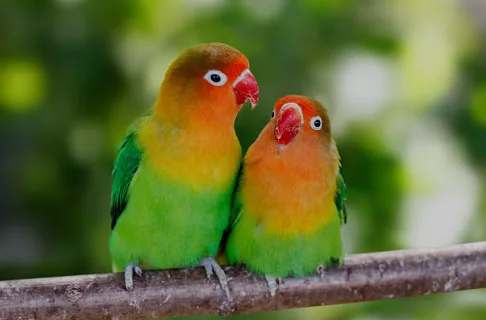
4. The lovebird: usually DNA
In the commonest lovebirds (notably Agapornis roseicollis) the sexes look the same. The folk methods — pelvic-bone gap, body size, behaviour — are guesswork and are wrong often enough to matter.
The only reliable answer is a DNA test. Keepers who wait months on a "pair" that turns out to be two hens are very common: the birds lay, but the eggs are infertile. We set out the same trap in the pigeon guide.
The Commonest Fatal Mistake: Breeding Too Young
Cage birds reach sexual maturity long before they are grown. The bird can breed — but its body is not ready.
| Bird | Sexually mature | Wait until |
|---|---|---|
| Budgerigar | 4-6 months | At least 12 months |
| Canary | 6-8 months | At least 10-12 months |
| Cockatiel | 9-12 months | At least 18 months |
| Lovebird | 8-10 months | At least 12 months |
A hen bred too young exhausts her calcium and goes into egg binding (below). She is also a poor mother: she breaks the eggs or abandons them.
Egg Binding: It Kills in Hours
This is the number-one killer of cage-bird hens, and it is almost unheard of in chickens.
The egg reaches the vent but cannot pass. The bird strains, fluffs up, sits on the cage floor and breathes with difficulty. Untreated, she dies within 24-48 hours.
The causes:
- Calcium deficiency (the usual one): the shell stays soft and the muscle cannot push
- A hen too young or too old
- Over-breeding (more than three clutches a year)
- Cold, obesity, no exercise
Prevention: keep a calcium source in the cage at all times — a cuttlebone, a calcium block, grit. Give a hen coming into breeding condition extra calcium and D3. Allow at most two or three clutches a year, and rest her between them.
In an emergency: warm the bird (28-30 °C) and get her to a vet at once. Do not try to push or pull the egg out yourself — if it breaks inside her, she dies.
A Lethal Gene: The Dominant White Canary
In our Araucana guide we explained that the ear-tuft gene kills the embryo when it comes in a double dose. The canary has the same trap.
The dominant white gene is lethal when homozygous. Pair two dominant white canaries and:
- 25% of the embryos die in the shell (double dominant white)
- 50% are dominant white (they live) and 25% are coloured (they live)
The rule: always pair a dominant white canary with a coloured (yellow) mate. White × white is throwing away a quarter of your hatch on purpose.
Nests: One Design Per Species
- Canary: an open, basket-type nest pan — not a closed box. Line it with felt and give the hen fibre (sisal, jute) to weave: a canary builds her own nest.
- Budgerigar: a closed wooden nest box whose floor is concave (dished). On a flat floor the eggs roll apart and the chicks' legs splay outward. It needs no bedding beyond a pinch of shavings.
- Cockatiel: a bigger box (25×25×30 cm) with a 7-8 cm entrance and shavings on the floor.
- Lovebird: a box plus plenty of nesting material. This genus has a charming habit: the Agapornis roseicollis hen tears material into strips and carries it to the nest tucked among her rump feathers.
Candling and Fertility
Cage-bird eggs are small and pale-shelled, so candling is easier than with a hen's — but they are fragile: don't lift them with your fingers; use a spoon, or look at them in the nest.
- In canaries the veining shows at day 4-5
- In budgies, day 5-7
- Clear (infertile) eggs stay clear; remove them early and the hen keeps sitting
If fertility is low, look at: a pair too young or too old; two hens (see sexing); slipping perches (the birds lose their balance mating — the perch must be firm and the right diameter); obesity; short daylight. More in our fertility guide.
Hand-Feeding: The Last Resort
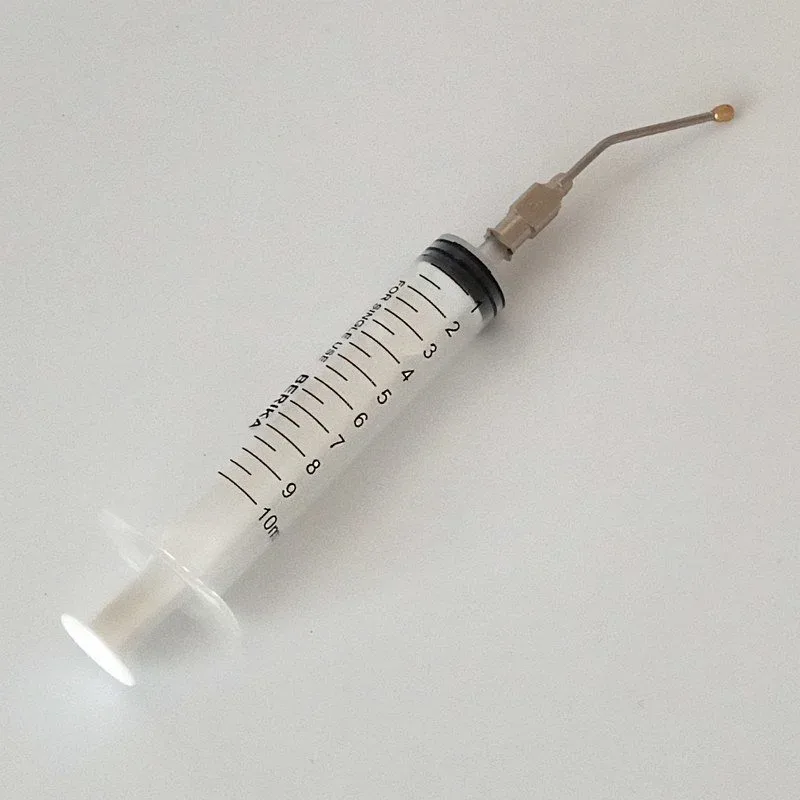
If the parents abandon the chicks or stop feeding them, the only way is hand-feeding — and it is laborious, not romantic:
- It needs proper chick formula (a home-made bread-and-milk mixture kills)
- The formula must be 38-40 °C: too cold and the crop stops, too hot and it burns the crop
- Every two hours in the first days, through the night; the interval widens as they grow
- Never feed again until the crop has emptied
- Keep them at 32-35 °C and humid — the logic of our brooder guide holds, on a tiny scale
An honest word: in inexperienced hands, hand-feeding ends in high mortality. If you can, foster the chick into another pair's nest instead — cage birds usually accept a stranger's young.
Hygiene and Health
- Clean the nest after every clutch; mites and lice build up in it
- Red mite (Dermanyssus) feeds at night and kills chicks — check the cracks in the nest and cage
- Change the water daily; mouldy feed is deadly
- Quarantine any new bird for 30 days — the logic of our biosecurity guide applies to cage birds too
Five Rules, in Summary
- The machine is not enough — the chick is altricial and something must feed it
- Don't breed them young — wait 12 months for a budgie, 18 for a cockatiel
- Keep calcium in the cage at all times — egg binding kills in hours
- Be sure of the sex — two hens will lay, but nothing will hatch
- No more than two or three clutches a year — you will exhaust the hen
Frequently Asked Questions
Will a budgie egg hatch in an incubator?
The egg will hatch, but you cannot feed what comes out. Cage-bird chicks are altricial: naked, blind and helpless, unable to feed themselves the way a chick can. Either the parents feed them, or you do — with formula, every two hours, through the night, for weeks. That is why the unit of production is the pair, not the machine.
How long is incubation in cage birds?
Canary 13-14 days (the shortest on this site), budgerigar 18 days, cockatiel 18-21 days, lovebird 21-23 days. In the cockatiel both parents incubate (the male by day, the female by night); in the budgerigar the hen sits and the cock feeds her.
How do you sex a budgerigar?
By the cere, the fleshy skin above the beak: in an adult male it is blue or deep purple; in a female, beige to brown (and it turns brown and crusty in breeding condition). But the test is unreliable before four to six months, and in mutations such as albino and lutino the male’s cere stays pink, so the method fails.
How do you tell a male canary from a female?
The one that sings is the male. Canary sexes look identical, and the song is the only certain marker: the hen chirps and calls, but she cannot produce the long, melodic song of the cock.
My hen is straining and sitting on the cage floor — what is it?
Most likely egg binding, the number-one killer of cage-bird hens; untreated it kills within 24-48 hours. The usual cause is calcium deficiency. Warm the bird (28-30 °C) and get her to a vet at once. Do not try to push or pull the egg out — if it breaks inside her she dies. Prevention: keep a cuttlebone or calcium block in the cage at all times.
When can I start breeding my cage bird?
Sexual maturity comes long before the bird is grown, and breeding too young can kill the hen. Wait at least 12 months for a budgerigar, 10-12 for a canary, 18 for a cockatiel and 12 for a lovebird. And allow no more than two or three clutches a year.
Can I pair two white canaries?
No. The dominant white gene is lethal in a double dose: in a white × white pairing, 25% of the embryos die in the shell. Always pair a dominant white canary with a coloured (yellow) mate. The same lethal-gene logic appears in the ear-tuft gene of the Araucana chicken.
Related Articles
Cage Bird Incubation: Budgerigar, Cockatiel, Canary and Lovebird
Budgerigar, cockatiel, canary and lovebird incubation durations (13-23 days). Supporting natural incubation, nest boxes, calcium and the challenges of artificial incubation.
Quail Types: Meat and Laying Lines (Pharaoh, Jumbo, Texas A&M)
The Pharaoh, Jumbo, Texas A&M, English White, Italian and Tuxedo are not separate breeds but lines of one species: a weight and egg comparison table, the meat-versus-eggs trade-off, why the white lines cannot be feather-sexed (the cloacal gland test), and the different incubation periods of the Bobwhite and the Button quail.
Budgerigar Care and Breeding: The Day-by-Day Calendar
The full budgerigar care guide: cage (horizontal bars, the right perch), diet (seed alone kills), sexing by the cere, and — in its most detailed section — the DAY-BY-DAY breeding calendar: eggs laid on alternate days, the hen sitting from the first egg, the first chick hatching on day 18 and the last on day 26 (eight days apart), and how the staggered hatch starves the smallest chick.